
Healthcare Software Development Industry Guide for 2023
The healthcare software development industry is rapidly growing, and with the advent of new technologies, the industry is set to revolutionize the way healthcare is delivered. With custom software development and new mobile app architectures being worked upon in the healthcare software industry, there are various developments that one should be aware of that will shape the future. This guide will explore the latest trends and developments in the healthcare software development industry for 2023. Trends In Healthcare Software Development Let’s dive deeper into the various trends of healthcare software development. Telemedicine Telemedicine is one of the most significant trends in healthcare software development. With the COVID-19 pandemic, telemedicine has become even more important as it allows patients to receive medical care remotely. This technology will continue to grow in popularity as it offers convenience and accessibility to patients and healthcare providers alike. It also helps reduce costs, improve patient outcomes, and enhance communication between providers and patients. Telemedicine can include video conferencing, remote monitoring, electronic prescribing, remote diagnosis, and other services. It can be used for both primary and specialist care, as well as follow-up care. Telemedicine also helps improve access to custom healthcare solutions for those in rural areas who otherwise may not have access to medical care. Additionally, it can help reduce wait times for appointments, reduce time spent in waiting rooms, and offer patients more flexibility in scheduling appointments. With telemedicine, providers can offer better patient education and engagement, leading to improved health outcomes. Artificial Intelligence (AI) and Machine Learning (ML) AI and ML are being used to improve the accuracy and speed of diagnoses and predict patient outcomes. This technology is also being used to improve patient engagement through virtual assistants and chatbots. ML and AI allow medical professionals to quickly analyze large datasets to detect patterns and correlations that can inform better decision-making. AI and ML can be used to identify potential health risks, predict the need for interventions before they happen, and manage chronic diseases. AI and ML can also help to streamline administrative and clinical processes, such as streamlining the ordering process and improving the accuracy of medical records. In addition, AI and ML can provide personalized care recommendations, track patient outcomes, and provide virtual support to patients. Cloud Computing Cloud computing allows for storing and sharing large amounts of medical data, making it easily accessible to healthcare providers. This technology is also being used to improve healthcare systems’ scalability and security, allowing for greater custom medical solutions. It allows for the rapid deployment of new applications and services, eliminating the need for large upfront investments in hardware and software. It also enables healthcare providers to access data from anywhere, anytime, thus improving efficiency and patient care. Additionally, cloud computing can help reduce operational costs, eliminating the need for expensive hardware and software maintenance. Finally, cloud computing can help healthcare providers save time and resources by enabling them to collaborate and share data through secure and reliable networks. Interoperability Interoperability is the ability of different systems to communicate and share data. This technology is crucial in healthcare as it allows for the seamless sharing of patient information between different healthcare providers. This allows for better coordination of care and better overall patient outcomes. Interoperability also helps to reduce costs by eliminating the need for duplicate data entry, thus reducing administrative burden. Additionally, it can improve population health by providing real-time data to healthcare professionals, aiding in making more informed decisions. Blockchain Blockchain technology is being used to improve the security and privacy of patient data. It also allows for the creation of secure and decentralized healthcare systems. It can be used to securely store and share patient records, providing quicker access to medical history and reducing the possibility of data breaches. Additionally, blockchain technology can be used for medical research, to verify the authenticity of medical products, and to ensure secure payments in the healthcare sector. Additionally, blockchain technology can improve healthcare services’ efficiency, such as streamlining the process of medical billing and insurance claims. Internet of Things (IoT) IoT technology is used to improve patient monitoring and collect data for research purposes. It involves using connected devices (sensors, cameras, etc.) to collect data from various sources, including patient, environmental, and medical data. This data can then inform decisions about healthcare delivery and research. The IoT has the potential to revolutionize healthcare, providing real-time data and insights that can be used to improve patient care and outcomes. For example, it can detect changes in a patient’s condition, alert clinicians of any changes, and even allow for remote monitoring of a patient’s health status. It can also be used to collect data for research purposes, allowing for more efficient data collection and analysis. Additionally, it can detect and alert clinicians of potential problems, allowing for quick intervention. Conclusion In conclusion, the healthcare software development industry is set to experience significant growth in 2023. Telemedicine, AI and ML, cloud computing, interoperability, blockchain, and IoT are the key trends expected to shape healthcare’s future. As technology evolves, healthcare software development companies will play a vital role in improving patient outcomes and making healthcare more accessible to all. The role of software in health care is growing, and if you want to be a part of this journey without considerable hassle, then Golpik has got you covered! Drop us a message to learn more about our fitness app development services, medical software development, and long-term app maintenance solutions!
Web Application Architecture: 2023 Ultimate Guide
As technology evolves at a rapid pace, so does the way web applications are designed and developed. Web application development is becoming increasingly complex and powerful, yet it must remain reliable, secure, and easy. Therefore, developers need to create and implement an effective web application architecture that meets the needs of their users. This guide will cover the fundamentals of web application architecture in 2023, including emerging web development trends, best practices, and the latest technologies. Digital transformation is necessary but impossible without proper knowledge of the latest trends and best practices related to web app architecture. What is Web Application Architecture? Web application architecture is the overall design of a web application, including the technologies and components used to build it. It defines how all the pieces of the web application work together, from the user interface to the database. By considering current and future needs, web application architects create a blueprint for the entire system. Web application architecture aims to create an efficient, secure, and user-friendly system. To achieve this, developers must consider several elements, such as performance, scalability, reliability, security, and usability. Web application architecture is a complex and ever-evolving field. As new technologies are released, and user needs change, architects must continuously update their designs and strategies. By utilizing the right combination of technologies and components, developers can create a secure, high-performance web application that meets the user base’s needs. It’ll also lead to considerable ease with web application maintenance. Trends in Web Application Architecture As technology advances, so does web application architecture. Here are some of the most popular trends in web application architecture in 2023. 1. Serverless Architecture Serverless architecture is a popular trend in web application architecture. It is a cloud-based computing model in which the cloud provider handles the provisioning and management of servers. This allows developers to focus on building the application instead of managing the infrastructure. 2. Microservices Microservices are small, independently deployable services that can be used to build a larger application. This approach allows for greater scalability and flexibility, as each service can be developed and deployed independently. 3. AI-Powered Applications AI-powered applications are becoming increasingly popular in the web application space. This technology can automate tasks, make decisions, and improve the user experience. 4. Containerization Containerization is a popular trend in web application architecture. It is a process of packaging an application and its dependencies into a self-contained unit that can be easily deployed and managed. This approach provides greater flexibility, scalability, and reliability. 5. DevOps DevOps is a software development practice emphasizing collaboration between developers and operations teams. It is a set of practices that allow teams to quickly and efficiently develop, test, and deploy applications. DevOps also helps teams automate processes and monitor performance. 6. API Design API design is the process of designing an Application Programming Interface (API) that allows different services to communicate with each other. When designing an API, developers must consider security, scalability, usability, and performance factors. Best Practices for Web Application Architecture To ensure the success of a web application, developers must adhere to certain best practices. Here are some of the most important best practices for web application architecture in 2023. 1. Design for Scalability Scalability is an application’s ability to handle increased workloads without sacrificing performance. When designing an application, developers should plan for scalability by considering the expected number of users, data volumes, and other factors. Some of the various practices for designing a web application for scalability include Identifying any potential bottlenecks in the application that could limit its scalability. This may include hardware or software components or certain processes or algorithms. Furthermore, you can also decouple components of the application so that each can scale independently. This allows for more flexibility in scaling certain components, such as the web server, database server, or other services. 2. Plan for Security Security is one of the most important aspects of web application architecture. Developers should ensure that the application is secure by implementing best practices such as encryption, authentication, and authorization. Let’s look into this in more detail: Encryption: • Use strong encryption algorithms for data in transit and at rest. • Use a cryptographic salt to protect passwords from dictionary attacks. • Encrypt sensitive data stored in the database. Authentication: • Use two-factor authentication for user logins. • Require secure passwords with minimum length and complexity requirements. • Use CAPTCHA to prevent automated attacks. Authorization: • Implement role-based access control to ensure that users can only access the resources they are authorized for. • Implement least-privilege access control to ensure users only have access to the needed resources. • Use authorization tokens to prevent unauthorized access. 3. Leverage Automation Automation can help developers build more efficient applications. By automating processes such as testing and deployment, developers can reduce the amount of time and effort required to build and maintain the application. 4. Monitor Performance Performance monitoring is essential for web application architecture. Developers should use performance monitoring tools to track the application’s performance and identify potential issues. Performance monitoring is used to measure the performance of web applications by tracking metrics such as page load times, user experience, server response time, and page size. It is also used to identify and diagnose potential issues such as slow page loading, high resource consumption, network latency, and application crashes. Additionally, performance monitoring can help developers identify areas of improvement, such as reducing page size, optimizing code, and improving user experience. Performance monitoring tools such as New Relic, AppDynamics, and Dynatrace can help developers identify performance issues quickly and accurately. These tools also provide insights into the application’s performance, which can help developers make informed decisions to improve the web application architecture. Conclusion Web application architecture is essential to the success of any web application. Developers must stay up-to-date on the latest trends, best practices, and technologies to build successful applications. Following the best practices detailed in this guide, developers can create efficient, secure, and user-friendly web applications.
Importance of a Good Mobile App Architecture in 2023
The global pandemic and changing expectations for how and when users interact with mobile devices have contributed to the continued growth in popularity of mobile application development services & mobile app architecture. Installation of apps increased by 31% year over year, and user engagement, as measured by sessions, increased by 4.5%, according to the Mobile App Trends 2023 report. The Google Play store has 3.48 million apps, while the Apple App Store has over 2.22 million. Sales of 5G devices are driving the demand for new apps, and post-pandemic device behavior, such as the desire for shopping convenience and delivery services as well as free time fillers, whether games or home fitness apps, is still present. While COVID impacted some of this behavior, most of these trends were already rising. Customers of all types of businesses, B2B and B2C, are demanding mobile-first interactions, which has prompted many organizations to think about custom mobile app development. The growth has increased the need for firms to think about application modernization strategies. The details of mobile app architecture will be covered in this guide, which can help direct the process of creating a mobile app for the market in 2023. What Constitutes a Quality Mobile App Architecture? Today, many apps are created without using any architecture or standards. An application that lacks architecture is: To speed up mobile application development, a good mobile app architecture will enforce good software development principles at the right stages of the process. It will also provide a clear path for the data flow that simplifies work and supports clarity regarding how to scale or expand the app in the future. An architecture for mobile apps that are clearly defined makes testing more productive, supports flexibility and Agile development methodologies, and makes future maintenance simpler and less bug-prone. In the short and long terms, a solid mobile app architecture will save time and money. Important Elements to Take into Account When Creating Mobile App Architecture Device Type When following a mobile app architecture, decide on the platform first (iOS, iPadOS, Android, Windows, Cross-platform), and then take into account the various smartphone models available today. These crucial facts can be used to choose the best development dimensions. When creating a mobile app, it’s crucial to keep the following things in mind: To ensure that every user, regardless of the device they choose, has the best experience possible, the goal at this stage is to deliver the most consistent experience across various platforms and device sizes (tablet vs. mobile, model varieties). Descriptive Frameworks Development frameworks are considered when establishing the tech stack and designing the mobile app architecture. For creating web apps, both for the front-end and the back-end, frameworks offer libraries, basic templates, and components. Bandwidth Situations The front-end frameworks Bootstrap, Foundation, React, Angular, Vue, and Backbone are used to create mobile apps. Developmental frameworks for the back-end (server-side), which include Ruby on Rails, Flask, Django, Laravel, Swift, Xamarin, React Native, and Flutter, among many others, are dependent on the target platforms and programming language of choice. UI/UX Design When it comes to mobile app architecture, UI/UX design is crucial for creating positive first impressions (a strong user interface) and retaining users (how it works – a strong UX). Online success depends on having a good user experience (UX) design. Still, mobile UX is challenging due to the shifting user expectations and best practices of each operating system (OS) and device type. The mobile app architecture must balance UI and UX in the design stage. To ensure the app is providing value, start by comprehending the fundamentals of mobile UX design and the latest trends for 2021. Navigation The user’s first point of contact with the design is navigation, affecting both the front and back end. A great mobile UX design makes it simple for users to navigate the page and discover new areas. Navigation requires familiarity, and a good way to make it easier is to weigh the various functionalities that API Integration brings. The following best practices for navigation make the mobile app simple to use and lessen friction for customers: Research and user feedback are the best ways to guarantee a positive user experience (UX) with navigation. Early testing of how the app looks and functions often include wireframes. Conclusion Any mobile app architecture and tech stack must be carefully taken into account for it to be successful. Planning which features to include in the app, how to include them, and how these features will be connected through layers can be facilitated by paying attention to your business requirements and user stories. There are many factors to consider, and the app may not live up to expectations if the wrong assumptions are made. Contact us if you want to shorten the time it takes to get your app to market, don’t have the internal staff to build it, or just want to leave it to the professionals with thousands of hours of experience building native, hybrid, and cross-platform mobile apps. If you’re thinking of getting your applications developed by the experts then get in touch with Golpik Inc. to get started!
New Year 2023 Offers on Software Development & Maintenance

Give Your Business a Fresh New Look with our Exclusive New Year Deals New Year’s Eve is a time to be thankful, a time to be hopeful for the coming year, and a time to improve upon the previous year’s shortcomings, whether it’s with your personality, your relations, or your software products. Golpik Inc. is bringing you the best New Year deals on software development, application maintenance, and support, and personalized solutions. Holidays may come and go for people, but no man can stop the creation of cutting-edge software and websites! Whether you want to hire one of the best software development companies or just want to grow your business past its achieved records of the previous years, we can help. After all, New Year’s is all about setting up new trajectories for future developments! Let’s go into more detail about the various New Year deals on software development & maintenance! Custom Web App Development A web application is a fantastic method to add professionalism to your website or app. You may find online programs to improve your digital supremacy, ranging from straightforward shopping carts to intricate content management systems. You can save money while ensuring your web presence is current and competitive with our New Year deals and an exclusive discount on Web and App Development Services. Custom web applications can help you improve user experience and give your website or app a more polished appearance and feel. For instance, you might utilize a web application to provide clients with an interactive shopping cart that would make it quicker and easier for them to browse and make purchases. Web apps can also be used to develop a more effective search function that makes it simple for clients to locate the things they require. You may easily maintain and update the information on your website by using web apps like content management systems. Web applications can also increase the security of your website. By taking advantage of our fantastic New year deals on custom web app development, you can cut costs while keeping your website secure and updated with the most recent security updates. To further protect your customers’ information, you can also employ web applications to add two-factor authentication to your website. Web programs can also assist you in keeping an eye on your website and spotting dangerous activity, enabling you to take the appropriate security precautions. With our new year amazing deals on software development, you may get all of these features & functionalities configured by the best professionals! CMS Development You may get fantastic New Year deals on software development, bespoke web application development, and application support and maintenance, whether you’re a business owner or an individual trying to improve your online presence. Discounts of up to 20% off on software development services and CMS, enabling you to keep your costs in check while maintaining the security and modernity of your online presence. The foundation of any internet presence is a content management system. They offer a simple method for managing information and keeping it current. You can select a package that suits your demands and budget, regardless of whether you need a basic system for a blog or a more sophisticated system for a big website. Furthermore, you may save a ton of money by taking advantage of discounts of up to 20%. Golpik promises to make your business affairs manageable by offering a desirable web and app development services discount! Your website must be redesigned in conjunction with any UX enhancements. We put a lot of effort into improving how users engage with your website, which can expand your customer base and increase revenue. Additionally, we improve your website’s Google positions with our tried-and-true SEO optimization techniques, which generate worthwhile leads and ad sales. Furthermore, Golpik provides all the resources you require if your present CMS is out-of-date or if you want to switch to a more effective CMS platform. Conclusion Take advantage of these wonderful New Years deals on design and development services. This New Year’s Eve, stock up on digital necessities and save money! For any pertinent tech-based initiatives, Golpik Inc. is one of the top software development & maintenance companies. So, make sure you don’t miss out!
What You Should Know About Long-Term App Maintenance

The Significance of Long-Term App Maintenance Users spend around 88% of their time on apps, according to a study conducted by eMarketer, and that’s exactly why long-term app maintenance is necessary. One person simultaneously utilizes roughly 30 applications per month and ten applications per day. There is fierce competition for web application owners and developers. It takes more than having a high installation rate to succeed. According to statistics, practically every second, downloaded app software will be removed within 30 days. Your custom software must constantly enhance user experience if you want users to keep using it. Let’s go into more detail about everything you need to know about long-term app maintenance. Factors Of Long-Term Maintenance It’s crucial to understand how long-term app maintenance functions and why it’s so critical to consider with web application development. Your application can be maintained in various ways, including tracking user statistics, updating the backend code, and changing user retention tactics. You may learn the fundamentals of data analytics and carry out this kind of upkeep yourself if you have the time and want to do so. However, making adjustments to the application’s backend code can be something that is best left to the professionals. If a development partner created your app, they would typically offer to provide application maintenance and support. Since they wrote the code and memorized it, they will know exactly what to do if something goes wrong in long-term app maintenance. Following its release, you or your app’s development partner can maintain it in some of the following ways: – App Support Updates Our devices are continually updated and enhanced, bringing new features with increased performance over earlier iterations. A new iOS or Android version is launched each year. And consider how many new mobile devices with better hardware specifications are introduced over time. Our gadgets’ hardware and software are updated constantly, which necessitates that the programs run on them also change. If not, you run the danger of your app not working with your users’ devices. This is why your mobile application development process also needs to upgrade with time. You risk losing customers if you don’t stay vigilant with long-term app maintenance and ensure it works with the newest gadgets and operating systems. Your consumers will continue to demand more as technology develops, and if your app isn’t properly maintained, it will fall behind. Consider how prevalent facial recognition, fingerprint logins, and two-factor authentication have become today. The lack of these additional security and convenience features may deter users from using a financial services app. – Fixing Bugs The creation of software inevitably results in bugs. Even with the cleanest code, a small error may prevent your program from running correctly or even crash it. Regular audits and fixes might stop your users from noticing them early and removing your app from their phones. When there are numerous issues to resolve, bugs negatively impact your consumers and may cost you a lot of money in the long run. You may regularly cycle between releasing bug patches and new feature updates by maintaining your app. Always check for bugs and other technical issues, or have someone else do it for you. Then, solve them. Keep note of user comments and feedback so any issues or complaints can be immediately resolved. – Design Upgrades The long-term success of your app depends on your ability to keep up with your customers’ changing usage patterns and fashion preferences. And to do that, you must constantly update the design of your user interface (UI) to reflect the newest trends. Users develop when they use your application more and more. Your interface must develop if you want to keep your current users engaged and give them the greatest experience possible. Additionally, you must adapt your user interface to shifting styles and trends to stay relevant in the field. – Analytics for Performance Monitoring the performance of your app is crucial. Watch out for lags, sluggish loading times, and response issues. Along with keeping an eye on how your app is functioning technically, you should also keep track of your analytics reports. Monitoring indicators, including engagement and conversion rates, consumer usage trends, and retention and churn rates, is crucial. Monitoring this data will enable you to improve the functionality and features of your app, lower the alleged “user churn,” and keep it in top condition over long-term app maintenance. Advantages of Long-Term App Maintenance As previously said, the application development process continues after the product is delivered. Our environment, including its technologies and related markets, is evolving. Here are some advantages of maintaining your application after it has been released: 1. Reduced Uninstalls Users can delete your app and select an alternative if they have a negative user experience. Customers may leave apps with annoying problems or apps that crash a lot more quickly than you can say “uninstall.” Similarly, users won’t need to maintain an app on their phones if it stops providing value to them over time, such as by not introducing new or updated features, especially if a better alternative is available. With long-term app maintenance, you must consistently work to fix any issues that might arise after you release it to the market. Your engaged user base is your most valuable asset. Thus, keeping them happy should be your top priority. This involves ensuring that your app is always current with the newest trends and technological developments and works quickly and effectively. 2. Securing Long Term Revenue Regularly updated and maintained apps can offer many financial advantages, including a higher ROI and cheaper costs. No matter how skilled and experienced the developer is, it’s nearly impossible to create a flawless, successful app on the first try. You’ll almost certainly run into some bugs once your app is live. Maintaining a long-term app maintenance cycle and keeping an eye on your app allows you to spread the cost of fixing problems over a longer period of time rather than having to
Avail Special Christmas Deals on Software Development & Maintenance

Christmas Deals on Software Development & Maintenance As we all know, Christmas is just around the corner & to celebrate, Golpik Inc. is bringing you the best Christmas deals on software development, app maintenance & support, and personalized solutions. Christmas is a time of warmth best spent with your loved ones, but what if while relaxing on the holidays with your friends, your brands & businesses were benefitting greatly as well? The holidays may come and go for people, but the production of innovative applications and websites waits for no man! Whether you’re looking to enlist the services of one of the finest software development agencies or just simply looking to boost your business on auto-pilot during the holidays. Whatever it is, we’ve got you covered! Golpik Inc. believes in increasing the joy of Christmas for our prospects in the finest of ways. This is why we bring you the ultimate Christmas discounts & Christmas offers so that you can spend the holidays with your family at ease and see higher ROIs when you get back to work after the holidays. Get flat 15% off on all development & maintenance services! Let’s go into more detail about the various Christmas deals on software development and more! CMS Development Whether you’re a business owner or an individual looking to upgrade your digital presence, you can find great Christmas deals on software development, custom web application development, and application support and maintenance. With discounts of up to 20% on CMS development services, you can make sure your digital presence is up-to-date and secure while keeping your budget in check. Content management systems are the backbone of any digital presence. They provide an easy way to manage content and keep it up-to-date. Whether you need a basic system for a blog or a more advanced system for a large website, you can find a package that fits your needs and budget. Plus, with discounts of up to 20%, you can save yourself a bundle of money. With a desirable discount on web and app development services, Golpik aims to make your business affairs manageable! If you refer a friend that also looking for similar facilities than you get 20% off on software development services along with them! With design revamps, redesigning your website cannot be done without improving its UX. We focus on optimizing visitors’ interactions with your website, which can help you to reach more people and generate more business. Furthermore, if your current CMS is outdated or if you’re looking to migrate to a more efficient CMS platform, then Golpik has all the facilities you need! We will help you complete the migration without disrupting your current processes. With our exclusive Christmas deals on CMS development, you get all these services and more at almost half the price! Custom Web App Development Web applications are a great way to give your website or app a professional touch. From basic shopping carts to complex content management systems, you can find web applications to enhance your digital dominance. With our Christmas deals on custom web app development, you can save money while ensuring your web presence is up-to-date & competitive. Web applications are great for giving your website or app a professional look and feel, but they can also help you create a better user experience. For example, you can use web applications to provide customers with an interactive shopping cart, which makes it easier for them to browse and purchase items quickly. You can also use web applications to create a more efficient search function where customers can easily find the items they need. Additionally, web applications like content management systems can make it easier for you to manage and update your website’s content. Furthermore, web applications can improve your website’s security. With our ultimate Christmas deals on custom web app development, you can save money while ensuring your website is up-to-date and secure with the latest security patches. You can also use web applications to add two-factor authentication to your website, which helps protect your customer’s data. Additionally, web applications can help you monitor your website and detect malicious activity, allowing you to take the necessary steps to protect your website. You can get all of these features & functionalities configured by the top experts with our exclusive Christmas deals on software development! App Support & Maintenance App support and maintenance are a must-have for any website or app. With exclusive Christmas deals on application support & maintenance, you can ensure that your applications are running smoothly without error while keeping your budget in check. Regular app maintenance is necessary for proper functionality so with every web design & development service you’ll get 2 months of maintenance for free! Regular maintenance can help to identify any potential security issues. Keeping up with the latest security patches and updates is essential for protecting your app from malicious activities. We don’t just tune and optimize your applications; we also run checks to figure out which type of upkeep your apps need. Our experts will handle it all, whether it’s preventive maintenance, perfective, corrective, or adaptive. Additionally, our pros are skilled at cloud architecture performance tuning & optimization. You can expect automated upscaling and downscaling of the Server Architecture as per your wishes. You’ll get fault-tolerant architecture for high-volume traffic and security risk management. We’ll also take care of the disaster management and recovery assessment, scanning, and optimization of cloud architecture. We’ll also provide a free quotation if you’re concerned about cloud cost optimization. Conclusion If you are unsure of how our services can benefit your business, feel free to contact our experts to discuss in detail. If you want to build and improve your business’s online digital presence don’t forget to check out our exclusive holiday season offers on web app design & development, support and maintenance, and CMS development services.
Top Web App Frameworks and Technologies for 2023
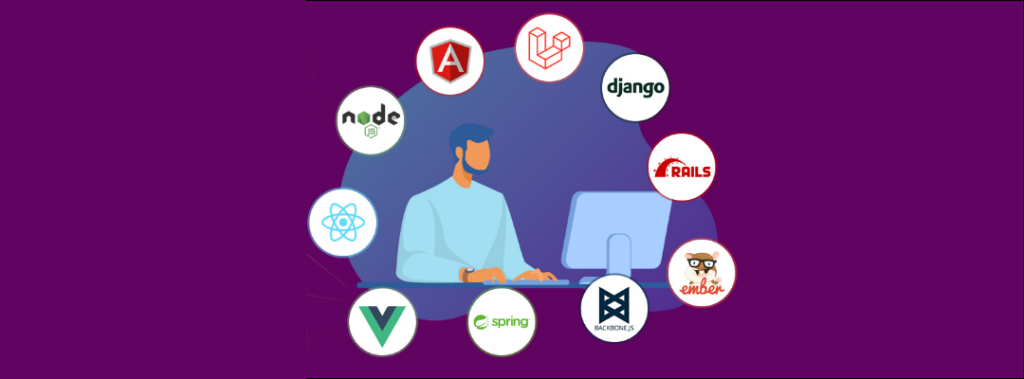
The requirement for teams to quickly provide custom software that can be scaled and evolved to meet client needs has never been greater as application development continues to change. You need to up your business game with intuitive web application design and development if you want to engage, attract, and convert potential visitors into customers. A web application framework is one of the tools that can, thankfully, make the development of web applications simpler. So, the question is, how do you pick the best framework for web app development? According to our observations and experiences, these are the top frameworks used by development teams and other information you should be aware of. The question of the finest frontend vs. backend frameworks is essential since the web app performance will be based on the tech you choose for both aspects. Frameworks For the Front-End and Back-End A web-based product’s back-end (server-side) part manages its internal operations, while the front-end, or client-side, part manages user interactions with it. Together, they construct a fully functional web application. The most popular web app frameworks are split into two groups based on that classification. Frontend Frameworks The front-end portion of a web application can be created using front-end development frameworks, which offer a prewritten structure. They set up the data flow based on user input, structure the functionality, and manage user engagement as well as style elements. Front-end frameworks are therefore used to design user-friendly interfaces and quickly find, organize, and update data obtained from a server or API. Front-end frameworks’ underlying technologies are HTML, CSS, and JavaScript. Some of the frameworks that are most in demand are React, Vue and Angular. A frontend web app framework will produce the right face for your projects so your users can get a sense of your brand through engagement, so it’s necessary to pick the right one. Let’s go into more detail about some of the best web app frameworks. 1. React React should be included in the most widely used web development frameworks list. Although technically speaking, it is not a web app framework; many developers know its ability to build component-based apps. Our business is not an exception because we frequently actively employ React for web development. React may be used on both the client side and the server side because it is a robust UI library in the first place. This technology is essential for producing engaging user interfaces and component-specific apps that divide the functional design into simple-to-manage pieces. Similar to this, React’s virtual DOM makes it possible to build apps that function normally even under extreme demand. 2. Vue One of the newest and most promising open-source development frameworks, Vue has strong support from the community. This web app framework has gained widespread adoption because, among other reasons, it is simpler to learn than Angular and has a more lightweight character than React. 3. Angular Angular is a powerful web development giant that was created in 2010 and completely revamped in 2016. It is an open-source web app framework for development that was converted from JavaScript to TypeScript. This significantly increased the capacity for development and prepared Angular for large-scale Enterprise-grade applications. The architecture is connected using two-way data binding, which enables dynamic updates to be added to the backend with each user interaction. The framework is a comprehensive choice for cross-platform solutions because tools and packages are available for almost any use case. On the other hand, the Angular web app framework is frequently bigger than other front-end development frameworks, which may impact overall performance. We’ve already covered the key differences between React, Angular, and Vue, so you can learn more about comparing these well-liked front-end development frameworks. When you need to develop progressive web applications and SPAs as quickly as possible, it can be challenging to choose the ideal alternative. These responsibilities are handled by Vue thanks to its adaptability, integration-ready components, reactive two-way data flow, and small by default size. Backend Frameworks The best frameworks for web apps offer a foundation for delivering an application’s server-side architecture. They take care of all database and server operations, build URL mapping, and put the necessary structures in place to carry out the intricate details of business logic. A back-end developer oversees effective communication between the various services that make up a fully-functional online application while keeping an eye on user involvement. Back-end frameworks’ foundational technologies are Python, JavaScript, PHP, and Ruby. The frameworks most in demand are Django, Spring, and Laravel. Let’s get into more detail about some of the top backend frameworks to build web apps with smooth inner workings and easy fixability. 1. Django The python-based open-source project, Django, includes JavaScript code in several apps. This web app framework was first introduced in 2005 and has since been developed and improved, emphasizing scalability, performance, and cybersecurity. Due to its excellent support for the most common database back-ends and its wide range of out-of-the-box features, developers can use it. Since Django is built on “Convention Over Configuration” and the DRY (don’t repeat yourself) patterns, applications built with it launch more quickly than those built with other web development frameworks. The maximum development speed of Django has already been used by many well-known brands, including Instagram and Google Development, to publish their apps. 2. Spring Another deserving open-source mention on our list is Spring. It offers support for Java programs with straightforward logic and quick execution. The popularity of this web app framework began to soar with the advent of the Enterprise JavaBeans (EJB) model for various reasons. It first aids in building a strong framework for developing enterprise-grade apps. It also uses a potent extension suite and a POJO-based programming model. Aspect-Oriented programming, dependency injection, and strong modularity are some of the other potent aspects that allow Spring to promote decoupling and provide reliable code for high-performing programs. It is important to note that web development frameworks typically have a modest file size, which makes Spring transparent and lightweight. 3. Laravel Due to the clear
Top Custom Software Development Challenges and Their Solutions

The custom software solutions industry has evolved into a significant force driving the all-encompassing advent of technological progress in our lives. This is because of the penetration of digitalization into an ever-widening circle of spheres. The IT sector is currently thriving with steady growth, opening up appealing financial and developmental vistas. However, to meet the expectations of consumers of digital products, the IT sector stakeholders must contend with many widespread issues in custom software development in the highly dynamic, difficult, and competitive early third-millennium world. Some of the common challenges faced by the average custom software development company include the growing complexity of tasks, the instability of the national and international market landscapes, the rapid obsolescence and depreciation of both hardware and software, the constant updating of techniques and tool lists used in the industry, and the desire to accelerate the product development cycle. Challenges to Custom Software Solutions The field of software development methodology is difficult and demanding. Developers frequently become frustrated at work due to the growing complexity of software projects, time restraints, and a lack of resources. We’ve put together a list of development challenges & custom software solutions, so let’s dive deeper. – Poor Guidance & Management The absence of project managers’ guidance is one of the most frequent problems in software development. If developers are given unclear custom software solutions, it may confuse and prevent them from performing their duties effectively. Whether it’s a web app development project or customized software, the project may be delayed as a result, which could lower the overall quality of the software. Solution: The appropriate custom software solutions require making a clear and concise project plan. It’s the best way to get past this obstacle. For developers to monitor their progress and ensure they’re on schedule, it should also include a timeline. To ensure everyone is on the same page, the project plan must be updated if the project manager changes their mind about something. – Inadequate Product Development Plan Many startups run into this significant roadblock as they take their first steps in the industry and create their first software product. Startups frequently underestimate the value of careful planning ahead and exaggerate their strong points, taking on more than they can handle. Without a proper software or application development plan, the process is incomplete & at risk. A project’s success is not assured by a rush to finish it with all available resources. As a result, the project is weighed down by disorganized and ineffective efforts, barely reaching the first milestone, much less finishing it. Solution: A comprehensive roadmap of the future project must be created before your team starts working on a software product. It should include information on the product’s specifications and scope, the budget that will be set aside for it, the expected quality of the finished product, the types of software development required for implementation, potential risks and a plan for mitigating them, the communication process, and the project’s schedule and completion date. Of course, it is impossible to follow the plan exactly because custom software solutions require minor adjustments or, occasionally, a complete overhaul. Realizing what expertise will be required and beginning the building phase depend on having a well-defined vision of the product concept and a realistic estimation. – Difficulty In Time & Resource Allocation Another frequent issue is the difficulty of estimating the time and resources needed for custom software solutions. Given the limitations of budgets and timelines, it’s critical to have a realistic schedule. Developers can then plan their time to improve a particular feature or work on software/application testing or maintenance and support, for example. A portion of the custom web application development project that a developer spends insufficient time on may not function properly or may lack certain features. The project will be delayed, and other team members may run out of work if we underestimate how long it will take to complete a task. But if it takes longer than anticipated, the project’s schedule will inevitably be extended. Solution: By dividing larger tasks into more manageable pieces, you can avoid this frequent problem. To ensure they’re tracking how much time they spend on each task, developers should also use time-tracking or project management tools like Toggl or Harvest. Setting deadlines will also aid developers in prioritizing their work and determining which tasks must be completed by a particular date. They should prepare a backup plan and consider any potential issues with software development. – Problems With the Technology Stack The requirements have been made clear, and the product plan has been approved. Does it appear that nothing can prevent you from top-notch custom software solutions? Wrong. The development team now has to deal with technical difficulties in the software development process. These difficulties typically come in three different varieties. The first step is to determine what should be part of the technological stack required to complete the task. Professionals in the industry should make this choice because they are best equipped to know which tools, libraries, and frameworks will work best for a given task. The second is to guarantee that the ordered product integrates well with the customer’s legacy software. You’ll require a trained professional. The third is to stay updated on new IT developments to enhance the implementation process. Even for seasoned experts, let alone the many proselytes in startups, keeping up with all the novelties in the digital sphere is difficult due to the rapid pace of technological advancement. Solution: Enlist the aid of experts to kill these three birds with one stone. Golpik offers a wide range of facilities for various custom software solutions. It can assist you in selecting a scalable tech stack that complies with industry standards and seamlessly fits the needs of your specific project. Whether it’s web app development or customized mobile application development, or any other kind of software, this will save you from having to find a suitable tech stack on the spot when the project is already well
The Ultimate Formula for Building Scalable Web Apps

With so many critical elements to consider, scalable web app development with high-performance metrics is difficult. Although the success of your app may seem like a dream come true, it may not have the resources to continue to provide a top-notch user experience as it gains in popularity. The good news is that you can avoid common pitfalls that result in a subpar user experience and wasted resources by adhering to the best practices we’ll cover in this article. Read on to learn how to ensure your web app runs smoothly. It’s time to end your web applications’ subpar performance and create new ones that repeatedly draw users back. There are various factors to consider with custom web application development for scalable web apps. Let’s dive deeper into some of the best practices to improve web app scalability & common issues to focus on. How to Fix Scalability Issues With custom web application development, scalability problems can have many different root causes, but the most frequent ones are application code, constrained database capabilities, and hardware resources. – Application Code Imagine you have a website or app where users can upload pictures. A large image might cause the application, which is only running on one thread, to crash. These slow request pipeline components constrain an application’s response time and scalability. It may create a need for extensive web application maintenance. Moving sluggish components into asynchronous background jobs is the best fix for this issue. For instance, requests for image uploads could be included in requests and sent to a queue. As soon as the job is scheduled (in milliseconds), the user’s request is satisfied, and a background worker takes care of the actual uploading task after that. – Database Constraints Consider a financial program that creates a stock chart with various technical indicators. Each indicator requires a complicated calculation to be made on the spot with time series data. The time required to perform the complicated calculations could reduce the application’s scalability and slow response times. Caching pre-calculated values and running calculations in a separate background job are the best solutions for these kinds of issues. For instance, you could compute the historical time-series data for a technical indicator up to the present period and cache those values. Due to this, it is no longer necessary to compute the entire time series for each request & this will enable a more responsive web app. – Hardware Resources Consider a financial program that creates a stock chart with various technical indicators. Each indicator requires a complicated calculation to be made on the spot with time series data. The length of time required to perform the complicated calculations could reduce the application’s scalability and slow response times. Caching pre-calculated values and running calculations in a separate background job are the best solutions for these kinds of issues. For instance, you could compute the historical time-series data for a technical indicator up to the present period and cache those values. Because of this, it is no longer necessary to compute the entire time series for each request. The Best Web App Development Formula for Scalability Now that you’re aware of the commonly found scalability issues with web application development, let’s dive deeper into some of the best practices to scale your web apps to new heights. – Use the Appropriate Tech Stack Whether your business uses XAMPP, WAMP/LAMP stacks, or another web server platform, you should use a technology stack that your business can afford. If you want to guarantee compatibility, use a hardware-based load balancer. Ensure that the app functions effectively for your users as well. Numerous plug-ins are available if you choose to use a database other than MySQL. – Analyze Requirements Learn how your web application would work and look. Make sure the prerequisites are met for whichever type of app you create, whether it’s a progressive web application, static, dynamic, or any other kind. Once you clearly understand the requirements and overall scope, you can continue with the remaining web app development steps. In order to speed up the application development process, you can involve your team and stakeholders during this phase. – Choose the Right Code Architecture You should be aware by this point that creating a maintainable and scalable codebase depends critically on your choice of application structure. It involves looking at your app’s features and how users engage with it. A vertical or horizontal scaling architecture was an option. Alternatively, you can decide on the option that can scale both vertically and horizontally. – Use the Finest Security Measures As you may already be aware, there is no one method for achieving complete security because numerous unforeseeable events can happen at any time. However, there are some strategies you can use to lessen the likelihood that your web app will experience security problems. A good firewall is the first line of defense against threat actors or hackers. You may already be aware that a fireball prevents or blocks access to the application for anyone outside of your company. Another crucial security measure is configuring the user directory so your web app can check for and update the user information in real time. – Employ the Right Team Make sure the development team for your company is qualified and has the necessary skill sets to complete the project. Hire a professional app development team if you don’t already have one. These groups will help you with your applications and take care of any bugs that may appear. If your development team can manage their tasks and increased workloads, they will perform at their best. You might consider outsourcing the creation of your app to a custom web application development company. – Appropriate Your Web Apps According to the User Instead of focusing on your app’s functions and looks, you should always consider how users will interact with it. Consider the actions you want users to take, for instance, if you built an app with a contact form. Like when
How To Grow Your Business with Laravel Web Development in 2022-23

The business sector is reaching new heights thanks to technological advancements. Businesses are becoming smarter as a result of utilizing technology to compete in the market. Obtaining digital solutions helps in reaching business objectives efficiently. One such technology that has gained recognition for website development is the Laravel web development framework. 9.45% of developers use Laravel for the development process, according to a survey report. The best option for creating Laravel applications and websites for businesses is the Laravel PHP framework. It can be difficult to choose the right framework for your websites. Let’s go into a bit more detail about the advantages of using Laravel as the primary PHP framework for your web-based projects, the reasons for its popularity, and why it’s the best choice compared to others. Why is Laravel Web Development The Best Compared to Others? Following the release of Version 3, which featured elements like the command-line interface called Artisan, database management system, and packaging system called Bundles, Laravel became more well-known. Laravel 1 and its first beta were both released in June 2011 after it. Laravel 8, which was released on September 8, 2020, is the most recent version. With each update, Laravel introduced new features that were detailed, expressive, and easy to understand. This made developers adopt Laravel development services, and it enhanced their application maintenance skills as well. Laravel web development provides the best framework for numerous, not just one, reasons. Numerous security features built into this PHP framework shield it from outside intrusion and cybercrime like hacking. Being an open-source framework, Laravel is renowned for its simplicity and increased coding effectiveness. Due to its ability to customize web applications and speedy Laravel web development, many businesses and enterprises prefer Laravel over other development frameworks. Unlike other frameworks, Laravel code doesn’t call for a break. HTML can be used to manage it on a single database. Additionally, it utilizes the Model-View-Control pattern (MVC), which makes it easier to carry out projects of any complexity. Reasons for The Popularity of Laravel Development There are also reasons why Laravel development companies started gaining increasing popularity over the years. Even though, Laravel web development provided new means of convenience, shifting from traditional frameworks was difficult for a lot of firms. However, with time, the benefits began to catch on. Advantages of Laravel Web Development The benefits that a business receives from using Laravel web development are listed below. Simpler Authorization Techniques No company should ever put its customers’ private information at risk. Software developers can more easily implement authorization when creating websites with the Laravel PHP framework. One of Laravel’s biggest benefits is the ease with which user authentication can be accomplished. Easy Mailing Coordination Every time a new device is used for logging in, every web app notifies the user. You cannot rely on the safety standards it adheres to if it doesn’t. On the other hand, websites built with the Laravel PHP framework send emails to protect the user account. Laravel’s built-in swift mailer library makes it simple to set up individual account APIs that send email notifications when they discover a new login from a different device. Correction of Technical Issues Technology advancement also brings more advanced hacking techniques. Every codebase is at risk of being compromised. Laravel stands out from the competition in areas where most frameworks require additional help. One of the key components of Laravel web development is improved security. When a website is created with Laravel, security risks like cross-site forgery and scripting are eliminated. Consequently, businesses can be sure that their websites are highly secure. URL Routing Laravel includes a configuration feature for URL routing. With the help of this feature, users can view the URL’s linked page directly on the current webpage without being redirected. The inclusion of a built-in file within the framework gives rise to the possibility. Users can access safe and recognizable routes to view the webpage thanks to the built-in file. As a result, companies using Laravel websites do not have irritated customers. Queue System There are numerous advantages & benefits for businesses using Laravel websites. The message queue system in Laravel is one of its key benefits. The queue system’s API enables users to control running tasks in the background as a request is processed by the webserver to receive a response. In this manner, Laravel web development productivity is maintained without impeding or delaying an ongoing process. Desirable Laravel features for businesses The following characteristics of Laravel make it a popular option for creating business websites Artisans’ Repeated activities cause boredom and reduce productivity. The built-in tool Artisan helps to slow down the Laravel web development process. With the aid of this tool, it is possible to build database structures that can be easily migrated. Template Motor Laravel’s template engine aids in producing some aesthetically pleasing website templates. All free or paid templates come with various widgets that can be quickly integrated to improve the web page’s aesthetic appeal. Libraries and Modularity The Laravel PHP framework includes a variety of libraries. These object-oriented libraries are simple to integrate into the website without altering the code. These libraries include capabilities like checking the number of active users (DAU/MAU), encrypting website passcodes, and preventing cross-website request forgery. Support for MVC Architecture A big part of Laravel web development is the MVC architecture support. The website’s performance is enhanced by MVC support, and documentation execution is trouble-free. System for Validation & Files To detect errors, use the validation feature of the Laravel PHP framework. It automatically tests the code to check for errors and produces reviews for the same. The framework also includes a file system that enables users to access data from cloud-based files. Bottom-line Every business wants to succeed quickly in this digital era of constant advancement. Success in a shorter time may be challenging, but it is not impossible. New technologies have met business needs and aided in goal accomplishment whenever the world has thrived for competency and improvement. Laravel