
Agile and DevOps: Optimize Your Development and Operations
What is SDLC (software development life cycle) The process in which we formulize that how we developed software within the given budget and resources. It involves composing an arrangement of interrelated programming code, which gives the real picture for the software creation. It comprises planning, defining, designing, building, testing and deployment. The life cycle characterizes a technique for making the quality of software and the generally advanced process of development along with a standardized approach. Software development methodologies: There are lots of software development methodologies and applications for specific projects not for all. All methodologies have distinctive qualities and shortcomings and exist for distinctive reasons. Here’s a list of the foremost commonly utilized computer program improvement methodologies. Agile Devops What is Agile? The term “Agile” was coined in 2001 within the Spry Pronouncement. “Agile may be a term used to depict approaches to computer program improvement emphasizing incremental approaches, group collaboration, arranging, and continual learning, developmental improvement, early delivery, and nonstop advancement, and it empowers adaptable reactions to change. In computer program improvement, agile include finding prerequisites and developing arrangements through the collaborative of self-organizing and cross-functional teams and their customers. What is DevOps? DevOps is the combination of operations and approaches that is for an organization’s capacity to convey applications and software faster than conventional computer programs. This speed empowers organizations to superior to serve their clients and compete more effectively within the market. DevOps is almost following the boundaries between customarily groups, advancement, and operations. Beneath a DevOps model, development and operations groups work together over the whole program application life cycle, from improvement and test through sending operations. Misconception that Agile and DevOps: There’s a common misguided judgment that agile and DevOps cannot work together, which does a disservice to everybody within the program development and in a related field. In reality, both approaches can altogether include straightforwardness, review, and adaption to way better empower items to create, provide and support complex items. Both agile and DevOps encapsulate extraordinary thoughts and enthusiasm that can include esteem to how groups work, guaranteeing the victory of their organization in a world where commerce is both driven and disrupted by software. Both agile and DevOps want to provide esteem to clients in a more successful way, but from diverse beginning points. Agile with the engineer, and DevOps from operations. Their accentuation moreover changes, driving individuals to accept that they are distinctive things. Agile emphasizes group intuition, culture, and values, whereas DevOps emphasizes conveyance pipelines and flow. Agile and DevOps Can Work Together: Agile and DevOps may be diverse, but that doesn’t mean ought to receive superiority to one another. The Agile technique and the DevOps technique can work together and give incredible efficiency. “The two terms are certainly diverse; the agile focus on an iterative approach to improvement, and the DevOps brings two traditionally isolated areas together one is improvement and other is operations, that are ordinarily separated. But the extreme objective of each one is of both to create collaboration and satisfaction to the customer,”. The great news is that it’s not essential to commit to one approach over another. A blend of both techniques can be utilized to guarantee and increased productivity. Both have major parts to play when it comes to computer program advancement and arrangement, and one can be utilized to empower the other. DevOps and agile are not commonly the same. Any organization transitioning to DevOps ought to easily shift to agile workflows. When utilized together, both processes make successful software, more advancement, and lead to superior products. Agile and DevOps are particular, even though their similitudes lead individuals to think they are the same. This does both agile and DevOps a disservice. Both are computer program improvement strategies; there’s no debating this. Agile has been around for over 20 a long time, and DevOps came into the picture decently recently. Merging Agile and DevOps: Numerous points of interest are common in agile and DevOps. Counting, speeding up performance, higher client demands fulfillment and successful collaboration inside a team. Combining the core of DevOps with the culture of agile requires changing in existing methodologies and operations but having little changes. Understanding: The agile technique requires individuals who take an active part in projects. The common understanding is particularly vital for both agile and DevOps. To effectively deliver the product, they have to know each step required to convey the product. Collaboration: DevOps includes the improvement in group working for particular operations. The already specified parts include all aspects of the preparation and operations. Practices: Both follow lots of practices and repetition just for the sake of fulfilling user demands and expectations. Automate workflows: As mechanization is a fundamental portion of DevOps improvement, it ought to be included within the agile workflow and extend its working mechanism. Rising fields, follow automation from manual workflows within the IT environment. Measure success: Blending agile and DevOps moreover includes evaluating and measuring the end-to-end development. Agile Vs DevOps: Agile: Agile follow an iterative approach that centers on collaboration, client input, and little, quick releases. Agile makes a different strategy for complex projects. Agile focuses on early changes. Agile strategy can be executed only for strategic models like a sprint, secure, and scrum. Agile advancement emphasizes preparing all group individuals with different skill sets and raises their skills. Small-Group is usually used agile development process. As littler is the group, the fewer individuals on it, the speedier they can move. Agile follows flexible development in terms of dates. DevOps: DevOps is considered a way of bringing improvement and operations groups together. DevOps’ main focus is on end-to-end building processes. DevOps is consistent in testing and delivery. The essential objective of DevOps is on collaboration, so it doesn’t have any commonly acknowledged framework. DevOps isolates and spreads the ability sets between the improvement and operation teams. DevOps try to fulfill development on exact dates. The actual objective is to convey
How to Test Your MVP without Significant Investment

What is MVP The concept of a Minimum Viable Product (MVP) was popularized by Eric Ries in his book ‘The Incline Startup’. His definition of MVP is “The Minimum Viable Product is that the adaptation of modern items that a have not too many features but accepted by the customers in the early development cycle of the product. MVP could be a implies to test the item simply during its development phase and to be launching within the advertise. A key premise behind the idea of MVP is that you produce an actual product (which may be no more than a landing page, or a service with an appearance of automation, but which is fully manual behind the scenes) that you can offer to customers and observe their actual behavior with the product or service. Seeing what people do concerning a product is much more reliable than asking people what they would do. Implies an item that has basic highlights and more often than not, no clients need to utilize or purchase it. Practical is the item that an engineer dreams of making with the assistance of available resources to fulfill the requirements of clients. So the term MVP implies a way to construct such a product that has all the highlights and at the same time, has used fewer assets. It moreover ought to be able to urge legitimate input which is how the ultimate item will be developed. Five traits of a successful MVP 1. MVP success criteria are accomplished when the MVP is centered on one person. This implies that a buyer persona is utilized to target the audience and is as particular as characterizing one single individual. Because it is said that keeping in my one individual and solving his issues along with your item gives the most excellent comes about. The greatest botch ordinarily made is building for different groups of onlookers. 2. Indeed even though we are building for one individual, we ought to tune in to numerous feedbacks. Now and then distinctive suppositions and sees fathom most of the issues. On the off chance that individuals fit into the category of your item, take their criticism seriously. 3. MVP does not cruel you have got to do less and anticipate more. Your MVP ought to be able to grandstand what issues your item can illuminate and how can it unravel them. This is often indeed more imperative in case your item as of now has huge competition. 4. MVP test is fair as critical as building an MVP. It is outlandish to gain cash from a fizzled MVP, no matter how much you attempt. So, make sure testing the MVP is an imperative portion of your improvement process. 5. An MVP is assumed to discover botches and assemble criticism. Keeping the dispatch of the MVP constrained to as less numerous individuals as conceivable is going to be an astute choice. What makes a good MVP? Effective MVPs tend to share comparative characteristics. The foremost important of which could be a member’s capacity to unravel a problem or deliver a result that addresses the same torment focuses that you just expected your real participation to address. If it doesn’t, you won’t get a strong sufficient marker that your enrollment will be of intrigued to your gathering of people. Another thing to be beyond any doubt approximately your MVP is that it shouldn’t take a part of the time to create. You don’t need to spend a pointless amount of time arranging and making it as it were to discover that no one needs to purchase it. That’s not to say you shouldn’t make it incredible. You completely ought to, but it ought to as it included negligible forthright work on your part. Sticking down the proper cost is imperative, and I propose charging a figure comparative to what you intend to charge for the ultimate product. Members can either make a single one-off installment (as a rule the identical to your month-to-month charge for your enrollment) or a yearly installment in case you accept your MVP has the same client lifetime esteem as that of your membership. Whether or not individuals are willing to pay for your MVP approves your thought since in case no one needs to pay for the MVP, they likely don’t need to pay for the real participation either. Why does your product need MVP? Who would have envisioned that apps like Twitter, Instagram, and Uber would blow up like this and would pick up world ubiquity? We are guessing exceptionally few. In reality, Twitter picked up its notoriety through progressive development. So, why do you would like an MVP? • Save Resources: When an app is created with numerous highlights and alluring plans, its advancement fetched is tall. An MVP is created with constrained resources and is still an item. The fetched of creating an MVP can extend between $10,000 to $20,000. Be that as it may, it can be less than that as well. • Define your audience: As a startup pulling in modern clients without investing an overwhelming sum in advertisements is very troublesome. MVP for new companies could be a way to bring in more users by investing less. On the off chance that clients discover your item great sufficient, they will communicate it to their companions and that’s how things go viral. Also, when the ultimate item is propelled, getting paid clients from the existing client base ended up possible. • Get feedbacks for your product: As expressed now in our article, titled “What is Minimum Viable Product “?considering MVP makes a difference with gathering client input. This feedbacks assist gets to be a way to get it how certain highlights ought to be built. And this way spares the designer the time and takes a toll to go all-in with the item whereas guaranteeing way better advertise response. • Save time and engage in development:
What Goes into Building a SaaS Product in 2021
It is of great concern as to how much SaaS product costs in building in 2021. This factor is of more relevance when a firm wants to invest in a SaaS product. The latest trends need to be considered when answering this question in detail. Many factors are involved in finally building a SaaS product. The major steps include the required functionality, API integration, timeline, and overall project scope. There is also a trend of changing the cost of a completed SaaS app. It is dependent on the specific SaaS development service providers, making the SaaS application factors more interesting. The firms need to know in detail about the cost of building a SaaS product in 2021. Many software-as-a-service trends come in between when considering this process. The firms primarily need to understand their customers’ ongoing demands and latest trends while meeting the product line faster. Latest SaaS Development Trends: Rising of SaaS Tools for Remote-based Collaboration: The pandemic of COVID-19 at the start of 2020 has led several firms to shift to remote work. The resulting outcome was that the resources seemed highly preferable for different online collaboration tools. The major famous tools included the following: Video conferencing. Google Hangout, Zoom, and Skype. Online Chatting. Chanty and Slack. Time Tracking Tools. Everhour and Harvest File Sharing and Cloud Storage Applications. Google Drive and Dropbox. Collaboration Platforms and Project Management Tools. Arsana, Jira, and Trello. Vertical SaaS: Vertical SaaS products are developed for satisfying the firm requirements relating to a specific industrial sector. Concerning this fact, there is a difference in horizontal SaaS apps, such as aiming at serving different domain sources where possible. The vertical software-as-a-service market and its big players are as follows: Property Insurance (Guidewire) Pharmaceutical Management (Veeva) Manufacturing (Infor) Switching from SaaS to PaaS: In today’s era, there is a tough level of competitors in the SaaS markets. As a result, firms consider innovative modes of retaining customers. An example includes scaling a product while moving it from SaaS to PaaS. Consequently, firms get agile, fast, and scalable SaaS applications to have competed in the growing markets. The examples of SaaS market leaders are Salesforce and Box. They have a successful adoption of the latest trends in the market. They migrated from SaaS to PaaS, enabling them to increases the demanding source of every of their product. Mobile-first Approach: There is a continuous growth in the rate of mobile users. By 2023, there is an expectation of a statistical record to be reached at 7.33 billion. The below graph better determine the fact of such calculation: The above huge figure drives firms to remain one step forward to the SaaS apps through the mobile-used device. Many online sources run different high-tech mobile versions to facilitate their customers and to meet the increasing trend of the market. These sources include Trello, Jira, Skype, Dropbox, and many others. Growing Popularity of MicroSaaS: Being termed as a small tool, MicroSaaS has adds-on with different extensions. It is developed to improve the functions of current applications. The fact about the popularity of the MicroSaaS app is that it allows firms in obtaining a competitive benefit while seeking an unused niche in the saturating markets. The MicroSaaS has been adopted by different well-known firms as follows: Grammarly (editing tool) Social Sprout (social media-driven software) Main Challenges of SaaS App Development: There is a difficult process in developing SaaS applications. The process involves the confrontation of specific disadvantages and barriers. These obstacles could result in increasing the overall cost of SaaS development. Thus, everything needs to be well-known when addressing these challenges. The major general mistakes should be avoided during app development through the adoption of strategic ways and in an easy manner. There are different tips available when processing the SaaS development, such as keeping the costs of building SaaS apps upfront and working. Poor Execution: Upon failure of the SaaS projects, the firm entrepreneurs mostly start blaming the SaaS ideas. Though the idea could be of great brilliance, its systemic working might have some glitches. There can be a skyrocketing cost of building a SaaS product if the poor execution becomes the reason for overall failure. A properly applicable SWOT analysis is initially recommended to start the execution of the overall business idea. More importantly, business owners need to understand and identify the SaaS project SWOT analysis considering the strengths, weaknesses, opportunities, and threats. The above strategic idea and process could finally lead the business owners to the right path of success. It can also determine the factors that usually cause facilitation or impediment during the execution process. Lack of Trust: The overall SaaS project is better determined through the trust of work and concept. If the customers have no trust in your SaaS product, then there is a possibility of less usage about it. This fact is specifically right for SaaS apps where a huge level of sensitive information is stored or is on record. Thus, the top priority should be given to the SaaS application security. The SaaS product should initially provide role-based access and two-factor authentication. This factor can help in the protection of user data much securely. Moreover, there should be a process of introducing a strict data deletion policy. It can determine how the storing and deletion of users’ sensitive data is processed and retrieved. Afterward, the SaaS product development process should start facilitating their customers with the provision of field-level encryption. This feature can allow customers to select the fields that have strong encryption. It is mostly applied in terms of social security numbers and credit card numbers. Small Audience: In the previous sections, we have determined great emphasis on the particular industrial sector like the famous SaaS trends. However, there could be a huge error when selecting a niche that has less concern. Thus, firms might be at risk and can have not to sound customers. In the future, the small audience could have a low impact on your overall SaaS product
Cloud vs Data Center: What to Consider for your Business Startup
The process to store and move data has rapidly emerged with huge expenses and modern aspects. The selection of software, hardware, and infrastructure need is powerfully bounding several firms. The companies are working hard to develop a robust system that can integrate a well-defined and cost-effective organization. The primary decision-making process of businesses and organizations would generally assemble many IT-based project selections. It is specifically done to process the company data and systemic power to a physical residing level. It is obvious that the supporting infrastructure, servers, and computers are generally bought and set up with on-demand rates. However, it is thankful for the advanced virtualization and distribution of computer systems that the development of the digital system has become possibly easy. They are readily done for hosting and functioning the entire physical remote system and hardware to be systemically working. The companies have been confronting with the major two options of Cloud and Data Center nowadays. These two selections have been charting the development of the traditional data center into a modern-based cloud data center (CDC). It is always good to know the difference between such two kinds of computing-based systems. They could support any business to grow and make a decision independently and set up a data pipeline successfully. Cloud vs. Data Center: What is the Difference? A data center is a specific location that provides access to any member of the firm. It provides housing of ancillary devices and collected hardware that is ensured for running an internal-based network. It is also used for storing data, running different applications, and hosting digital systems. The traditional data center is on premise base, clarifying that every function is running with the physically site-based system and office-based spaces. A data center could be of some computer networks through the whole building, blade servers, climate-controlled room, or a desk. Its management is done through the in-house IT group and its payment is made through the firm accessing the data center. In general, the cloud or the cloud data center has been serving a similar aim to the traditional data center. However, its location is set elsewhere in the physical term. It is also used for distribution over different locations. Similar to the traditional data center, the CDC bases the IT infrastructure system of a firm while managing its third-party services. Security: Apart from the growth advantages of computation and cloud storage, several firms select for retaining in-house IT groups. They do it for remaining on-premise owing to the measures and controls that are affordably provided through the traditional data center. Through the administration and development of a personal system, a business could ensure keeping full responsibilities and authority of the respective contents and data infrastructure. The process of utilizing the cloud enables every customer to reply on its essential factors of hosting, cybersecurity, and reliability. It particularly includes strict compliance needs and related performance and high availability, leading the decisions to be done directly through the traditional data center. It is always a top priority to keep information secure regardless of the cloud or data center on-premises. Every organization needs to ensure the protection of their records, proprietary knowledge, and defending against data breaches. It is good to know that the on-premise data center and the cloud data solution ensure the best level of security for all organizations type. Cost: The process to build and plan traditional data centers includes few time constraints. These generally include hefty upfront investments and continuous working. Some kind of hidden cost is involved in the process from the administrator’s payment to the power-based bill and HVAC payment. It also involves troubleshooting, communicating, documenting, and man-hours work and payment. On the contrary, no basic investments are required in the cloud. The CDC pricing scheme is also comparably much deliberative. For example, it has a straightforward and transparent payment system that estimates the overall payment of on-premises data centers. In general, every customer makes the payment for the exact resource being used. It could include the storage capacity or the computational power. It completely minimizes the entire price of ownership whilst correcting the account and financial plans. The cloud data center is directly maintained and administered by the provider. It means that all worries about outages, downtime running, repair, tuning, and software updates are done directly by the provider. Customization: The cloud is generally termed Infrastructure as a Service (IaaS). It is due to the customers being getting accessible flexibility and virtualization instance of hardware that the concerned providers offer to the organizations. This type of provider capitalizes from increased resources and better infrastructure, particularly thanking the focused delivery of specific services. It clarifies that there is an easy-to-use system in the cloud data center. It has high customization business-driven needs and has more agility over the traditional data center. The process to tweak the on-premises system needs to be focused on working while purchasing an added software and hardware. Similarly, the cloud provides an ability of storage capacity, networking capability, and computing resources through the fingertips on the button. Scalability: There is an on-demand resource in the cloud, making the benefits of a CDC more transparent and rapidly deployable. The scaling process of the traditional data center has the involvement of new costs, new challenges, and new plans. The cloud has the capability of scaling this systematically in the due time with much cheap cost. In the period of big data, firms are continuously finding the volume of related data expanding while revealing completely new resources. The cloud is truly prepared for the constant increase of data, making its scalability more unique in nature and a more future-proofed application. Cloud vs. Data Center: Which is Better for your Business? In the recent period, several firms have changed their options toward the cloud for a better infrastructure requirement. CDC is the right selection for a small business as it can provide correct computational sources while not requiring any IT-based team to deal with the expensive hardware.
Taking Advantage of the Code Audit in 3 Quick Steps
The process of executing a recommendation and the result of the code audit can increase the life of digitally developed products. It possibly pushes it to the next phases of market shares. It then helps in saving the life of the entire business. It is directly a fair matter to arrange an audit, making the counting of a business with the real resulting outcome. Businesses drive a code audit and related information for transforming and updating a platform, website, or app. It’s all about auditing the digital product. There comes a time when a business needs scaling of their large markets. Businesses also start adding newly developed features for different users. What are a Code Audit and Its Expectation for Business? A code audit is an exercising system of checking the digital products through an expertise reviewing method. It deeply involves checking the performance of the product, its reliability, security measures, software architecture, and the entire code quality. A good audit continues to cover different technical-based factors of the product. It further focuses on design components and UX/UI design that impact the way of users’ experience. After completion of the code audit, the resulting outcome recommends the following: The result of a reliable UX and code audit is simply ahead of a general list of problems. Every problem comes with general advice for action to be initiated for better future advantage and evaluation. Every issue needs to be fixed on a priority basis, making the effect of the product truly improving for both the business and users. The success of a product lies in the way of its forward-moving with the problems. It particularly involves working through three main areas of the code audit. These include sustainability, risk management, and technical debt. Code Audit Action No. 1: Sustainability: The objective of a code audit is simply to offer the digital products a newly developed life. Then it creates a great sense of focusing on product-based sustainability. It is a critically difficult problem that is further categorized into four components. These include security, scalability, usability, and maintainability. Security: It is difficult to determine the significance of assuring the app’s security risk to be truly reduced. A spectrum of factors exists in the security issue. The first one is legal compliance where related laws exist for the product usage. An example may include the European Union’s General Data Protection Regulation (GDPR). Afterward, there arises a responsibility toward the customers and users. An example may include the collection, storage, and usage of data of the users and customers. It then includes vulnerability of data loss and theft that generally occurs when the relevant data is used from the clients. Scalability: With every user and its requirement increasing day-by-day, the product requires direct growth onward. Otherwise, the product is left behind the general expectation and benefit. It is usually a lengthy and difficult process, initiating with a prototype to the minimum viable product. Businesses are required assuring the product being fit for the markets. The app is also focused to be working and increasing toward the huge markets. Every step in the process develops with the product and its increasing demands. These entire issues need to be ended in the code, making the app and product workable for all users properly. Usability: The entire product user interface exists similar to an unrealistic thing when the code audit is not in place. It means that the digital product or an app should be utilized with the proper user interface. It becomes counterproductive when the product experiences an unhealthy behavior from any user. The business objective is to completely fulfill user expectations with clearly set forth goals. It also focuses on intuitive navigation and accessible content. It is a great practice that every user experience can have a positive impact on the business-driven product in different manners. Maintainability: It is a level where the business starts understanding, repairing, and enhancing the code of products. At this stage, the code is required to be kept for proper software architecture while updating it for a better experience. The new features also need to be added to the digital product, making it clear, usable, and experiencing for all users. Afterward, there arises a need to regularly automating and testing of the code. It helps in ensuring best practice maintenance while increasing product-based sustainability. The product then undergoes an improvement work where it is checked by several developers/IT specialists. Moving ahead, continuous integration and setting up of programming is analyzed for the code. It includes developers’ way of merging the code with originally identified factors. It assures every conflict between varying working fields is properly and rapidly gathered and worked on afterward. Code Audit Action No. 2: Risk Management: Every project involves some risks. Thus, risk management is a crucially focused component of all projects. The processing factors of executing the code audit are a highly complex matter, therefore, carrying much risk in the system. It requires working on the digital product development phase from the start. The old code seems to have a vulnerability, so it is needed an update and most priority to be focused on systemically. The existing product can also be lost and go alienated, making it complete as a result of an old code of the product. It finally requires an immediate change, making it the most business priority to be focused on time. The success factor of risk management in the development phase is truly a strategic concern. It involves a backlog of different actions and tasks that are necessarily carried out in the code audit. These backlogs help in keeping every task and action on priority while improving them for future concerns. This backlog then supports identifying possible weak spots and addressing every product-based risk. This process of development and improvement drives backlog to the final delivery of the product, clarifying what needs to be focused on afterward and what is achieved from it. The success factor to risk management from backlogs
What is DevOps and Why Does It Matter During Product Development
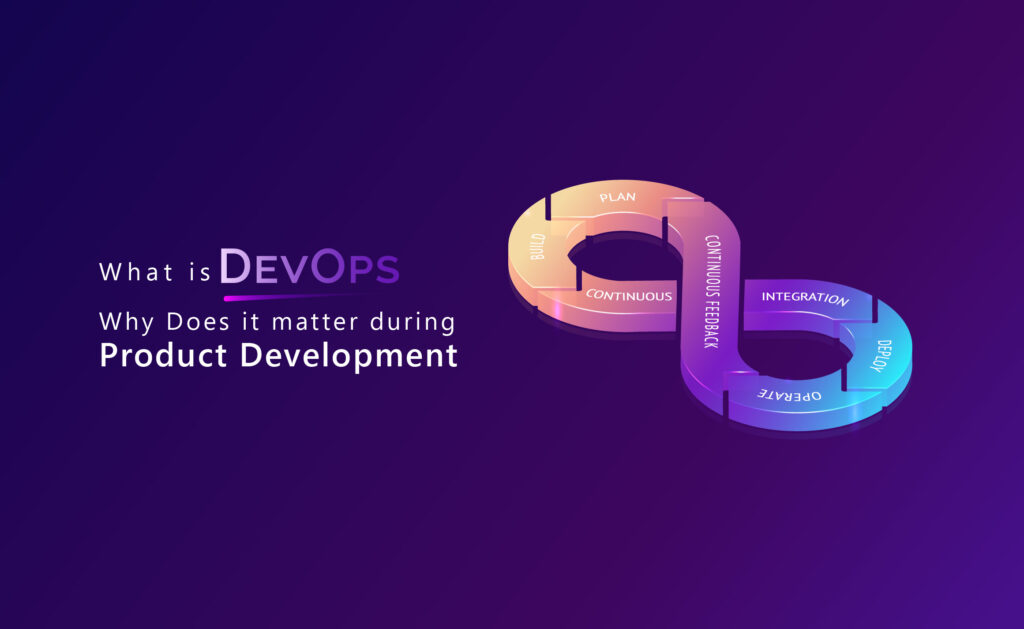
There is a great consideration between dev and ops, making it a complete term DevOps. The word “DevOps” somehow confuses the people, particularly non-technical ones. No formal definition exists for this term and the internet is presenting different guides for solving the term of DevOps. The internet also presents a spectrum of problems and skills to resolve this term, making the essence of the word somehow understandable to both the technical and non-technical people. “DevOps” is a combined term of two factors. The first one is “dev” which refers to development. It specifically means the processing and development of a product. Developers in the scrum team generally represent the product’s owner while keeping the product-based backlog. It assures the processing of a product’s development in the best form. All developers are directly interlinked in developing the product. The second one is “ops” which refers to “operations”. In a non-agile-based approach to software development, the products are developed using the best engineering capability and specialty. The responsibility is focused to release the product while streamlining its operations. A product is finally built using agile software development, ensuring a better chance for continuous development. At all times, DevOps ensures customers’ products competitive and running in a smooth direction. The DevOps team adjusts, changes, and reacts to products to run systematically. It needs a specific way to work while splitting a responsibility in the long-term. Smooth coordination is needed to rapidly respond to changes, making the product run through different stages of development. DevOps could be better understood after understanding the term etymology. A simple definition is that the skills set in agile software development needed for keeping the product’s work with complete flexibility. Common DevOps Tasks: Every developer requires an infrastructure to begin working for DevOps product development. This process needs to be reliable, secure, efficient, and stable. Such infrastructure continues evolving at different intervals while adjusting the product lifecycle. This is the step where DevOps skill becomes important to be considered for further product development. DevOps is not only run through the database server, but it is developed through the infrastructure-based system. It makes the product participating through different architecture and designs. The development team develops the product using different DevOps methodology. It is particularly used and requires more functioning similar to the development of a Linux system configuration. Apart from complying with a formulated plan, it is important to consider Agile Manifesto, making the change and response to be implemented smoothly. DevOps work requires a strategic integration and deployment of product change quickly. The great knowledge of the tools comes into existence when considering the DevOps skillset. It supports teamwork in releasing software smoothly while automating the entire process. For example, it implements the ultimate continuous deployment, continuous delivery, and continuous integration. The concept of “working software” is another term to be considered from the Agile Manifestor when it comes to understanding DevOps. There exist few essential matters that are needed to be covered, such as to craft a product, design it completely, and change it routinely. The complete DevOps product cannot be achieved until the software product is continuously monitored for better performance. It then comprises many things that are needed to be systematically monitored for the better functioning of the software product. This strategic way can help the product to work perfectly while avoiding the consequence of a failure. Why DevOps is Important? DevOps skills should be properly included in the work of a development team. A coordinated team and operations are required to manage DevOps operations, as have been stated above. However, there exist some drawbacks that come during the process of product development. The process of gathering feedback from every user should be done merely after the completion of the product’s finishing outcome. Afterward, the response to change should be focused collaboratively through teamwork, making it highly effective and perfect in the long-term. A product missing DevOps capabilities could experience different problems. Such a product cannot be a part of the agile development team. The missing of DevOps capabilities usually means the following: Other Ways DevOps Can Accelerate the Product Development: The product development lifecycle can be accelerated through a spectrum of ways. Some of the most effective ways of speeding-up the product-development are as follows: Faster Delivery of Features: After a developer develops an application or software, they start connecting it through the IT-based operation. It is particularly done to test the product for better efficiency. If a new application or software is in place, then the process to test becomes necessary for a successful product. Similarly, if there is an updated version of an application or software, then there is already created a testing environment. It then necessitates the IT operation team to start configuring the product, ensure side applications, and add interfaces. Quick Recovery from Failure and Enhanced Quality of Code: Upon releasing a product, application, or software in markets, every developer focuses on the project-based parameters. These include operational responsibilities, future updates, and fixing bugs. This strategic task can be better achieved through DevOps technology. It can support developers to remain updated with the product lifecycle. It improves the quality of code while running through every development stage. It quickly recovers from failures particularly after increasing the quality of code and the fixation of identified bugs. Improved Efficiency: The DevOps methodology motivates every developer to continue devoting the ultimate time to creating values for the product. In general, routine tedious working is needed to ensure integration and automated testing of the software product. However, there comes a matter of configuring or ensuring code integration. The above tasks are generally accomplished through the click of a button. Consequently, there is achieved true work efficiency with complete enhancement. The challenges are also resolved systematically through this factor, making it complete a value-creating work. DevOps – It’s More Than That: Few major general definitions of DevOps are necessary to be considered before initiating a software product development. It requires focused teamwork together with a
How to optimize your cloud performance and reduce cost
Cloud cost optimization is the processing way to minimize the entire cloud spends through the identification of right-size computing services. It also includes identifying the reserved capacity for higher discounts, eliminated wastage, and mismanaged resources. Cloud computing is changing in different ways that help in building and deploying renowned applications. Nowadays, cloud computing models are proliferated and changed with different forms, making it typical for technological leaders to adopt them. An informed decision is initiated by technology leaders for every cloud-based service. The best resulting outcome is achieved through the payment and platform models of cloud services. Businesses are now adapting to the cloud journey, making a framework of different cloud cost-management techniques. Such cloud instances lead to uncontrolled proliferation, driving providers and services to generate a higher cloud cost. It necessitates organizations to mitigate few general challenges that occur during the cloud cost optimization process. Key Challenges of Cloud Cost Optimization: The cloud cost optimization processes involve different requirements, making the product-based lifecycle process run through different demands. It may need the integration of technological innovation together with IT services. Many challenges occur during the process of cloud cost optimization. Businesses require many years of experience while functioning through different cloud projects. The below are few key challenges every business experience when achieving better cloud cost optimization: The Best Practices of Cloud Cost Optimization Techniques: Concerning the matter of cloud computing, there is a proper need to carefully and efficiently using the approach for direct analysis and continuous monitoring. It assures in a right optimal process, leading to achieving proper cloud resources. The below are few demanding effective ways of optimizing spend on cloud services. These ways are also the best practices to manage infrastructure-based efficiency: Cloud Optimization Use Cases: While initiating the migration journey toward the cloud, the AWS-based system involves a setup of a giant solution that supports managing and optimizing spend. The solution mainly includes the application of usage data, tracking costs, organizing resources, and utilizing AWS cost optimization tools. AWS cost optimization support in improving the control via different access permissions and consolidating billings. Cost optimization in AWS allows a reliable plan via forecast and budgeted outcome while leading to lowered costs of cloud optimization services. Microsoft Azure supports managing cloud spending properly. It then focuses on different matters of the firm, such as finance and resources. Azure cost optimization enables underutilizing resources with Azure-based Advisors while getting through a proper recommendation service. Moreover, Microsoft Azure and its cost optimization process reduce spend, reconfigures cost optimization processes, and consolidates them. Finally, Azure Cost Management helps in monitoring the firm’s overall cloud spending, making it doubled and resourceful for a better future. Other Cloud Cost Optimization Best Practices: Finding Unattached or Unused Resources: An easy way of optimizing the cloud cost is to review the unattached or unused resources. Developers or administrators may use up temporary servers for performing different functions. They usually forget to turn off servers after the completion of jobs. Moreover, they forget the removal of storage being attached to servers or so forth. A good cloud computing strategy starts when the identified unattached and used resources are completely removed from the server. Identifying and Consolidating Idle Resources: Identifying and consolidating idle resources is the main step in optimizing cloud computing costs. For example, idle computing usually consumes up to 1% to 5% of CPU utilization. It causes a significant waste of resources and finance. Administrators generally operate low utilized functions, but their act of forgetting to consolidate idle resources is a big mistake. It is quite a complex process of adding newly introduced resources to the data center. They are also inefficient and expensive, leading to an impact on on-demand capabilities, load balancing, and auto-scaling. It finally ends up with more power consumption, thereby increasing the costs of cloud optimization. Utilizing Heatmaps: As mentioned above, cloud cost optimization gets a direct impact from heatmaps. It is a visually displayed tool that shows up the peak and valley in computing demands. This step could be valuable in creating a start-up time while reducing huge costs. It identifies whether a development server is safe enough to be shut down on weekends, leading to achieving optimized costs from the best-leveraged automation system. Right Size Computing Services: Right-sizing is an effective way to analyze computing services that are later modified to achieve more efficient sizing. There are different options for a server to optimize the storage capacity, graphics, computing, database, and memory. They work individually in reducing cloud costs, making it simply work with highly achieved peak performance and resources outcome. Taking Benefit of Spot Instances: As mentioned above, spot instances have a different aspect from return on investment. However, they can save huge resources and finance on Azure spend and AWS spend. They are truly suitable for specific computing cases, leading to accomplish jobs with the right efficiency and outcome. They can also be eliminated quickly, resulting in a more reduction of cloud cost optimization strategically. Considering Single Cloud vs. Multi-Cloud: Few companies apply multi-cloud solutions for avoiding vendors’ locked-in aspect. It is a wise strategy to increase uptime and availability, but it causes risks to lose possible volume-based discounts comparing to single-cloud vendors. For example, they can miss out to reach a $1 million tier from a vendor if they spend on Azure + $200,000 on Google Cloud Platform. The valuable amount of the $1 million tiers could be a great discount on cloud-based spending from a single vendor. In contrast, the firm’s capability of saving finance and resources could be double from the multi-cloud strategy. It is because the outweighed amount from administrative hassles can be switched between different platforms. It can finally lead to payment for multiple cloud services, training staff, and network traffics. Importance of Cloud Cost Optimization: Regardless of the firms’ involvement in the cloud journey, cloud cost optimization has been continuously evolving at the top concerns. With firms moving more towards cloud workload and services, it has become
Agile at Golpik: How We Deliver Great Web Products
Agile methodology at Golpik is a famous and most recently applied tactic in website and software development. There is a spectrum of advantages when comparing it to the traditionally introduced development processes. The agile approach works best for every web product, making it a key benefit for all customers’ types. Why Agile? The most significantly accepted and life-evolving change of Agile methodology is to adjust the basic parameters of project-based development. It brings a perfect achievement for every project’s success, making it demanding for all firms’ types. With every need of business and product flexibility, Agile projects become successfully implemented in both the custom and traditional methodologies. It mostly happens when the product moves quickly in responding to every change that is conducted according to the business environment. The right way to understand Agility is to review the preceding times of Agile projects. For example, every project was delivered with complete documentation, remarks, and requirements. It used to consume months in getting negotiation with the product’s agility. There were also difficult processes for allowing implementation and software development in the business concept. The factor of the end product is of great importance nowadays. The finally developed stage of the product necessitates both customers and developers to ensure a better strategy throughout the product recycle. If the project fails to achieve its actual goal, then it causes the wastage of labor resources, money, and time. In few stages, the businesses realize that a strategic change is inevitably possible to reach the final limit. There arises a time of becoming adaptive and responsible to business and product agility. It finally enables in gaining a new way of developing software while working with some other strategic measures. Similar to Golpik, now businesses are enjoying great flexibility in processes and product development. It leads to more enhanced software development and much-increased agility. Golpik has been successfully implementing an Agile strategy in different project-based outcomes. It is a new learning concept for many businesses, driving them to adapt to the most suitable methodology in the long-run period. Both the stakeholders and team enjoy extended transparency through the Agile approach. It strategically keeps updated with the changing demands of the market while remaining Agile and flexible in due course. Key Advantages of Agile Methodology for Businesses: Businesses now strongly care about their product development methodology. They establish a strong team to become more Agile in reality. Different companies now apply agility in their business, product, and service. These firms include Microsoft, Barclays, Spotify, and many other world-renowned giants that apply Agile in their business process. According to Microsoft’s Principal Group Program Manager, Aaron Bjork, businesses now require much increment in their product and service to ensure delivery of fast customer service. It also includes working with customers’ feedback to assure better product development and improved service orientation. Now, let’s review the advantages of getting Agile for a business’s product. Cost-efficiency: Every firm becoming Agile getting the capability of evaluating their costs for different executed components. The business lean concept also determines that becoming Agile eliminates the wastage of many things while adapting to step-by-step processes. This strategy helps in estimating the significance of the next feature, leading to benefit every stakeholder of the business. It subsequently reduces expenses and improves the functional capability of the business. Time-efficiency: Time-efficiency refers to setting a priority of determining all team members in a specific project. It helps in avoiding irrelevance, wastage, and duplication of service or efforts. Its outcome is the accomplishment of a highly developed website or product on time. Customer-focused Product: It is a wise strategy to remained updated with the team of developers that are readily assigned to some projects. It enables in getting what was needed and how reliably it has been achieved for the customers and related markets. At Golpik, the project needs and discussions are continuously helping to get an enhanced way of developing products, services, and newly introduced features. Transparency: Every change becomes visible when coordination is intact at every stage. Every single enhancement and feature is streamlined, leaving no chance for over-costs or late timeframe. It helps in delivering an end-result while getting transparency in the overall product development. Space for Experiments: Becoming Agile refers to becoming more flexible with every change that is needed in the organization. It allows for more implementation of new development. Developers become capable of working through newly introduced features and functionality. The QA team also becomes effective in testing the business environment, eliminating almost every limitation that might be hindering business processes. Several benefits are achieved afterward, clarifying that the Agile approach is much beneficial for all projects type. It finally increases the value of the business and subsequently accelerates the workflow of businesses. Agile Concepts Executed in Golpik’s Work-based Principle: Individuals and Their Interaction on Tools and Processes: Golpik believes that every customer should be facilitated with the right software development and service orientation. Therefore, the firm develops great amazing tools, products, and services. The team at Golpik collaborates in delivering maximum positive results for customers. Collaboration enables Golpik to deliver the three most demanding processes. These are responsibility, effective teamwork, and clear communication. Every team member has a right to initiate some risks while innovating great ideas for the business. They also have a right to put forth their viewpoints that could help gain an enhanced project development. The perfect work atmosphere is the basic mission of Golpik, leading every team member to ensure a relaxed and supportive feeling and participation. It directs the Golpik team to express more end-results and to remain talented at their assigned tasks. This way of collaboration at Golpik drives its people to build more product development processes. These may include becoming the best-expert for the markets and delivering more production processes that are demanding in the markets. Working Software on Comprehensive Documentation: Every project involves the creation of specific documentation while working for numerous months. The people at Golpik initiates business projects seriously and utilize every
SaaS Security Guide: How to Protect Your Product and User Data
The increasing need for SaaS (Software-as-a-Service) applications has dramatically increased due to COVID-19 and its work-from-home essential. Different things occur on a work-from-home basis. A leading aspect is that the official corporate networking system offers a significant portion of an enterprise’s security. The security features of SaaS necessarily demand huge attention, particularly for maintaining consumers’ trust. It is not a new concept, but it is considered as the top-most reason that ensures preventing wider SaaS model adaptation. This article specifically focuses on a SaaS security guide on how to protect the product and user data. What Makes a SaaS App? SaaS is not completely a newly designed concept. It is generally a technological tool tested over different durations of time. In 1980, the rise of SaaS history emerged with a globally digitalized trend, completely changing the world in the arena of software. Therefore, the SaaS model applies to the vendor’s host software on a remote basis, leading to deliver a subscriber mode through the internet. SaaS apps are considered similar to traditionally designed software. It gives numerous benefits with the rising mode of applications and software development. Its most leading aspects include strong security, cost-effectiveness, increased scalability, enhanced flexibility, easy update, quick setup, and instant loading. SaaS products are considered and utilized with higher security standards. As much data are stored on a server, every vendor performs their great efforts in protecting users’ data from various threat, such as SQL injection. The objective of every vendor is to assure the provision of highly demanded and quality service. It also focuses on delivering different SaaS benefits to the individual user. This specific focus enables guaranteeing top-notch security and maintenance from every layer. It finally makes SaaS architecture completely different and stands apart from other general software. An example may include networking tools and infrastructure systems that are an essential part of every software service. The above aspects are the only reason that cybersecurity needs an important focus and concern. Many interesting cybersecurity facts can be considered and worked on. Similarly, many SaaS security concerns are required to be emphasized for developing top-notch and reliably usable software. SaaS Security Issues: There had emerged a spectrum of threats and vulnerability concerning SaaS security issues in 2020. It constituted up to $3.86 million on average cost for data breaches. According to McAfee’s report, the overall amount of threat that was targeting cloud services grew by up to 630%. Referring to SaaS cybersecurity threats, there were observed many threats and problems with cloud-computing services. These issues were mostly about SaaS cloud security. It all determines that the data is stored using third-party providers while it is accessed all through the internet technology. There are different SaaS applications’ related critical security issues that need to be focused on the different intervals. · Security Misconfiguration: According to Open Web Application Security Projects, the problem of SaaS security is a general web security-based problem. It is generally the incorrect setup of computing assets that causes malicious activity in the SaaS service. To assure SaaS security concerns, there is a need to correctly do the configuration of every tool that is utilized in the service while continuously upgrading them. · Cross-Site Scripting (XSS): It is considered as the secondly emerging general vulnerability that impacts around 2/3 of every application. Such a kind of attacking threat refers to the injection of malicious code on every page that is shown on the side of the end-user. This SaaS web-based security threat could be stopped through the newly developed version of React JS or Ruby on Rails. · Identity Theft: The use of SaaS products and services could face vulnerability if the online service is used with a credit card. It causes the risky factor of identity theft. However, this type of problem can be prevented with a specific security tool, including in-transit or at-rest encryptions, LDAP, or firewalls. · Insufficient Logging and Monitoring: It is quite necessary to check electronically auditing logs to be saved from unauthorized or possibly malicious-related activity. It is important to note that there is a breach time of 280 days where a potential threat is detected and worked on. Such kind of threat is also addressed through third-party service. Given the above, it is obvious that a substantial loss can be caused to all SaaS applications about their security matters. A small business is highly likely to face a huge cost of data breaches. These security issues pose a great effect on the cost of developing a SaaS application. After understanding the above major safety threats, it is time to consider the best practices on SaaS security and its guide. SaaS Security Checklist: Step 1: Develop a Detailed SaaS Security Guide: The below guide is necessary to be focused on to assure the adaption of the right security strategy: · Assess the software environment for detecting security-related vulnerability and risk. It can be considered quite useful for checking the entire security and knowledge structure.· Understand the way of defining and eliminating risk. · Establish a checklist with an internally controlled system. · Ensure security standards for every SaaS application. Moreover, there is a need to pay great attention to the directly desired SaaS security standards. These may include ISO/IEC 27001, SOX, CIS, NIST 800-171, HIPAA/HITECH, PCI DSS, and GDPR. It is also important to note that the SaaS security checklist needs to be promoted with a security-based culture: · Start creating offboarding or onboarding checklist that can ensure the regulation of all security problems. An example may include the entry of basic information for the workforce, computer encryption, or the use of password managers. · Ensure employing centralized user management which can be controlled with complete data flow throughout the app ecosystem. · Develop establishment of internal and public security policies, particularly for informing every SaaS application user concerning the data collection and processing. Step 2: Employ a Secure Software Development Life Cycle (SDLC): The employing of a secure SDLC applies a realized security activity
6 Reasons Why Web Application Maintenance is Important: After Product Release
Clients frequently assume that there is no need to do any action after the release of their product. However, it is not the case. There is an evolving and growing process for web applications. The need for maintenance comes in every case afterward. It takes time to update, stable, and secure web apps. Web maintenance is quite important after product release, similar to intake of water and food for human life. There occur several problems if web maintenance is not overlooked after product release. It causes huge financial penalties and issues in the case of not ensuring proper web maintenance. Bug Fixes: Many website owners face bugs. There is no need to afraid of bugs as everyone faces them. The facing of bugs is a general process in ensuring proper software development. There are multiple reasons for the occurrence of bugs, meaning that bugs enter code for different reasons. These include last-minute changes, buggy third-party tools, lack of version control, unrealistic release schedule, miscommunication, and human error. There are different varieties of bugs. Few are critically hindering to web app’s functions, while other bugs are unnoticeable and need to be worked on regularly. Regardless of the bugs’ types, they need to be fixed before the occurrence of a huge problem. Let suppose that a firm is creating new accounts in web apps. For doing this, there is a need of entering all relevant information in the account section. These include the phone number, age, last name, and first name. After entering such information, the process involves clicking on the “Create Account” button. However, after seeing the account creation page, the app starts crashing and brings an error page. This is how bugs appear in the system. Considering the above situation, it could be much disappointing, irritating, and annoyed. Every user feels the same condition. These types of bugs need to be fixed before time to avoid inconvenience for users. The registration issues are a general problem, enabling firms to fix this bug in due course before its occurrence. It is a general process to fix bugs, accounting for up to 5% to 10% of the project’s initial development time. Third-Party API Updates: Many web applications have a direct connection to third-party services. These include the most demanding social media websites of Facebook and Twitter. It is important to note that third-party service continues changing their API. This occurrence mandates firms to update their apps with newly developed service API. In case of not updating the app and API, the web application stops working at all. Such type of maintenance is not frequently observed. Many famous service websites continue supporting new and old APIs. An example is Facebook Messenger that supports both types of APIs. Every programmer consumes 8 to 16 hours in updating their app, particularly for supporting newly developed third-party API. Security Patches and Updates: There is an automatic update system for apps and software. However, both software and apps need handy support for updating purposes. It could be somehow frustrating to initiate constant updates. However, the need for updates is simple and easy. The resulting outcome of updates contains important changes. These include the security, stability, and performance of web applications. The process of installing updates assures an efficient and safe working of software and web apps. The security issues are automatically resolved with the process of patching and updating software. Implementing New Functionality: New functionality is commonly added due to making specific features more famous. It is needed when competitors offer more features in their products, services, and apps other than your apps. However, a better product could not be maintained with the addition of more features. There is always room for improvement afterward. The addition of newly developed features is a general process. Every user and developer needs to focus on the certain issues that the products generally face in due course. The products, web apps, and software need to be improved based on users’ feedback. The feature and feature modification should also be developed in the same direction, encouraging many users to avail the offered services. App Scaling or Hardware Upgrades Suppose that a company is in the process of developing an MVP for a web app. However, the app has become more famous than expected. The userbase has been expanding every day. It is quite great to know about this, but it is also somehow a challenging situation. It is a call to action that the app requires a highly loading action. With more users adopting the app, the loading process on the server increases day by day. Finally, the company requires developing a team for transferring the app to a high-performance server. It is done particularly to let the app work in a more fast and efficient manner. It is simply a process of giving more power to the app. A failure to do this action will force users to leave the app due to its crashing and overloading in due course. Monitoring: As explained above that bugs have a general appearance. They expectedly crash the app and change APIs. It is the main reason that web applications require a continuous focus and care. A leading action is to avail the service of a firm that can continue monitoring the app. It is done for receiving direct alerts about everyday increasing issues. Such action can lead the firm in developing a team to ensure a proper set up of maintenance. It can also alert the firm about making actual updates and dealing with different constant changes in the web app. It can also ensure proper timely resolution of the problems while updating the app on time. It can then direct the firm to receive benefits from the arrival of several users that will be availing the web app and products directly. The company can balance costs and retain customers from regular web application maintenance. It is quite important similar to the initial product development process. Proper fixing of bugs and ensuring improvement