
Why Your Website is Failing to Convert—and How a Web App Can Save the Day

Have you ever checked your website analytics only to see visitors leaving without taking action? It’s frustrating, isn’t it? You’ve invested in a great design and quality content, but something’s still missing. This scenario highlights a growing issue: static websites often fail to meet modern customer expectations. The Problem: Your Website Isn’t Enough AnymoreWebsites are great for sharing information, but they often lack the interactivity and personalization customers now expect. For example: Visitors can’t engage in real-time. Processes like filling out forms or placing orders feel clunky. There’s no clear way to create ongoing engagement after their visit. The solution? A web application. What a Web App Does Differently Real-Time Engagement: Whether it’s a live chat, a dashboard, or a collaborative tool, web apps let users interact directly with your services. Smooth User Experience: Think of how seamless it feels to use an online banking portal or manage projects with tools like Trello. That’s the power of a web app. Ongoing Engagement: Features like user accounts, activity tracking, and notifications keep users coming back. How We Can HelpOur team specializes in creating custom web apps that bridge the gap between your business and your audience. From idea generation to deployment, we ensure your app solves real problems and boosts engagement. Stop losing leads to outdated websites. Let’s upgrade your digital presence with a web app that delivers results.
The Top Web Application Frameworks of 2023: A Comprehensive Guide
Are you looking to build a web app in 2023? If so, you’ll need to choose the proper web application framework that can help you create an application that is scalable, secure, and efficient. With so many web app development frameworks to choose from, it can be overwhelming to determine which one is the best fit for your project. But don’t worry! In this blog post, we’ll review the top web app development frameworks of 2023 and help you choose the one that is best suited for your needs. And, as an added bonus, we’ll also introduce you to who Golpik is i.e., a tech firm that specializes in custom web application development using the latest web development technologies and frameworks. With Golpik as your development partner, you can rest assured that your web app will be in good hands. Now let’s go into more detail about the top web application framework of 2023, its features, benefits, and drawbacks. 1. React React is a JavaScript library for building user interfaces. It was created by Facebook and is used by companies like Instagram, Netflix, and Airbnb. React allows developers to build reusable UI components, making it easy to create complex interfaces. React’s virtual DOM (Document Object Model) enables efficient updates to the UI, making it fast and scalable. Its popularity has led to a massive ecosystem of libraries and tools, making it an excellent choice for building web apps. Benefits: Drawbacks: 2. Angular Angular is a TypeScript-based open-source web application framework created by Google. It is one of the most popular web frameworks for building complex, enterprise-level applications. Angular provides a set of tools and libraries for building scalable, maintainable, and efficient web apps. Angular’s data binding, dependency injection, and component-based architecture make it easy to develop and test web apps. Its built-in modules and services simplify the web application development process, and its CLI (Command Line Interface) provides a range of features to speed up development. Benefits: Drawbacks: 3. Vue.js Vue.js is a JavaScript web application framework for building user interfaces. It is gaining popularity among developers due to its ease of use and lightweight size. Vue.js provides a range of features for building reactive and composable web apps. Vue.js’s templating system allows developers to write HTML templates and bind data to them, making it easy to create complex UIs. Its reactive system updates the UI automatically when data changes, making this web app framework efficient and fast. Benefits: Drawbacks: 4. Django Django is a Python-based web application framework that follows the model-view-controller (MVC) architecture. It is popular among developers due to its simplicity and ease of use. Django provides a set of tools and libraries for building scalable and secure web apps. Django’s ORM (Object-Relational Mapping) system allows developers to interact with databases using Python code, making it easy to manage data. Its built-in admin interface provides an easy way to manage the app’s backend, making it popular for building content management systems and e-commerce websites. Benefits: Drawbacks: 5. Ruby on Rails Ruby on Rails is a popular open-source web application framework created using the Ruby programming language. It follows the model-view-controller (MVC) architecture and provides a set of tools and libraries for building scalable and secure web apps. Ruby on Rails is popular among developers due to its convention over the configuration approach, which simplifies the development process. Its built-in ORM system, ActiveRecord, makes it easy to manage data, and its modular architecture allows easy customization. Benefits: Drawbacks: Conclusion Choosing the right web application framework is critical to ensure that the app is scalable, secure, and efficient. In this blog post, we reviewed the top web app development frameworks of 2023, including React, Angular, Vue.js, Django, and Ruby on Rails. React and Angular are popular choices for building complex, enterprise-level applications, while Vue.js is gaining popularity among developers due to its lightweight size and ease of use. Django and Ruby on Rails are popular among developers due to their simplicity and ease of use. Ultimately, the choice of web application framework will depend on the project’s specific needs, the development team’s skillset, and the available resources. It is essential to research and compares different frameworks before making a final decision. At Golpik, we specialize in building custom web apps using the latest frameworks and technologies. Our team of expert developers has extensive experience in building scalable, secure, and efficient web apps that meet the specific needs of our clients. Whether you need a simple website, an e-commerce platform, or a complex enterprise-level application, we have the skills and expertise to deliver high-quality web apps that exceed your expectations. Contact us today to learn more about our web app development services and how we can help you achieve your business goals. Let us be your partner in taking your business to the next level with our innovative and customized web app solutions.
Reasons for a Website or App Redesign & How to Do It!

Your brand is visually represented in the design of your website and apps. The UI and UX of any service, item, or product you sell must be of the highest caliber. But let’s be honest: the design typically has room for improvement, and facilitating app redesign solutions requires a skilled hand. Did you know that 90% of website visitors leave because the site is poorly designed? It only has one meaning: if you are aware that design is your weakness, it is time to begin your redesign app journey. Therefore, if you want to keep your visual representation current, website and app redesign is a process you cannot avoid. You need to know all the relevant information for an apt redesign approach. What Signs Might Point to The Need for a Redesign? Why should a website or app be updated? Think of it as a hygienic routine, similar to getting your hair cut. Redesigning an app or website will improve user experience, increase customer loyalty, and boost conversion rates. The question “Why go for a website or app redesign” is not the only one you should be asking. How to redesign a website and the methodology involved in redesigning a website are other queries. The process of a website redesign is covered in this article. We will provide you with a step-by-step guide on an effective redesign that addresses all important website and app aspects, as well as the definition of redesign, when to start one, and why. Guide on Redesigning Your Website Whether it’s a corporate website or an app redesign for a financial institution, there are generally ten steps involved in redesigning a website or app. Each of them is listed below, along with a detailed explanation of why you must complete this step. This project plan template is a basic one for website redesigns. Carrying Out an Audit An audit involves researching and analyzing the current website, its performance, and user experience. This includes looking at user behavior, user feedback, website analytics, web or mobile app architecture, and competitor analysis. This helps to identify any potential problems or areas of improvement. An audit is the first step in a website or app redesign that aids in product and market understanding. Without this knowledge, we cannot proceed to understand the effects of our actions. Once the audit is complete, the team can begin creating a website or app redesign plan that considers the user’s needs and the business’s goals. This includes deciding on a design direction, creating a navigation structure, and making content and design decisions. After the plan is finalized, the website or app redesign implementation can begin. This includes coding, testing, and launching the new website. Once the new website is running, the team can review the results and look for ways to improve the user experience. Identifying Areas for Website Improvement It occasionally happens that issues with a website or app have nothing to do with the design. We must confirm that the website or app redesign is required and identify additional work areas. Defining The Redesign Strategy Before relaunching the website, we develop the redesigning strategy and lay out the range of the work that needs to be done. The strategy process should include the following steps: Project Administration The following should be the top priority in any plan for a website redesign: the changes must be made gradually to avoid affecting other communication channels and confusing users. The next steps should include the following: Creating The Client Profile Who is the ideal client for you? The customer profile is created at stage five to learn more about your clients’ ICPs, goals, and problems they hope to solve with your goods or services. UI/UX Identifying the most practical ways to improve user experience is crucial. You must do thorough research about your target audience and create a user experience that meets their needs. You should also ensure that you design your website with a focus on usability, accessibility, and responsiveness. Moreover, we would recommend you ensure that all elements of the website are visually appealing and easy to navigate. Conducting Tests Beta testing is essential to fully grasp how the introduced changes impact the product or service. Naturally, it delays the website or app redesign, but the result is worth the delays. Beta testing is testing a product or service before it is officially released. Generally, it involves the participation of a small group of people who are given access to the product or service in its current state and asked to provide feedback and suggestions. This feedback can be used to identify any areas of improvement or potential issues with the product or service. The testing process should be tailored to the requirements of the product or service being tested. For example, if the website or app redesign includes new features or a different user interface, these should be tested thoroughly to ensure they are functioning as expected. Testing should also focus on how the changes impact the user experience and how easy it is for the user to navigate the website. The feedback gathered from beta testing is invaluable for ensuring that the product or service is ready for launch. Beta testing can also provide valuable insights into how the product or service can be improved in the future. Gathering Feedback Always put your customers first and solicit their opinions. This knowledge will help you decide which changes to make first and how to manage a website redesign project. Gathering feedback is an essential part of any website redesign project. It helps understand the customer’s needs, preferences, and expectations. Use this information to make informed decisions about what features or updates to add or remove. There are several ways to gather feedback. Surveys and questionnaires are the most popular tools to collect customer opinions. They can be administered online or in person. Interviews are also a great way to get deeper insights into customer preferences. Focus groups are a useful tool
Web Application Architecture: 2023 Ultimate Guide
As technology evolves at a rapid pace, so does the way web applications are designed and developed. Web application development is becoming increasingly complex and powerful, yet it must remain reliable, secure, and easy. Therefore, developers need to create and implement an effective web application architecture that meets the needs of their users. This guide will cover the fundamentals of web application architecture in 2023, including emerging web development trends, best practices, and the latest technologies. Digital transformation is necessary but impossible without proper knowledge of the latest trends and best practices related to web app architecture. What is Web Application Architecture? Web application architecture is the overall design of a web application, including the technologies and components used to build it. It defines how all the pieces of the web application work together, from the user interface to the database. By considering current and future needs, web application architects create a blueprint for the entire system. Web application architecture aims to create an efficient, secure, and user-friendly system. To achieve this, developers must consider several elements, such as performance, scalability, reliability, security, and usability. Web application architecture is a complex and ever-evolving field. As new technologies are released, and user needs change, architects must continuously update their designs and strategies. By utilizing the right combination of technologies and components, developers can create a secure, high-performance web application that meets the user base’s needs. It’ll also lead to considerable ease with web application maintenance. Trends in Web Application Architecture As technology advances, so does web application architecture. Here are some of the most popular trends in web application architecture in 2023. 1. Serverless Architecture Serverless architecture is a popular trend in web application architecture. It is a cloud-based computing model in which the cloud provider handles the provisioning and management of servers. This allows developers to focus on building the application instead of managing the infrastructure. 2. Microservices Microservices are small, independently deployable services that can be used to build a larger application. This approach allows for greater scalability and flexibility, as each service can be developed and deployed independently. 3. AI-Powered Applications AI-powered applications are becoming increasingly popular in the web application space. This technology can automate tasks, make decisions, and improve the user experience. 4. Containerization Containerization is a popular trend in web application architecture. It is a process of packaging an application and its dependencies into a self-contained unit that can be easily deployed and managed. This approach provides greater flexibility, scalability, and reliability. 5. DevOps DevOps is a software development practice emphasizing collaboration between developers and operations teams. It is a set of practices that allow teams to quickly and efficiently develop, test, and deploy applications. DevOps also helps teams automate processes and monitor performance. 6. API Design API design is the process of designing an Application Programming Interface (API) that allows different services to communicate with each other. When designing an API, developers must consider security, scalability, usability, and performance factors. Best Practices for Web Application Architecture To ensure the success of a web application, developers must adhere to certain best practices. Here are some of the most important best practices for web application architecture in 2023. 1. Design for Scalability Scalability is an application’s ability to handle increased workloads without sacrificing performance. When designing an application, developers should plan for scalability by considering the expected number of users, data volumes, and other factors. Some of the various practices for designing a web application for scalability include Identifying any potential bottlenecks in the application that could limit its scalability. This may include hardware or software components or certain processes or algorithms. Furthermore, you can also decouple components of the application so that each can scale independently. This allows for more flexibility in scaling certain components, such as the web server, database server, or other services. 2. Plan for Security Security is one of the most important aspects of web application architecture. Developers should ensure that the application is secure by implementing best practices such as encryption, authentication, and authorization. Let’s look into this in more detail: Encryption: • Use strong encryption algorithms for data in transit and at rest. • Use a cryptographic salt to protect passwords from dictionary attacks. • Encrypt sensitive data stored in the database. Authentication: • Use two-factor authentication for user logins. • Require secure passwords with minimum length and complexity requirements. • Use CAPTCHA to prevent automated attacks. Authorization: • Implement role-based access control to ensure that users can only access the resources they are authorized for. • Implement least-privilege access control to ensure users only have access to the needed resources. • Use authorization tokens to prevent unauthorized access. 3. Leverage Automation Automation can help developers build more efficient applications. By automating processes such as testing and deployment, developers can reduce the amount of time and effort required to build and maintain the application. 4. Monitor Performance Performance monitoring is essential for web application architecture. Developers should use performance monitoring tools to track the application’s performance and identify potential issues. Performance monitoring is used to measure the performance of web applications by tracking metrics such as page load times, user experience, server response time, and page size. It is also used to identify and diagnose potential issues such as slow page loading, high resource consumption, network latency, and application crashes. Additionally, performance monitoring can help developers identify areas of improvement, such as reducing page size, optimizing code, and improving user experience. Performance monitoring tools such as New Relic, AppDynamics, and Dynatrace can help developers identify performance issues quickly and accurately. These tools also provide insights into the application’s performance, which can help developers make informed decisions to improve the web application architecture. Conclusion Web application architecture is essential to the success of any web application. Developers must stay up-to-date on the latest trends, best practices, and technologies to build successful applications. Following the best practices detailed in this guide, developers can create efficient, secure, and user-friendly web applications.
Top Web App Frameworks and Technologies for 2023
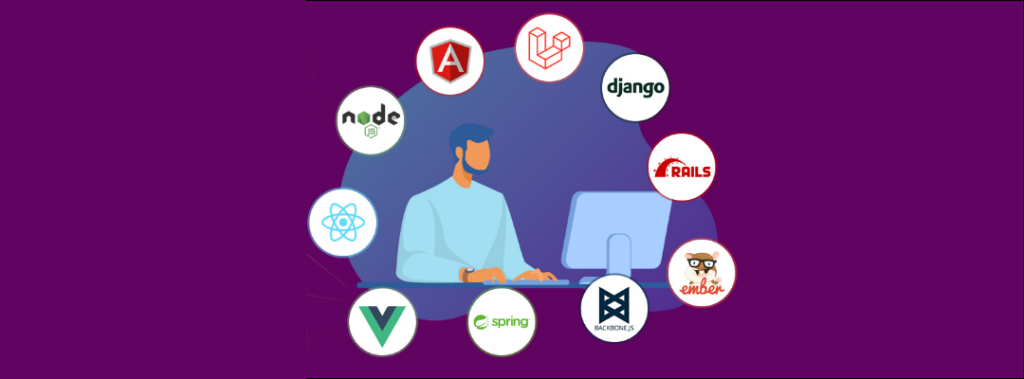
The requirement for teams to quickly provide custom software that can be scaled and evolved to meet client needs has never been greater as application development continues to change. You need to up your business game with intuitive web application design and development if you want to engage, attract, and convert potential visitors into customers. A web application framework is one of the tools that can, thankfully, make the development of web applications simpler. So, the question is, how do you pick the best framework for web app development? According to our observations and experiences, these are the top frameworks used by development teams and other information you should be aware of. The question of the finest frontend vs. backend frameworks is essential since the web app performance will be based on the tech you choose for both aspects. Frameworks For the Front-End and Back-End A web-based product’s back-end (server-side) part manages its internal operations, while the front-end, or client-side, part manages user interactions with it. Together, they construct a fully functional web application. The most popular web app frameworks are split into two groups based on that classification. Frontend Frameworks The front-end portion of a web application can be created using front-end development frameworks, which offer a prewritten structure. They set up the data flow based on user input, structure the functionality, and manage user engagement as well as style elements. Front-end frameworks are therefore used to design user-friendly interfaces and quickly find, organize, and update data obtained from a server or API. Front-end frameworks’ underlying technologies are HTML, CSS, and JavaScript. Some of the frameworks that are most in demand are React, Vue and Angular. A frontend web app framework will produce the right face for your projects so your users can get a sense of your brand through engagement, so it’s necessary to pick the right one. Let’s go into more detail about some of the best web app frameworks. 1. React React should be included in the most widely used web development frameworks list. Although technically speaking, it is not a web app framework; many developers know its ability to build component-based apps. Our business is not an exception because we frequently actively employ React for web development. React may be used on both the client side and the server side because it is a robust UI library in the first place. This technology is essential for producing engaging user interfaces and component-specific apps that divide the functional design into simple-to-manage pieces. Similar to this, React’s virtual DOM makes it possible to build apps that function normally even under extreme demand. 2. Vue One of the newest and most promising open-source development frameworks, Vue has strong support from the community. This web app framework has gained widespread adoption because, among other reasons, it is simpler to learn than Angular and has a more lightweight character than React. 3. Angular Angular is a powerful web development giant that was created in 2010 and completely revamped in 2016. It is an open-source web app framework for development that was converted from JavaScript to TypeScript. This significantly increased the capacity for development and prepared Angular for large-scale Enterprise-grade applications. The architecture is connected using two-way data binding, which enables dynamic updates to be added to the backend with each user interaction. The framework is a comprehensive choice for cross-platform solutions because tools and packages are available for almost any use case. On the other hand, the Angular web app framework is frequently bigger than other front-end development frameworks, which may impact overall performance. We’ve already covered the key differences between React, Angular, and Vue, so you can learn more about comparing these well-liked front-end development frameworks. When you need to develop progressive web applications and SPAs as quickly as possible, it can be challenging to choose the ideal alternative. These responsibilities are handled by Vue thanks to its adaptability, integration-ready components, reactive two-way data flow, and small by default size. Backend Frameworks The best frameworks for web apps offer a foundation for delivering an application’s server-side architecture. They take care of all database and server operations, build URL mapping, and put the necessary structures in place to carry out the intricate details of business logic. A back-end developer oversees effective communication between the various services that make up a fully-functional online application while keeping an eye on user involvement. Back-end frameworks’ foundational technologies are Python, JavaScript, PHP, and Ruby. The frameworks most in demand are Django, Spring, and Laravel. Let’s get into more detail about some of the top backend frameworks to build web apps with smooth inner workings and easy fixability. 1. Django The python-based open-source project, Django, includes JavaScript code in several apps. This web app framework was first introduced in 2005 and has since been developed and improved, emphasizing scalability, performance, and cybersecurity. Due to its excellent support for the most common database back-ends and its wide range of out-of-the-box features, developers can use it. Since Django is built on “Convention Over Configuration” and the DRY (don’t repeat yourself) patterns, applications built with it launch more quickly than those built with other web development frameworks. The maximum development speed of Django has already been used by many well-known brands, including Instagram and Google Development, to publish their apps. 2. Spring Another deserving open-source mention on our list is Spring. It offers support for Java programs with straightforward logic and quick execution. The popularity of this web app framework began to soar with the advent of the Enterprise JavaBeans (EJB) model for various reasons. It first aids in building a strong framework for developing enterprise-grade apps. It also uses a potent extension suite and a POJO-based programming model. Aspect-Oriented programming, dependency injection, and strong modularity are some of the other potent aspects that allow Spring to promote decoupling and provide reliable code for high-performing programs. It is important to note that web development frameworks typically have a modest file size, which makes Spring transparent and lightweight. 3. Laravel Due to the clear
The Ultimate Formula for Building Scalable Web Apps

With so many critical elements to consider, scalable web app development with high-performance metrics is difficult. Although the success of your app may seem like a dream come true, it may not have the resources to continue to provide a top-notch user experience as it gains in popularity. The good news is that you can avoid common pitfalls that result in a subpar user experience and wasted resources by adhering to the best practices we’ll cover in this article. Read on to learn how to ensure your web app runs smoothly. It’s time to end your web applications’ subpar performance and create new ones that repeatedly draw users back. There are various factors to consider with custom web application development for scalable web apps. Let’s dive deeper into some of the best practices to improve web app scalability & common issues to focus on. How to Fix Scalability Issues With custom web application development, scalability problems can have many different root causes, but the most frequent ones are application code, constrained database capabilities, and hardware resources. – Application Code Imagine you have a website or app where users can upload pictures. A large image might cause the application, which is only running on one thread, to crash. These slow request pipeline components constrain an application’s response time and scalability. It may create a need for extensive web application maintenance. Moving sluggish components into asynchronous background jobs is the best fix for this issue. For instance, requests for image uploads could be included in requests and sent to a queue. As soon as the job is scheduled (in milliseconds), the user’s request is satisfied, and a background worker takes care of the actual uploading task after that. – Database Constraints Consider a financial program that creates a stock chart with various technical indicators. Each indicator requires a complicated calculation to be made on the spot with time series data. The time required to perform the complicated calculations could reduce the application’s scalability and slow response times. Caching pre-calculated values and running calculations in a separate background job are the best solutions for these kinds of issues. For instance, you could compute the historical time-series data for a technical indicator up to the present period and cache those values. Due to this, it is no longer necessary to compute the entire time series for each request & this will enable a more responsive web app. – Hardware Resources Consider a financial program that creates a stock chart with various technical indicators. Each indicator requires a complicated calculation to be made on the spot with time series data. The length of time required to perform the complicated calculations could reduce the application’s scalability and slow response times. Caching pre-calculated values and running calculations in a separate background job are the best solutions for these kinds of issues. For instance, you could compute the historical time-series data for a technical indicator up to the present period and cache those values. Because of this, it is no longer necessary to compute the entire time series for each request. The Best Web App Development Formula for Scalability Now that you’re aware of the commonly found scalability issues with web application development, let’s dive deeper into some of the best practices to scale your web apps to new heights. – Use the Appropriate Tech Stack Whether your business uses XAMPP, WAMP/LAMP stacks, or another web server platform, you should use a technology stack that your business can afford. If you want to guarantee compatibility, use a hardware-based load balancer. Ensure that the app functions effectively for your users as well. Numerous plug-ins are available if you choose to use a database other than MySQL. – Analyze Requirements Learn how your web application would work and look. Make sure the prerequisites are met for whichever type of app you create, whether it’s a progressive web application, static, dynamic, or any other kind. Once you clearly understand the requirements and overall scope, you can continue with the remaining web app development steps. In order to speed up the application development process, you can involve your team and stakeholders during this phase. – Choose the Right Code Architecture You should be aware by this point that creating a maintainable and scalable codebase depends critically on your choice of application structure. It involves looking at your app’s features and how users engage with it. A vertical or horizontal scaling architecture was an option. Alternatively, you can decide on the option that can scale both vertically and horizontally. – Use the Finest Security Measures As you may already be aware, there is no one method for achieving complete security because numerous unforeseeable events can happen at any time. However, there are some strategies you can use to lessen the likelihood that your web app will experience security problems. A good firewall is the first line of defense against threat actors or hackers. You may already be aware that a fireball prevents or blocks access to the application for anyone outside of your company. Another crucial security measure is configuring the user directory so your web app can check for and update the user information in real time. – Employ the Right Team Make sure the development team for your company is qualified and has the necessary skill sets to complete the project. Hire a professional app development team if you don’t already have one. These groups will help you with your applications and take care of any bugs that may appear. If your development team can manage their tasks and increased workloads, they will perform at their best. You might consider outsourcing the creation of your app to a custom web application development company. – Appropriate Your Web Apps According to the User Instead of focusing on your app’s functions and looks, you should always consider how users will interact with it. Consider the actions you want users to take, for instance, if you built an app with a contact form. Like when
How To Grow Your Business with Laravel Web Development in 2022-23

The business sector is reaching new heights thanks to technological advancements. Businesses are becoming smarter as a result of utilizing technology to compete in the market. Obtaining digital solutions helps in reaching business objectives efficiently. One such technology that has gained recognition for website development is the Laravel web development framework. 9.45% of developers use Laravel for the development process, according to a survey report. The best option for creating Laravel applications and websites for businesses is the Laravel PHP framework. It can be difficult to choose the right framework for your websites. Let’s go into a bit more detail about the advantages of using Laravel as the primary PHP framework for your web-based projects, the reasons for its popularity, and why it’s the best choice compared to others. Why is Laravel Web Development The Best Compared to Others? Following the release of Version 3, which featured elements like the command-line interface called Artisan, database management system, and packaging system called Bundles, Laravel became more well-known. Laravel 1 and its first beta were both released in June 2011 after it. Laravel 8, which was released on September 8, 2020, is the most recent version. With each update, Laravel introduced new features that were detailed, expressive, and easy to understand. This made developers adopt Laravel development services, and it enhanced their application maintenance skills as well. Laravel web development provides the best framework for numerous, not just one, reasons. Numerous security features built into this PHP framework shield it from outside intrusion and cybercrime like hacking. Being an open-source framework, Laravel is renowned for its simplicity and increased coding effectiveness. Due to its ability to customize web applications and speedy Laravel web development, many businesses and enterprises prefer Laravel over other development frameworks. Unlike other frameworks, Laravel code doesn’t call for a break. HTML can be used to manage it on a single database. Additionally, it utilizes the Model-View-Control pattern (MVC), which makes it easier to carry out projects of any complexity. Reasons for The Popularity of Laravel Development There are also reasons why Laravel development companies started gaining increasing popularity over the years. Even though, Laravel web development provided new means of convenience, shifting from traditional frameworks was difficult for a lot of firms. However, with time, the benefits began to catch on. Advantages of Laravel Web Development The benefits that a business receives from using Laravel web development are listed below. Simpler Authorization Techniques No company should ever put its customers’ private information at risk. Software developers can more easily implement authorization when creating websites with the Laravel PHP framework. One of Laravel’s biggest benefits is the ease with which user authentication can be accomplished. Easy Mailing Coordination Every time a new device is used for logging in, every web app notifies the user. You cannot rely on the safety standards it adheres to if it doesn’t. On the other hand, websites built with the Laravel PHP framework send emails to protect the user account. Laravel’s built-in swift mailer library makes it simple to set up individual account APIs that send email notifications when they discover a new login from a different device. Correction of Technical Issues Technology advancement also brings more advanced hacking techniques. Every codebase is at risk of being compromised. Laravel stands out from the competition in areas where most frameworks require additional help. One of the key components of Laravel web development is improved security. When a website is created with Laravel, security risks like cross-site forgery and scripting are eliminated. Consequently, businesses can be sure that their websites are highly secure. URL Routing Laravel includes a configuration feature for URL routing. With the help of this feature, users can view the URL’s linked page directly on the current webpage without being redirected. The inclusion of a built-in file within the framework gives rise to the possibility. Users can access safe and recognizable routes to view the webpage thanks to the built-in file. As a result, companies using Laravel websites do not have irritated customers. Queue System There are numerous advantages & benefits for businesses using Laravel websites. The message queue system in Laravel is one of its key benefits. The queue system’s API enables users to control running tasks in the background as a request is processed by the webserver to receive a response. In this manner, Laravel web development productivity is maintained without impeding or delaying an ongoing process. Desirable Laravel features for businesses The following characteristics of Laravel make it a popular option for creating business websites Artisans’ Repeated activities cause boredom and reduce productivity. The built-in tool Artisan helps to slow down the Laravel web development process. With the aid of this tool, it is possible to build database structures that can be easily migrated. Template Motor Laravel’s template engine aids in producing some aesthetically pleasing website templates. All free or paid templates come with various widgets that can be quickly integrated to improve the web page’s aesthetic appeal. Libraries and Modularity The Laravel PHP framework includes a variety of libraries. These object-oriented libraries are simple to integrate into the website without altering the code. These libraries include capabilities like checking the number of active users (DAU/MAU), encrypting website passcodes, and preventing cross-website request forgery. Support for MVC Architecture A big part of Laravel web development is the MVC architecture support. The website’s performance is enhanced by MVC support, and documentation execution is trouble-free. System for Validation & Files To detect errors, use the validation feature of the Laravel PHP framework. It automatically tests the code to check for errors and produces reviews for the same. The framework also includes a file system that enables users to access data from cloud-based files. Bottom-line Every business wants to succeed quickly in this digital era of constant advancement. Success in a shorter time may be challenging, but it is not impossible. New technologies have met business needs and aided in goal accomplishment whenever the world has thrived for competency and improvement. Laravel
Importance Of Mobile and Web App Maintenance for Guaranteed App Success

Application maintenance is often overlooked by businesses and brands as the majority of the private and commercial entities emphasize heavily on the project’s production process rather than the upkeep. If you’re a sole proprietor, personal brand, business, or large corporation with low downloads or reduced software sales, chances are you’re not emphasizing on application maintenance and support as much as you should. The Significance of Mobile and Web Application Maintenance When it comes to the success of your mobile and web applications, there are various aspects that you’ll need to consider regarding maintenance. If you expect higher consumer retention, you must have adequate application maintenance facilities. Furthermore, you must introduce new features regularly to stay competitive and encourage customers to actively use your app. Businesses are constantly looking for new ways to expand their audience reach when it comes to custom software solutions. One way to achieve this is to create a mobile app that will help boost loyalty or create custom software or an app specifically for that purpose. The mobile app can also be used to retain customers by providing a better experience through smoother functionality. According to various studies, a small increase of 10% in retention can result in a more significant 30-40% increase in business value/revenue. Enhanced Functionality Brands and businesses providing custom software development solutions often deal with scaling applications that have been live for a certain period of time. With such applications and software, as well as new applications, the users are more likely to be aware of the functionality shortcomings as well as the benefits of using your product in a certain way. This is the biggest reason people may delete your app if it doesn’t match their expectations or doesn’t work as well as the other applications on the market. With consistent updates to the app’s UX, centered around smoother, user-friendly, and competitive functionality, user retention and the number of users will increase significantly. This aspect of application maintenance will significantly increase the success of your mobile and web applications. Bug Fixes Regular application maintenance can assist in reviewing the code and determining whether or not there are any defects. The need for bug fixes often arises with custom web application development and even with non-custom projects. When the app goes live, developers may notice a few bugs or performance issues. They are most likely to occur when the app is being launched in a hurry. Defects can appear at any stage of the mobile or web app development process. Bugs may also exist as a result of changes in the associated framework, platform, or version upgrade. The functionality issues can then be investigated and resolved quickly, allowing the app to run more smoothly. However, if the bugs are not fixed on time, it may result in customer attrition. Cyber Security A significant aspect of application maintenance is the timely upkeep of your app’s security protocols. Hackers and firewall penetration experts are constantly looking for flaws in applications. Over the years, the number of successful cyberattacks has gradually increased. Despite being supported by encryption technologies, the applications’ security protocols may become obsolete over time. Your app must include adequate security measures. It’s better if there’s a specialized team to assess and plug any vulnerabilities in a timely manner. The team must also stay current on the latest security protocols and incorporate them into the app. Blocklist Avoidance When businesses publish applications on the app store, they must adhere to certain guidelines. Furthermore, rules and regulations change over time, requiring developers to stay on top of these changes. The significance of web and mobile application maintenance stems from the fact that a dedicated team would be in place to monitor any changes in app store guidelines. Furthermore, upgrading the app will keep it compatible with the app store updates. This will ensure that your web and mobile application development services stay relevant for a longer period of time. Reduction Of Downtime According to recent reports, various critically acclaimed brands have suffered significant revenue losses as a result of their app’s downtime. Revenue losses are inevitable and bound to increase if applications experience more significant downtime. However, we’ve seen that regular application maintenance activities enable better performance metrics for web and mobile applications. Having a team of developers segmented to handle app upkeep activities can assist you in meeting desired performance levels and growing your business. It can also reduce unnecessary customer ratings and lead to better overall better reviews. Better Marketing The best marketing tactic is keeping your users happy. In today’s rapidly evolving digital space, it’s necessary to make applications that cater to the needs of your target demographic. With a team of professional developers working on your application maintenance, the positive reviews are going to keep piling up. If you respond to the positive and negative reviews for your application, then it directly translates to your users that you care about them and want to ensure the best possible experience for them. This aspect is said to have a positive effect on SEO rankings, as confirmed by Google. Upgraded Versions, Better Retention You can’t expect customers to use a mobile app for very long. The significance of web and mobile application maintenance stems from the fact that app users enjoy seeing new features over time. As a result, developers must formalize a roadmap outlining the features they intend to include in the app at regular intervals. When adding new features, you must consider scalability, efficiency, and performance all at the same time. Users also believe that the brand is still alive and well, and that the app is being managed by an experienced team. Upgrading your applications in a timely manner is going to boost consumer loyalty as well as grow a sense of fidelity between you and your consumers. Need-Based Maintenance Web applications and mobile applications differ across various platforms, niches, and production processes, as well as the issues they are developed to resolve. It is due to this
A Detailed Guide to The Web Application Development Process

Introduction Web application development has come a long way since the early days of the internet. In the past, web applications were static, and pages would often take a long time to load. Today, web applications are much more dynamic and responsive, thanks to advancements in technology and the rise of custom web application development for providing game-changing features, outstanding security, and memorable user- experiences. Now the question arises, what exactly are web apps and how are they developed? This blog intends to shed some light on web applications and their development process. After you are done reading this blog, you’ll have a better understanding of what steps are involved in developing a web application and you’ll be able to make an informed decision about whether or not investing in a web application is the right option for your business. What Is a Web Application? A web application is computer software that performs operations via the Internet by utilizing web browsers and web technologies. In simpler words, it is an interactive application that can be accessed through a web browser. The demand for web applications is increasing very rapidly as they not only help businesses streamline their operations but also provide an exceptional user experience to customers with ongoing application support and maintenance in the long run. How Is a Web Application Different from a Website? The below table explains the further differences between a web app and a website. Web Applications Development The process of building interactive programs that operate on web servers and are accessed via a web browser is known as web application development. Typically, developing a web application entails identifying the issue, modeling a potential solution, contacting users, selecting a framework or tool, and then developing and evaluating the web application, often simultaneously with users. Steps Involved in The Development Process for Web Applications The web app development process requires exactly 8 steps to be followed which are: 1. Identify the Issue You Are Attempting to Resolve Identifying the key issue that you plan to solve with the development of a web app serves as a compass to direct you on the right track. The solution can only be derived if the problem is clearly defined. Everything needs to have a purpose otherwise it’s of no use. 2. Configure Your Web Application’s Lifecycle A web app development life cycle provides a strategically developed technique for successful performance. Therefore, you must set up the entire lifecycle of your web app from creation to retirement. 3. Create A Wireframe/Web Application Prototype Consider the wireframe to be the “sketch” or “blueprints” for the app, encompassing both the front and back ends of how the app will look and function. Hence, your wireframe serves merely as a tool for explaining your solution to your intended users. By incorporating more functionality into the generated wireframes, the finished prototype can look and operate just like a genuine web app. This prototype may be used and tasted, with responsiveness and improved UX features that imitate the user experience, providing vital insight on performance, design, and user experience prior to complete development. 4. Pick Your Weaponry You will create your web application using a variety of platforms, tools, and frameworks. It’s crucial to select the right instrument for the task (in this case, your web application) and avoid following trends. For a simple to-do app, for instance, Django and React might be excessive. 5. Establish A Database for Your Web Application The database is in charge of gathering, saving, analyzing, and controlling data collected, as well as giving protected access to this data. Throughout this domain, the choice is quite simple, with two MySQL practically monopolizing the database market, with other possibilities like MongoDB and PostgreSQL. 6. Frontend & Back-End Both your front end and back end will probably be constructed at the same time. Your front end will largely resemble the prototype or wireframe that you evaluated earlier. HTML, CSS, and JS make up the front, similar to one of our front-end frameworks. One of the most challenging aspects of developing a web application is creating the backend. The main responsibilities of the backend are to serve the front end, authenticate users, grant access, and provide HTTP endpoints for your front end (note CRUD!). 7. Examine Your Website’s Application The process of testing your web application is continual and typically occurs both during and after the building stage. Testing can be carried out manually or automatically. You ought to make an effort to address functionality, usability, compatibility, security, and performance testing during the testing phase. 8. Host and Release Your Web App Running your web application on a server is known as hosting. A domain must be purchased, and a cloud hosting company must be selected. You will need to implement a CI tool to transfer your web application from your local computer to your cloud provider and deploy it. Tools And Technologies Used in The Development Process for Web Applications JavaScript, CSS, and HTML go hand-in-hand when it comes to custom software development. Although it may seem difficult at first; understanding web technology and how it functions, though it gets easier once you know what you’re doing. Do not worry if it does not come to you immediately. To dig more into web and mobile app development, you might need more time, experience, and endurance, but gradually, you’ll have a thorough grasp. You’ve heard the phrase “web development technology,” but have you considered what it means? Because computers cannot speak with one another in the same manner that humans do, they must rely on codes. The markup languages and multimedia applications that computers use to communicate are known as web technologies. 1. Browsers Browsers request information and then display it to us in an understandable manner. Consider them to be web interpreters. Some of its examples are: Google Chrome – Google’s cross-platform web browser. Safari- A graphical web browser developed by Apple. Firefox – A free and open-source web browser created by the Mozilla Foundation and its subsidiary,
10 Compelling Reasons for Custom Web Application Development

There is no denying that web applications have become a crucial instrument for business. The purpose of web app development is to streamline things for businesses as well as customers.Yet hiring an experienced web app developer is vital as each business has unique needs. Such companies help their customers by providing a superior web apps. Customized web apps address a wide range of needs in a precise manner, improving both performance and output.Let’s look at how web app development can be beneficial for your company. Flexible And Scalable Application Predesigned websites and apps are not scalable or flexible, and thus have a short lifespan. They needed to upgrade as your company grew. As a result, it’s built with scalability in mind, making them adaptable to changing needs and preferences. This feature of the custom web app allows you to save money and resources. With cloud-native apps, enhance resilience & create extra value for the firm. Low-Maintenance You should not have to worry about your team having the latest version. This is because it gives updates to anyone who needs them. If there is a problem, you can contact a support team of developers 24/7. Furthermore, Updating and maintaining software can perform directly on a server, and efficiently deployed to users’ computers. Outstanding Security Having an online presence brings challenges of security to the table. The risk of a data breach via malicious attacks and spyware is something that every business must undertake while planning their web application. However, the custom web application developers keep these challenges in mind and use effective firewalls to keep the data safe. As a result, ensures the security of your application and business. Complete Functionality Management When designing a mobile app or web app, it is important to optimize for potential drawbacks. This allows the application to run smoothly and helps you cope with issues such as unexpected breakdowns and delays in output delivery. Customer Friendly Journey Each company has goals, and a tailored website is a powerful tool to help you achieve them. A bespoke solution is taking into account all the details of your particular company. As you know, a great CX (customer experience) is a guarantee that happy clients will keep coming back, bringing round a couple of new ones. Conveniences for SEO Boost Custom websites open the door for more complex and more advanced SEO optimization. Optimize a website from scratch, and you will be able to win with keyword-rich text and tuned-up imagery, consistent website structure in search results. Unique And Interactive Website The custom web app allows you to create a unique and appealing design that increases your brand value and business growth. Better Business Function Automation It can take time to integrate large amounts of data, which can be time-consuming and repetitive. Customized web applications automate the process, allowing for timely data integration. Custom web apps help businesses to improve internal and external functions. They help businesses to generate leads and to attract prospects. Also, help to organize and automate the data delivery to convert prospects into customers. Cross-Platform Efficiency Custom web applications can access by clients despite the working frameworks they are likely to use. Windows, Mac, and other operating systems are among them. With the collection of search engines, like Internet Explorer, Bing, and Firefox, clients run into problems with programming resemblance. Makes Business More Successful A custom web app contributes to success and efficiency. This way, you’ll be able to control overhead costs and avoid gaps. It provides a significant boost to overall performance. Conclusion It’s a game-changer for businesses as it automates workflows, provides data security, and allows for growth. These features are far more effective than commercial software, which has useless features, targets hackers, and is expensive in the long run. Instead, work with a reputable app developer to understand your company’s needs and build a robust application that is perfect for you and your team. Golpik, as a leading US-based web development Software House, is well-versed in the area of web apps, both technically and conceptually. If you want to create a custom web app for your company, or you want to know why and how you can optimize your web app performance, you can Contact Us.