
Optimizing Development Costs with Project Success Metrics
Every project is considered successful through some specific metrics. Some companies consider the factors of time, scope, and budget as their project constraints. Other companies focus on revenue generation, as may be expected from their projects. While there are a few other firms that consider the factor of complete customer satisfaction as their main achievement. Thus, many questions arise when it comes to considering the right project success metrics. It could be ultimately the marketing team, finance team, or SEO results that form the basis of a successful project. In general, the boundary of success could not be determined before all existing constraints are fully determined and worked on. Definition: The definition of a project and its scope need to be defined on time. The set up of successful projects start with determining how successful the project could be for all stakeholders. All criteria need to be focused on the specific goals or with a particular milestone. Companies need to be careful when selecting their valuable criteria. A focused idea is to prepare a list of success criteria initially, and then conduct a careful discussion and working on it thoroughly. Many projects have specific and similar successful criteria and metrics. These may include but not limited to as follows: Measurement: Reliable measurement of every selected and successful criteria could be accomplished with the involvement of all stakeholders. For example, stakeholders can be aligned with different roles, frequency of measurement, and other determined metrics. The afterward stage involves performing, tracking, and enforcement of the measurement process. For better accuracy, the measurement map should be defined with the involvement of the entire team. The three focused criteria should be taken into consideration, such as roles, frequency, and metrics. It will support in establishing the right expectation with all stakeholders involved. The final process is to focus on the project execution while identifying all areas of measurement. Documentation: Upon reaching the agreement on successful criteria, the next step starts with documentation and sharing of frequency metrics with all group members. It is necessary that every member of the team should have a direct agreement with the defined list. Otherwise, the successful boundary will have low flexibility and misleading result, thereby making the measurement ineffective for all. Current Snapshot: In a few cases, a project can become ineffective if its legacy system is undefined at the right time. Therefore, it is necessary to focus on the current state of the system while getting its image that is under enhancement. The above process will enable the team in making comparisons upon measuring of entire criteria. It is generally worked through working increment demonstration or sprint reviews. This strategic way can support the team in getting more conclusive results about the measurement. Continuous Monitoring: Continuous monitoring is the final successful metrics of the project. The process of having the success criteria identified, agreeing, and documenting does not end up here. The next role of the project management team is to track the success of the project. For example, the project risk assessment should be done to evaluate and ensure the entire success of the project regularly. The project’s risks have a direct relation to the success criteria, thus, mandating the project team to continue monitoring and evaluating afterward. It is also necessary to avoid any failure and to remain focused directly on the successful path of the project. There exists a spectrum of management models and approaches in the agile nature of IT projects. Some examples may include the Iron Triangle, Jobs To Be Done, the Lean Startup, and Scrum. Any of these should be selected properly to avoid failure of the project, thereby achieving a successful path and aligning with it systematically. Conclusion: There are different project success metrics that save development cost. Each of them should be defined properly to get a direct success of the project while focusing on basically determined criteria. These metrics should be applied and targeted to ensure a better evaluation of the project. The project should be initiated properly with defining measurement frequency. There is also a need of documenting the chosen success criteria and related metrics. Every member of the team further needs to agree on the chosen measurement frequency and documentation. Before the beginning of the project, the current state of the system and its image eventually become necessary as a part of the successful step. The next and final step is to continue monitoring the success metrics, such as tracking the project’s progress and evaluating the entire metrics continuously.
Complete HIPAA Compliance Checklist for Your Software Product

An important law encompassing the medical software products is now the 1996 US Health Insurance Portability and Accountability Act (HIPAA). Businesses failing to adhere to HIPAA are required to give payment in a heavy fine. The firms and organizations were charged huge fines in 2018, making up to $28,683. The Office for Civil Rights has necessarily imposed fines to the firms that ignored the HIPAA checklist. The companies are now required to be careful in completing the HIPAA compliance checklist for their software-based products. It can save them from applying a hefty fine that is now charged to HIPAA ignorant companies. Introduction to HIPAA: HIPAA was enacted as a leading act and with the main objective of establishing focused rules. It included the destruction, exposure, transfer, usage, storage, and gathering of medical data from every kind of medical establishment. It also affects companies that have access to medical data with them. The main requirement imposed by HIPAA is now governed by all data protection rules on behalf of every patient, allowing them to initiate an informed decision. HIPAA is dissimilar to other acts in the industry that is important for all companies. It is an important rule, but it has power merely for the U.S.-based territories. However, the companies transferring their data out of the U.S. territory are truly exempted from the HIPAA protection act. Every company is required to understand the main terms in order to be completely HIPAA compliant for its medical software. HIPAA Compliance Checklist for the Software Product: HIPAA necessitates the use of mainly reliable technology for securing the software and relevant data. However, HIPAA avoids naming the exact tool or technology. The governors of law made a decision not to specifically state the selection of technology which happens to be outdating within a year or two. It means that the companies have a wider choice in selecting the security feature, toolset, and technology means, as may be requiring for projects. Nevertheless, all healthcare software companies or related software have to meet the set forth a list of HIPAA needs. The law has established a clear checklist that is required for making the companies completely HIPAA compliant. Strictly Control Access: Around tons of ePHI is processed by any software product. However, every employee is not necessitated to do the same job or get access to similar data. The companies are required to ensure strict control of the access to data, as may be needed by specific employees. It can subsequently help the firms in protecting their data from malicious intent. There also raises the possibility of saving software data from unnecessary human errors. Pro Tip: The software needs to be implemented on a role-based system as it can lead to restricted access of data to the employees. The companies should define every specialist with the specific data that may need for the product work. These not merely include a nurse or a doctor rather the access to data should also be given to specific technical staff or administrators. After defining every type of user for the software, the companies should then create a list of the kinds of data that may be requiring further access for better performance. In HIPAA, it is a good idea to limit workers’ access to data. However, if a particular employee, administrator, or specialist does not have access to necessary information, it can be requested for onward access and subsequent control. Limit Session Times: According to HIPAA, the session times should be limited to improve the security of PHI. For example, every user should be automatically logged out of the software system following a specific time. If the employees are not using the system, then they should also be logged out of the system automatically. It can help in protecting the information and software that are unauthorized to a third person. Pro Tip: It is pertinent to note that the companies should not create session times the same for every user. For example, few users should be given long time access to session if they need to work for a longer period. Such prevention from unauthorized access is a wise strategy in making the device being supervised in the right manner automatically. Encrypt Data: In pursuant to the HIPAA compliance act, it is an optional step to define PHI encryption. It is a choice for the companies whether to encrypt data or not. The only concern and important factor is data security under the HIPAA act. For example, the companies can select different approaches for protecting their data from unauthorized access, such as tokenization. In general, medical information is better protected from such a fast, easy, and convenient way of data encryption. Pro Tip: It is necessary to apply the most reliable encryption protocol for choosing encryption upon other security approaches. In short, the encryption should fulfill the needs of the National Institute of Standards and Technology. Moreover, the keys to the access of data should also be placed in an accessible location, so as to ensure the most reliable encryption. Implement an Activity Tracking System: HIPAA requires companies to implement an activity tracking system. For example, the software system should be executed in a manner that it could have tracking capability, such as accessing users’ activity. It should be done on a regular basis to identify individual patterns. The above consideration can help the firms to run their system while detecting suspicious actions. It can also alert firms about different types of malicious intent. It can further be useful in identifying data theft and data breaches while preventing them with complete authority. Pro Tip: The tracking system is not merely supportive in preventing breaches rather it is also effective in investigating accidents, as may be occurring due to the security breach. The companies should record every action and ID of the workforce. This action can help in conveniently finding out as to which employee worked lastly on the system and as to how a hacker interfered in the system
6 Key Advantages of Outsourcing a Software Product
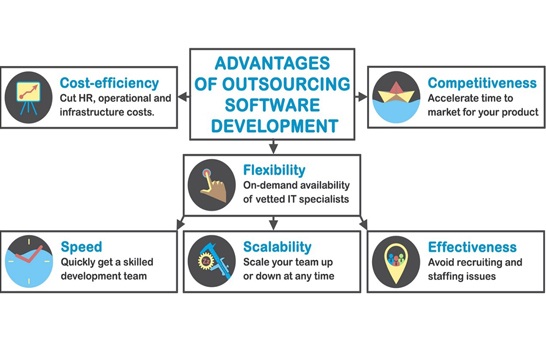
If you are employed to create any new product from the beginning, consider a strategy where you can complete a task in-house, or you can opt for outsourcing model which lets you assign your important task to a professional team. These two options catering to your development task has its weaknesses & strengths. This depends on the situation & the type of task you are involved with. So here in this post, we will be discussing some of these points side-by-side in comparison to deciding the best option. 1. Work with of Professional Team This must-have crossed your mind that outsourcing a project to an external team has huge risks involved in the process. But a professional team who undertakes your task, also care about your reviews because that impacts their market reputation. The professionals of the IT world only aim for quality & a smooth process. When you are charged for the high-quality professional work, the team on the other end is responsible for final results & risk management. 2. Minimized Costs When you invest your trust in an outsourcing company, you save a lot from infrastructure & operational costs. The salaries are comparatively lower in some countries & outsourcing provides some great significant benefits & options to cut expenses. 3. Competence The corporations you trust online for your outsourcing work must have skilled professionals on-board and many other factors involve which describe outsourcing company strengths such as, professionals have experiences of working with more significant projects & for businesses of different arenas. Their experiences enable them to have a broader understanding of markets & business requirements. So, you are plain sailing towards your required product just by outsourcing your software. 4. Simple Partnership If you are working on a software development project, then you must be loaded with tons of information. This might be regarding the project progress, information transfer, clean communication & supply team with every detail they need. Your outsourcing firm will now be in charge of all of this, so you are free from all hassle. 5. Time-Saving The best part about utilizing the outsourcing benefits is that it helps you get some free time on your end. This time can be used for some other important activities related to your business. In the long run, this will impact on company’s core business plans & procedures. Find yourself enough time to invest in brand marketing & let a professional team take of your work. 6. Absolute Results The company or individual you are trusting for your service is always looking for a chance to create a well-known impression. This makes your outsourcing partnership even more impressive because the other person is putting in a lot of effort to create a product to blow up the market. They dedicate their immense creativity to build a product, from designing to tunning, fixing & relaunching. So, if you have invested your trust in the right outsource partner, then it is more likely to help with a smooth delivery process, a better quality of work & save your time for other productive matters. We hope that you are convinced to outsource your next software project online.
Stripe vs PayPal vs Braintree: How Do These Payment Platforms Compare?
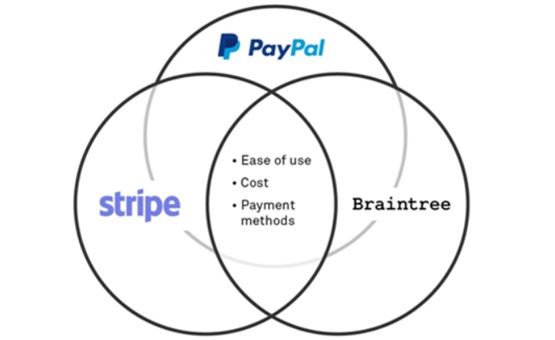
PayPal, Braintree, and Stripe work as a famous payment platform. These three options are highly used in incorporating any payment platform in the mobile or web application. A good decision about their selection needs to be done based on these platform’s offers and policies. Supported Payment Methods: The eCommerce websites are required to support high on the American Express, Mastercard, and Visa Card. It is the main reason that PayPal, Braintree, and Stripe are now accepting the payment methods of Diners Club, Discover, Maestro, and JCB credit cards. Apart from accepting the payment method of credit cards, the eCommerce websites are required to support different payment modes. It is, therefore, necessary to consider and understand the difference between PayPal, Braintree, and Stripe. A great benefit of choosing Stripe is its close acceptance with AliPay which is a Chinese-based pay platform. The eCommerce website gets a better response from Stripe when it is targeted to the Chinese market. Unlike Braintree, Stripe is now accepting direct charges to the bank account through Automated Clearing House (ACH) payment. However, Braintree has a direct integrating platform with PayPal when it comes to offering payment through ACH payment and AliPay. The companies have an opportunity to accept Braintree payment through PayPal. It has also a direct functioning capability to accept payment through PayPal supported digital wallet of Venmo. However, PayPal has a limited payment acceptance way, such as accepting payment through debit card, credit card, and PayPal. In contrast, Stripe and Braintree are more favorable payment methods as they accept different marketplace payment methods, such as bitcoins. Fees, Chargebacks, and Refunds: It is a major consideration of how each payment platform charges fees for the rendered service. It is again important to consider different kinds of charges when accepting the payment methods of PayPal, Braintree, and Stripe. Transaction Fees: The fees of PayPal are high as it charges a fee on a monthly and yearly basis. However, Braintree and Stripe have no such charges. Paypal enables free account usage with PayPal Express Checkout and Payment Standards. However, the companies cannot have a fully customized experience similar to an eCommerce store, particularly having huge merchants and buyers. Nevertheless, PayPal offers a Payment Pro Plan that enables a direct payment transfer with the buyers and merchants. It costs around $30 per month for the overall monthly transfer charges. On the contrary, there are single transaction-based fees for every transfer. For example, Stripe and Braintree charge $0.30 + 2.9% for every payment transaction. The above charges are low charge payments that are applied for all acceptable payment throughout the world, including the U.S. However, Paypal has different payment fees, such as 3.9% fees plus an international payment percentage. Paypal’s U.S. transaction fee is also different, such as 2.9% + 0.30 fees. It is pertinent to note that the above PayPal payment fees are merely related to credit card payment. The fee for the American Express credit card is different for PayPal. The other payment modes, such as AMEX transaction has a different fee for Stripe, Braintree, and PayPal. Disputes and Refunds: It is a general practice that some shoppers dispute charges. Every payment platform happily supports handling some kinds of chargeback transactions. However, it is done as per the customer’s expense. For example, PayPal charges $20 as a refund for disputed amounts while Stripe and Braintree charge $15. However, if the dispute gets a solution in the customer’s favor, then Braintree and Stripe return $15 and the entire chargeback amount. In a similar case, PayPal returns $20 but it charges a little fee of $0.30. Stripe and Braintree have a convenient refund policy as they return the transaction fees without charging any amount of fee. PayPal considers chargeback transaction as a new transaction, so it still imposes a little amount of $0.30 as the processing fee. It is pertinent to note that if the customer’s merchant account has no money to cover the charges, such as $15, then PayPal, Braintree, and Stripe charges money directly from the customer’s bank account. Other Payment Methods: As mentioned, Braintree and Stripe have a working capacity with different payment modes. For example, they highly support AMEX transactions and Bitcoin. For example, Stripe charges $5 per transaction with 0.8% fees for the payment transfer with ACH payment, direct bank charges, and Bitcoin transactions. Bitcoin payment gets a more favorable chare of payment with Braintree. For example, Braintree offers free transactions up to the first $1M worth of payment. However, there is a small Bitcoin transaction fee of 1% in Braintree. PayPal, Braintree, and Stripe have selected different methods for the AMEX payment. Stripe charges for AMEX transaction is 2.9% + $0.30 payment. Braintree charges merely $0.30 + 3.25%. PayPal has a higher charge payment system for all AMEX transactions, such as $0.30 + 3.5% fee. Comparison of Paypal, Braintree, and Stripe: There is a major comparison between PayPal, Braintree, and Stripe. Each of them has distinct key features that the businesses are required to consider before affiliating their transaction services with them. At first, Stripe is a payment platform supporting processor, gateway, and merchant account. It has no monthly fees. Its per-transaction fee is 2.9% + $0.30. It has a currency conversion rate of 2% per transaction. It applies a $15 chargeback amount. Similar to Stripe, both Braintree and PayPal are payment platforms supporting processor, gateway, and merchant account. Braintree has no monthly fees. Its per-transaction fee is 2.9% + $0.30. It has a currency conversion rate of 1% per transaction. It applies a $15 chargeback amount similar to Stripe. Like Stripe and Braintree, PayPal is also a payment platform supporting processor, gateway, and merchant account. PayPal has a payment fee of $30 per month as Payments Pro. Its per-transaction fee is 2.9% + $0.30. It has a currency conversion rate of 1-4%. It applies a $20 chargeback amount. Stripe’s payment methods are ACH, Bitcoin, Apple Pay, Android Pay, and AliPay. It accepts payment cards of AMEX, MasterCard, Visa, and other credit/debit
MVP vs. Prototype: Ideal for Validating Business Ideas?
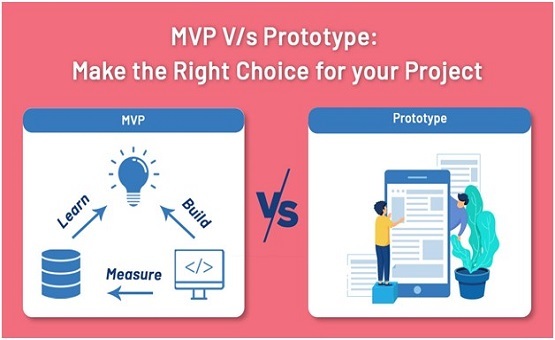
The start-up businesses are required to undergo a spectrum of stages for launching their final product. Among all, the stage of idea validation is the most leading factor to finalize the process. The comparison of a prototype and an MVP (Minimum Viable Product) are of great importance throughout many businesses. The approaches of a prototype and a minimum viable product are supportive in leading the businesses through different stages of product development. It is important to note that people frequently get confused with the definition of an MVP and a prototype. The right usage, accuracy, and comprehension of these methodologies can generate corporate ideas in a well-structured manner. It can lead the respective users and stakeholders to understand the business concept in the right manner. It can then improve the successful outcome of all future products’ launches, thereby leaving no chance of failure or obstruction in any way. It is again necessary to understand that the prototypes and MVPs have different objectives that need to be used at a different product development stage. There is also a possibility of combining the approaches of an MVP and a prototype, leaving again no chance of distraction among them. Prototype V/s MVP A prototype is simply the beginning of a material, such as a model or a sample, which is later purposely designed for a better business concept. A prototype is the releasing process of the products that are designed for testing the concepts or processes. These are later acted as the major things to be learned from or replicated. On the contrary, an MVP (Minimum Viable Product) is a basic product that has a limited feature to be satisfied with the basic need of consumers. It has also enough features for providing feedback for future product development, giving a limited rise to more product development opportunities. What is a Prototype? A prototype is used in the early stage of startups’ product development. Its purpose is primarily to conduct a presentation and identify user testing. Upon presenting the prototype, it is possible to gather a few funds for the developing phase of the Minimum Viable Product. The afterward process is complex as the lifetime of the overall functional cycle gets terminated on the later stages of development. It is again important to note that the primary level of stakeholders and users can get valuable feedback from the entire process. In case of getting negative feedbacks, the prototypes can be altered and tried again at a later stage for better product development and finalization. On the contrary, the strategic approach of MVP is utilized for testing the startup idea for gaining better efficacy. It’s another purpose is to get community feedbacks that are later utilized in the development of a business idea. This tactical process enables in getting a huge and raised sufficient level of funds that are later rolled to the products’ marketplaces to the diversified people. However, if the planned ideas seemed invaluable for developing the product ahead, then it could be stopped in any way. Such a stoppage of the process does not consume any deal of time and money while it lets the process continued at a later stage with a much-deliberated process. What is an MVP (Minimum Viable Product)? A Minimum Viable Product is considered a fully-fledged product, meaning that it is readily delivered to the markets. It is the right way to consider whether the products would have a value for the consumers in the markets. Additionally, it requires a lot of consumers’ feedbacks from the target audiences. Unlike a prototype, an MVP expects intense technical development. It is owing to the reason that its functionalities could have a possibility of adding, particularly at the final stage of product scale. MVP vs Prototype: Which is Best to validate: Both a prototype and MVP are quite supportive to validate and verify the assumption of the product. They initiate a major performance in the development phase of product recycle. Their comparison is of great importance when it comes to bringing them into the product development stage. An MVP and a prototype describe how and what could be developed from each stage of the process. However, it is noteworthy that they have different goals that are initiated in the designing flow of the process. The product prototypes are truly displayed with the functions when needing the operational measures. In contrast, an MVP is mainly the functional product over the development stage. It is truly simple in the systemic process and is made available to the markets. Concerning the product development phase, an MVP has extended ways for enhancing and scaling the product. Concerning the above statement, it could be determined that a prototype requires the basic testing and assumption of the product. It has a different way of showing the users about the early investment referring to the business processes and ideas. These entire considerations are aligned in the development phase of the product. Such considerations increase the investors’ confidence about their money being invested in the prototype and MVP of the product. The investors understand that their money will give a worthwhile true business idea. Regarding an MVP, it is not a sketch and is a less functional product. It requires the less functioning need to finalizing the product. Such a feature of the MVP product requires less implementation and monitoring. Every prototype bears a product idea for the development stage. The only consideration requires it to check its working capability with every stage of product development. The product prototype is the next phase where the startup development process is initiated to move the product in the afterward stage. The overall systemic process then leads the product toward the functional stage. From there, the product’s reliability is assessed in terms of its functionality and finalization. Thus, it is said that a prototype is highly considered as the prime implementation need of the future project. It is simply a sketch that is primarily meant to determine the investors about their
The Significance of Business Needs in Software Projects
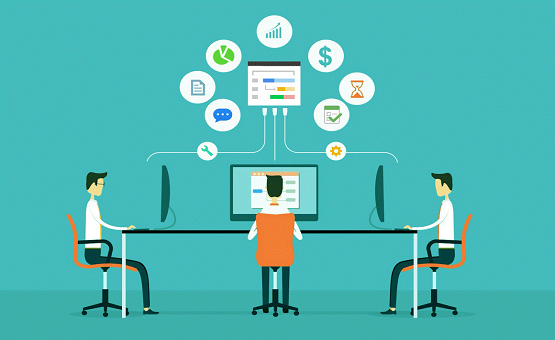
Have you ever been dissatisfied with the deliverable of an IT Software Development Company? Did you ever feel like the product you were looking forward to isn’t meeting all your business needs? Every new activity, product or project is created in response to a business need. Yet we often find ourselves in situations where, despite spending tremendous money, there’s a conflict between what has been created and what is actually needed by the business owners. What could be the possible reason for such conflict? The answer is poorly defined business needs. First, let’s discuss business needs. What are business needs? Business needs are an important component of any IT project. Known at the beginning of any project, business needs describe all activities and characteristics of a project’s end product essential to meeting business goals. The process of gathering business needs depends on the knowledge, and expertise of business analysts who facilitate to make sure that a project’s overall mission and components align with business goals. What will that mean for the team on the development side? How is their work affected once they’re building a product without properly determining business needs? • They have an unclear vision for end product. • They won’t be able to leverage the right skills for the desired tasks. • Poor communication about the business goals end up making a software product that is not at all aligned with the business objectives. • The lack of knowledge about the problem their code is aiming to solve, can result in a nonproductive environment. • The code starts to produce bugs overall doesn’t work towards meeting the end business need and this makes perfect sense as developers don’t have a vision over the goal of the entire project. Why is it important to define the business needs to a Software Development Company? Following are some of the key impacts of defining Business Needs in a Software Project: Vision of the ultimate goal Successful software development requires an understanding of clearly defined business needs. Once you combine the objectives of both your business and therefore the development team, you finish up creating an ideal environment for developing the software and your product. Therefore, business needs must be addressed in a software project as they provide a vision of the ultimate goal. With the goal in view, developers can set priorities. they can also apply their expertise to supply better solutions to succeed in these goals. There’s a reason why business analysis is included within the development process in most companies. It helps in creating a more comprehensive business case in the quest to justify their project. This is an important task that occurs early in the project and helps to set the stage for agreed upon work (and what the team should not be working on). Without clear business requirements, poor decisions will be made. Decisions that may hamper development, disrupt deadlines, and lead to extra development stages. Any experienced software development firm will always give importance to documenting the requirements of every project. Listed below are a number of the advantages of defining business needs during a Software Project: Ideal Development and Effective Implementation Plan By knowing what the business owner wants, software developers can come up with the ideal development and implementation plan. Understanding the business requirements lowers the risk level and allows clients to enjoy better satisfaction levels by receiving efficient products in the first attempt. Defining business needs in a document ensures a successful software development project. Business Intended Project One of the finest ways to increase the chances of a successful software project is to make sure you’re designing and developing keeping in mind the nature of business. This is why it’s crucial to understand the needs of the business throughout the process. When you create a value-driven development process, you can identify what solutions your product brings to your business. For example, you can write out the desired results at the beginning of your project that answers your business needs and resolves the problems of the intended users. Client Satisfaction and Loyalty Each business owner considers the project from his or her individual perspective. To build a complete picture of what the project should achieve, a software development company must understand these different perspectives and gather the different requirements. This will not only help you to attain the satisfaction but also the loyalty for future projects. Through dedicated relations, companies can ensure businesses do not forget their initial positive experience. Eliminates Miscommunication Undocumented business needs in a software project lead to miscommunication on all sides. It’s not at all rare that a business owner and a developer understand the same terms differently. Especially when we’re talking about an outsourcing software development company that’s not entirely acquainted with the business needs. Miscommunication, in turn, lays a straight path to constant rework, changes, and bug fixes. Usually, this chain ends with disrupted deadlines and costs that go through the roof. To ensure smooth software project development, all parts of the product and the process of its development must be understood by every team member in the same way. To ensure that developers see each feature of the product exactly as the business does, it is crucial to define the business needs. This will help the development team to measure the product against their goals and maximize the value flow. Bring Consistency When business needs are not clearly defined, stakeholders might not be familiar with the basic scope of the project, and end-users may be tempted to describe all sorts of functionality that your project was never designed to provide. This affects the consistency of project development which can be a tedious, time consuming process resulting in demotivated and frustrated developers. To help you avoid problems like these, a focused and detailed business requirements analysis is necessary. This is the process of discovering, analyzing, defining, and documenting the business requirements that are related to a specific software project and it’s the process by which
What are the Best Free WordPress Themes for Startups?
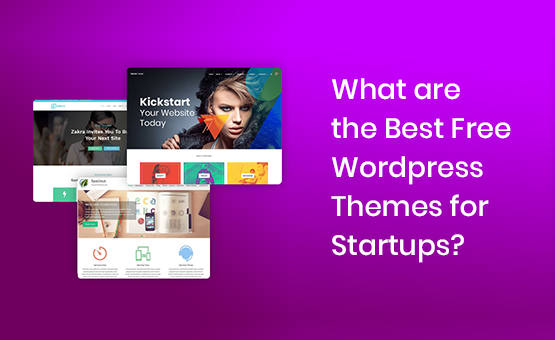
Are you looking for what are the best WordPress themes for your startups? Having a responsive theme that works and looks great is inevitable for growing your business across the Internet. It gives a website a stunning look and touch without needing to write a single line of code. Yes. It is true. Don’t fret – Believe me. I’m going to show you the best, free and first-rate WordPress themes for your startup business. Just pick any one of them and your client will fall in love with you. Related Read: What is a theme? How Can I Find a WordPress Theme for My Startup Business? It is simple but NOT easy to choose the right WordPress theme for your startup company. Choosing a responsive, modern yet effective theme is way much better than changing your theme every time. Don’t waste your time and try these practical tips when you’re about to select your website theme: Consider Your Niche/Industry: Make sure that the theme you’re going to pick works in your industry, If you’re a blogger, look for a theme which displays content. If you’re running an online store, look for an eCommerce theme that could display your products clearly. Make Sure your Theme Represents your Brand: Do you want a bold look to display your creative side but distracts visitors? Or do you want a straightforward and simplistic website with a guarantee of easy navigation? Therefore, make sure your theme represents your brand. Responsiveness is Indispensable: Responsive is the currency of keeping your visitors hooked on your website when they’re using their smartphones. So pay as much attention to responsive themes as possible and you’ll get your business from nowhere to everywhere. SEO is all about Visibility: Ensure that your themes are SEO-Optimized. Because SEO makes you visible and Visibility is Salability. Browser Compatibility: Make sure your theme looks good on all browsers, not just on that one which you prefer. Test demos on browsers i.e. Google Chrome, Bing, etc. Test Plugin Integration: Ensure your theme supports all important plugins i.e WooCommerce plugins, YoastSEO. What is your type?: You’re ready, steady and go with your website, but wait, shouldn’t you still work on it? Relax, check out the best WordPress themes and plugins. Maybe, you get a better one. Look for a permanent solution, neither short-lived quick fixes. So now that you know how to go about choosing a theme for your WordPress site let’s take a look at the best options. Right now, you’ve come to know what key things should be considered before choosing a theme for your WordPress site. Let’s take a look at the easily available best option. Best Free WordPress Themes for Startups If you’ve been wondering what are the best WordPress themes, stop worrying, your search is over now. Begin from here by adding more relevant content into this blog – ( Now, you’ll move with a new strategy of adding more information into the content.) Free WordPress Themes for eCommerce 1-Divi Divi isn’t just a multi-purpose theme but also a visual page builder with matchless features.It can be used to build any website as per your business requirements. You can start with one of the pre-made layouts and customize in a way you want with the help of a drag-and-drop builder. Also, if you want to start from scratch, it is best to build entirely a custom theme in one-go. All-in-all, Divi layouts are completely mobile-responsive. It is equipped with all the best features i.e. Landing pages, social buttons, and gallery, etc. Key Features: Inline Text Editing. Drag & Drop Building Custom CSS Control 40+ website elements 800+ Pre-made designs & 100+ Full website packs Hover State Styling Fonts & Text Styling Shape Dividers Advanced Code Editing Animations Color Manager Filters and Effects 2- Neve Are you looking for a super-fast, easily customizable and multi-purpose theme for your website? Neve is the WordPress theme for you. It is multi-purpose, AMP optimized and responsive. So, either you want to establish a blog, small business, startup company; Neve is the perfect theme for you. Also, if you want to create a responsive storefront that could help you increase revenue, Neve is a free WordPress theme for creating an eCommerce website. The best thing about this theme is that it loads in seconds, adapts to your viewing device. Whereas its minimalist design with high extendibility, SEO-Optimized code will help your business website rank higher in Google SERPs. It offers unparalleled page builder compatibility with all well-known page builders such as Brizy, Beaver Builder, Visual Composer, Divi, etc. Neve can be integrated with WooCommerce along with lots of other features such as WPML plugin, RTL language, etc. Key Features: Custom Design of the Header and Footer Lightning Fast Speed Ease of controlling website layout options Zero % hurdle at the time of content editing and designing AMP Compatible SEO Friendly Markup Accessibility Ready Easy setup and sleek designs Quality Code and Full Support Here is A WEBA Natural Products – An Online Store built on ‘Neve’: #1 WordPress theme for eCommerce stores and businesses. View live Site 3- Customify Customify is a free multi-purpose WordPress theme with customization options. It is designed to be a flexible theme and lets you edit any aspect of the theme with an easy-to-use interface in the ‘Live Customizer.’ As it’s WooCommerce ready with drag-and-drop functionalities to make minimalist yet eye-catching landing pages. In short, it has everything from multiple sidebars, to page templates and translation support. Therefore, customify stands out as a highly-recommended WordPress theme for eCommerce websites. Key Features: Comprehensive Header & Footer Builder Fast Performance SEO- Friendly Easy of importing pre-made sites Page Builder Compatibility Lightweight Optimized source code & compatibility with popular caching and minification plugins A Live Example of a Website built on WordPress Theme: CustomifyMattress 24×7 View live Site Free WordPress Themes for Blogging 1- Spacious Spacious is really ‘The Spacious’ multi-purpose WordPress theme. Designed and coded by experts with impeccable professionalism. It will
6 Most Common Business Problems and Their Solutions in 2021
Are you planning to run your own company? Be ready, because you’re going to face some of the most common business problems along the way. Beyond a question, running a company isn’t easy. There will be times when unforeseeable events will change the course of your business. Likewise, going global could become a nuisance. Possibly, a diversified workforce could lead to internal conflicts or you’re failing to generate business leads because you’re not innovating your products or service and so much more.In this blog, I’m going to share 6 common business problems and their solutions in 2020. So, what are you waiting for? Let’s get started…! 1- Uncertainty Uncertainty is the big concern for existing and emerging businesses. Unfortunately, not every business owner and entrepreneur have Warren-Buffet like predictive capabilities to foretell future. That’s why; uncertainty has been one of the key reasons that businesses failed. There could be many sources of uncertainty such as Global Economy, Competitors Actions, New Technology etc. Well, if you’re thinking what causes uncertainty? Then, You should remember: – Uncertainty is a permanent part of a business. As much as you wish for predictability and desire more control but you can’t escape from reality. Sol You can’t prepare yourself for all future events, but it’s in your control to equip your company with the tools essential for fending off potential threats with specific plans for certain situations. Here are some practical tips which will prepare your company for the most common business problem (uncertainty): 1- Be Ready for Multiple Outcomes – An accomplished company always stay prepared for multiple outcomes. It is not a smart move to expect the most likely outcome will conclude every situation. Foresight is helpful strategy to respond effectively in all situations. The best way to prepare for uncertainty is to collaboration across departments and among employees in the planning process. This way, you’ll get unique perspectives that will result in clarity of goals. 2- Always Pick the Right Members for your Team – Having skills and competencies is important for the success of your team, but the mental capacity to think ‘out-of-the-box’ and creatively is a must-have. Therefore, always pick the right members for your team who have the conviction and expertise to handle uncertain situations, because if they can’t, your business will be going to fail. 3- Be ‘Agile’ but Execute Thoughtfully – Most of the companies run into trouble when their agile framework doesn’t work. Because attempting to be agile just by implementing rules is exactly like saying you build a helicopter only by following instructions only. Agility isn’t something you just read, and implement. It should be planned, executed, practiced and your workplace culture should reflect your agile policies. All-in-all, agile methodologies does produce extraordinary results, if they executed thoughtfully for anything from building websites to opening your business in another country. 2- Globalization Lean Methods Group (A Denver-based management consulting) conducted interviews and concluded that 7 out of 10 Fortune 500 CEOs mentioned ‘Globalization’ as one of their top challenges. Undeniably, globalization is one of the common business problems in 2020. Wondering why?Because, from understanding foreign cultures and penetrating into new markets to designing new products for new customers, and standing out in disruptive competition isn’t easy.Solution – How you can utilize from globalization strategy to expand your business? For businesses, it’s inevitable to familiarize with different cultures and international markets. They need to concentrate more on information-gathering and learning ways to better analyze and interpret data appropriately. Meanwhile, government internet in local economies is sure to happen which might lead to increased uncertainty for any organization or a business to operate globally. 3- Innovation Innovation as a process has never been smooth. It demands well-built environment in place so people could be encouraged and enabled to generate ‘Outside-of-the-box’ ideas – freely and consistently. There should be right tools in place for the successful innovative process to offer value and growth of a business. Innovation is a key factor for success of a business. Nurturing a culture where your people could innovate products and services is mission-critical. But businesses fail to combat internal challenges which lead to the death of innovation inside a workplace. When it comes to common business problems and their solutions, lack of innovation comes first. There is a big list of companies that started off well but failed to innovate and they collapsed. Here are four big challenges for innovation in the business world today:- 1- Innovation is restrained to one group only. 2- Lack of cross-departmental communication 3- Lack of customer empathy 4- No Innovation Strategy Solution – How to develop a culture of innovation inside your company?The trick here is to find ways to become more innovative while maintaining control over the organization. Also, be sure to communicate your innovative ideas to stakeholders like lower to middle management and employees, not just present them with a fait accompli. The trick is simple. It doesn’t cost a fortune to nurture a culture of innovation inside a business. A better way to for a company to become more innovative is to bring in clarity in all processes while maintaining control. An open-door policy will even take cross departmental communication to the next-level.Also, you must take all stakeholders from employees to customers for creation of better innovation strategy and soon you will realize that a business problem which you’d been facing is getting resolved. 4- Technology Does this number 19,400,000,000 rings any bells? I hope — None! It’s the total number of websites created in the previous year 2019. But the tricky question is – How this surplus of information will help you to optimize and grow your business? Definitely, Not!It is the information overload… And, this overload of information is a direct result of technological advancement. For decades, technology has been improving at a rapid rate. Today, it is more evident than ever before. That’s why; investing enough resources in technology has become more and more difficult. Business owners and entrepreneurs
Questions to Ask Before Hiring a Web Development Company

A website is the real face of a brand. It acts as a source of interaction between you and your targeted audience. So, if you’re aiming for instant online presence- building a website is inevitable for you. In a recent study, it was revealed that online visitors spend approximately 55 seconds on a website that they visit: you, as a brand, has a leverage of 50 second to use or misuse this opportunity. It is accepted fact: creating a website is not a piece-of-cake, especially for people, with little or zero technical know-how. Since, there are thousands of web developers struggling to get your attention (and hard-earned money), how do you pick one that is reputable, affordable and easily accessible? I’ve made it simple. Start with these questions and you will definitely land on to service provider that will meet your requirements successfully: What platforms will you use for building my website? Is it Magento, WordPress, and Shopify? Which platform should be used for the development of your website? Definitely, a web platform is the foundation of your website and rest of it will be built on that platform. There are pros and cons to attached to it. So, you must inquire about it and make solid reasoning to gain clarity. What research strategy do you apply before starting off web development process? Rest assured: this question aparts amateurs from professionals. Many web developers are prone to start building website without prior research and this undisciplined approach is called ‘Cowboy Coding’ that impacts process negatively. Whereas, professionals ensure correct practices. The correct research strategy for web development starts with unique market positioning and helping your brand grow from nowhere to everywhere. In the end, asking about research is must; if you want to succeed at web development efforts. How much time do spend on web development process? Good web development is time-taking process. You shouldn’t rush inadvertently. Be realistic and find out how agile they are when it comes to project completion. If you’re expecting to get an amazing online site designed and launched within a week, you should rethink. Because it is rash approach. However, evaluate how quick that service provider will help out. How much this website development will cost me? I don’t advocate to find the cheapest, or badly priced web developer for your site. Always look for better options but don’t forget: there are many companies that charge high amount of money for petty amount of work. Remember- your website is an investment but don’t let this development become an endless money pit. A good service provider outlines everything and ensures execution of development process on mutually-decided terms and conditions.
Boost Your Brand with Affordable Website Development Company USA

Are you brainstorming eagerly and planning in-depthly to build your brand or want to establish an online business? But, unfortunately, failing fast in turning your ideas into reality. Time’s come for you to stop feeling worried because Golpik is presenting its best services to clients encompassing everything from timely delivery to affordable prices and free unlimited revisions. We are the least expensive web development company in USA as we put your satisfaction over our monetary advantages. We are Trend-Setting Web and App Developers We strategize masterly and execute smartly to make your business move from nowhere to everywhere. Our creative developers and crafty designers put their best efforts to optimize your entrepreneurial ideas. They help clients in building money-making and widely useful brands and businesses. Golpik understands the fact: Let alone thriving, no business can survive without leveraging the power of internet. Therefore, we help businesses reach optimal level of internet presence for quick conversion by offering ‘top-notch web development services.’ Make your Business Front Page of Internet with our Creative Web Development Services We build websites, applications, software, and web stores for brands, companies and individuals across the globe and help them streamline their workflow for greater productivity and profitability. Our experts are fully familiar with the hurdles come along the way in website development, application designing or branding, and they don’t leave any stone unturned in transforming your ideas into viable and user-centric products and services. You will find us significantly different as compared to other service providers in the USA because we put you FIRST and we come SECOND. We Create. We Innovate. We Inspire. We nurture the culture of ‘Innovation, Creative Freedom and Inventiveness’ at Golpik. That’s why; we always hire out-of-the-box thinkers, innovators and top-notch strategists for our services- Mobile Application Development, eCommerce development, Website development and UI/UX Services. As far as our vision concerns, we want to bring revolutionary changes in technological landscapes with our pocket-friendly yet highly professional services. Unlike other dodge companies, we don’t manipulate customers. In fact, we provide value, help clients escalate their efficiency and achieve their goals at budget-friendly services. We Offer End-to-End Web Development Solutions Especially, if you want to get One-Stop solutions with heuristic approach; Golpik is the powerhouse for you where you’ll experience versatility. From DevOps, and Magento to Drupal and Shopify; we provide complete solutions of your problems. Similarly, we have the best and well-trained In-house teams for customer success that act quick to solve most critical issues of clients. They build empathy and help you in getting value-added and valid solutions.All-in-all, with our profound experience, technical competencies and most talented workforce, we’ll transform your brand into money-making machine. We provide continuous support and quality assurance, that too at discounted prices because we just don’t serve customers, we build long-lasting relationships.