
Leading SaaS Industry Trends for 2021 You Must Know

Introduction: Software as a service (or SaaS) is a way of delivering applications over the Internet—as a service. Instead of installing and maintaining software, you simply access it via the Internet, freeing yourself from complex software and hardware management. Software-as-a-service (SaaS) is getting to be a progressively reasonable choice for organizations in terms of openness, usefulness, and versatility in a vicious commerce environment. It’s remarkable for companies to run SaaS computer programs and maintain online information without having, introducing, and running applications on their computer frameworks and information centers. As such, these advancements are rising in ubiquity each year. SaaS is taking over the cloud computing advertise. The world predicts that the service-based cloud application industry will be worth $143.7 billion by 2022 a level of development that will shape SaaS patterns in 2021. SaaS may be a computer program demonstration that provides such functions that are not available in our computer and cost-effectiveness for companies, that is why it’s such a dependable alternative for various trade models and industries. A breakthrough year for the SaaS: 2019 was a breakthrough year for the SaaS world in numerous ways. With an unused year on the skyline, in this article, we’ll investigate 10 fundamental SaaS trends that will stand out in 2021. But, sometimes we are going examine the common characteristics rotating around the industry that will offer assistance put extra light on the SaaS industry patterns for 2021. The Key Characteristics of SaaS: Some key characteristics of SaaS application that is very beneficial and helpful for the public who used that service and make SaaS the number one service throughout the world. ● Flexible payment options: Adaptability in installment models, where they were paid only for the asset utilization they require, for the occasion and they do not require to pay a whole month. ● Scalability: Cloud-based SaaS empowers businesses to grow with ease due to its wonderful versatility. Companies can be specific about the types of highlights and choices they want. ● Updates: SaaS providers handle the necessary software updates and develop new features over time, so businesses don’t have to invest ample amounts of time in this particular area of operation. ● Accessibility: With SaaS, businesses have the versatility of getting SaaS applications from any advanced gadget and area, making it particularly convenient for portable platforms. ● Increased collaboration: SaaS improvements improve a business’s capacity to advance collaboration over groups and divisions due to the facilitation of record sharing, in expansion to particular ease of perusing and understanding new business. ● Security: Most SaaS models are known for their enterprise-level security, which could be a more all-encompassing approach to security than numerous centralized, on-premise arrangements. Top 10 SaaS industry trends: We see a long run of SaaS growing with a little specialty in markets being caused by Micro-SaaS and Vertical SaaS trends. Also, AI, moving to PaaS, and white-labeling trends lead to more complex and personalized cloud offerings coming into play. At long last, a mobile-first may be a given whereas building cloud apps in 2021 and beyond. The top 10 trends of SaaS are given below. ● Enhanced Mobile Optimization ● White Label SaaS ● Artificial Intelligence ● Vertical SaaS ● The Growing Need For API Connections ● Migration To PaaS ● Micro-SaaS ● Centralized Analytics ● Low-Code Capabilities ● Machine Learning ● Enhanced Mobile Optimization: In our mobile-driven age, we’re free from the boundaries of time or geological area, meaning that individuals can interface with their peers and remain beneficial 24/7, 365 days of the year. Increasingly, companies over segments work basic parts of the businesses from their tablets or smartphones. Furthermore, more workers than ever feel engaged to perform their employments way better by being able to work with energetic portable dashboards and different instruments. ● White Label SaaS: One of the most recent and most interesting current SaaS points, the development of white labeling will be gotten to be more noticeable in 2021. Essentially, SaaS white labeling could be a handle where software-based commerce makes a completely created, tried, and finalized stage and then offers it to another company so they can customize and offer it beneath their claim branding. ● Artificial Intelligence: The primary of our most impactful patterns in SaaS is the independent, self-learning variety. Today, Artificial Intelligence(AI) is deep-rooted in the veins of our society. AI made the breakthrough throughout the world because of its remarkable functionalities insights patterns for 2021 – and next year, it’s anticipated to create some genuine waves. Fake Insights innovation is getting to be broader; it’s getting to be a genuine game-changer, with anticipated market esteem of $733.7 billion by 2027. AI optimizes commerce forms, expanding efficiency and effectiveness whereas computerizing monotonous tasks and supporting human capabilities. ● Vertical SaaS: Our foremost SaaS pattern in 2021 is Vertical SaaS. In this SaaS centers on clients over any segment and industry, Vertical SaaS is customizable, focusing on clients inside particular businesses and supply chains. A few illustrations give analytics computer programs, retail analytics, or advanced coordinations analytics. Companies who are looking to advantage from specialization are finding Vertical SaaS to be a cost-effective, industry-specific alternative that permits them to refine the customization of certain highlights. ● The Growing Need For API Connections: The API (Application Programming Interface) has been a principal portion of program improvement for a long time. With the blast of SaaS solutions and adoption by the advertising, they have to be coordinated into an existing business framework showed up. ● Migration To PaaS: That said, in 2021, we anticipate seeing SaaS moving towards the domains of PaaS (stage as a benefit) – advancements that engage businesses to construct custom apps as add-ons to their unique administrations. ● Micro-SaaS: A SaaS trade focusing on a specialty advertise, run by one individual or a really little group, with little costs, a contract center, a little but committed user base, and no outside funding. Thus, micro-SaaS like several imaginative and important industry on the rise, expansive numbers
Choose the Right-Hosting Provider for Your SaaS/Web Apps
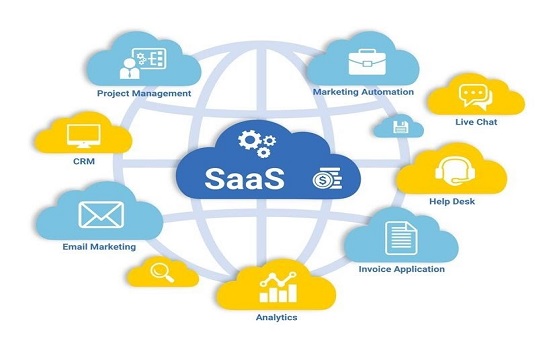
Over the ten years, SaaS has grown to be the primary service delivery model for companies across all industries. According to a Gartner report, over 70 percent of companies utilize this model. The SaaS delivery model has indisputably changed how software vendors market and sell their software. With SaaS hosting, companies can create, distribute, and manage software on the cloud easily and in a more cost-effective way. However, the success of any SaaS delivery model is dependent on several factors including the flexibility and scalability it offers. It relieves companies of hosting and managing applications on premise by hosting applications in the cloud. What Is SaaS? SaaS — Software as a Service — for example, Gmail or other cloud applications; the client uses the application, the basic settings of the application are managed by the provider. IBM reports that 80% of companies increased their use of cloud managed services in 2017. The two driving factors are complex technologies and competition. Companies are now finding it too expensive to constantly build and upgrade servers in-house. SaaS hosting may transform your business by:• Delivering new technology to companies that previously couldn’t afford it• Significantly reducing the technology bill when compared to on premise servers• SaaS applications interconnect more easily compared to traditional software, increasing company efficiencies• SaaS hosting provides 24/7 Why do you need to evaluate hosting options for your SaaS product? As aforementioned the hosting company and the type of hosting you choose can make or break your business. Remember the application’s performance is very much dependent on the hosting. As such, you need to first figure out your hosting needs requirements. Some of the crucial metrics that you’ll be looking at here include the cost of scaling to cater for huge traffic, cost-to-performance ratio, web app storage space, and support. It’s vital to know the different types of hosting services available when choosing your SaaS hosting service provider. Currently, there are three main hosting services. They include: Shared hosting With shared hosting your website is hosted on the same server with other anonymous websites. Meaning that you’ll share space as well as other resources with other users. Shared hosting is the cheapest among the three. However, it’s major drawback is that it is less secure compared to cloud hosting and dedicated hosting. Cloud hosting Cloud hosting, on the other hand, is IaaS (infrastructure-as-a-service) cloud delivery model. With cloud hosting, your website’s data is stored on multiple, different servers. This means that if one server fails, another one will kick in and keep your website running. Cloud hosting is a perfect option for business owners who require near-perfect uptime and want to grow their servers as they see fit. Dedicated hosting With dedicated hosting, the entire server is dedicated to a single business. There are several benefits of using dedicated hosting such as on-demand deployments, single tenancy, consistent performance, customizability, security, and scalability. However, the benefits are relative to the use case – and the needs of the business. With that in mind, let’s look at how to choose the best hosting for your SaaS product. 6 Things to consider for choosing the right Hosting Provider for your SaaS/Web App The best way to select a SaaS provider is by doing it the way you would select your own technologies in-house. That starts with a thorough understanding of your business. Technology isn’t the only factor in a successful investment. Your SaaS solution must drive business value as well. You must connect the dots between software and revenue, and everything in between. You’ll go through cycles of technology investments during your business’ lifetime. Be sure your SaaS host will support them all. Consider the following six factors when choosing an SaaS provider: 1-Understand Your Unique Business Needs There is a great deal of chatter online about the ‘Best SaaS Hosting Solution.’ But it is the individual support of your unique business needs you should have in mind. Start by assessing exactly which services you would like to shift to an external provide. This can be things like:• Website and server hosting• Server backups• Cloud Storage• VPN• DDoS protection• Server Administration and Management• Content Management Systems Cloud companies have proliferated so that there is an ongoing list of capabilities they can provide. Determining exactly which services you need is a great first step. Pricing is another business need you should consider. You will want to balance capabilities with your pricing points. This becomes more difficult as you juggle the different capabilities you want from your solution. For example, you want cost-effective scalability. If your company grows quickly, you must facilitate that growth. Look for pricing structures that support this on your terms. Does your SaaS hosting solution support all present and future capabilities you will need? Don’t corner yourself by selecting a solution you’ll change only a year from now. You have a clearly outlined business plan, which should include your technology details. 2-Evaluate the Technological needs of your business Even as your business begins to shift away from in-house servers to SaaS applications, you still need to consider the resources you may decide to host internally. Perhaps you have an in-house accounting system. Your own IT team manages the system, and you’d like to keep it that way. So, what does it have to do with SaaS? You may find you need to integrate these solutions with cloud applications. You may want that accounting system to link up with your Customer Relationship Management portal to cut down on bouncing between applications. Interoperability with these is essential, even if you don’t need it at first. Make sure to consider all of the applications you currently run, and work with a SaaS provider that can integrate with as many of them as possible. 3-Consider How Your Investment Will Support Future Initiatives As your business grows, you will want to scale your SaaS resources. Ensure your SaaS provider has fair offers when it comes to increasing your investment. They should offer discounted pricing for