
Agile and DevOps: Optimize Your Development and Operations
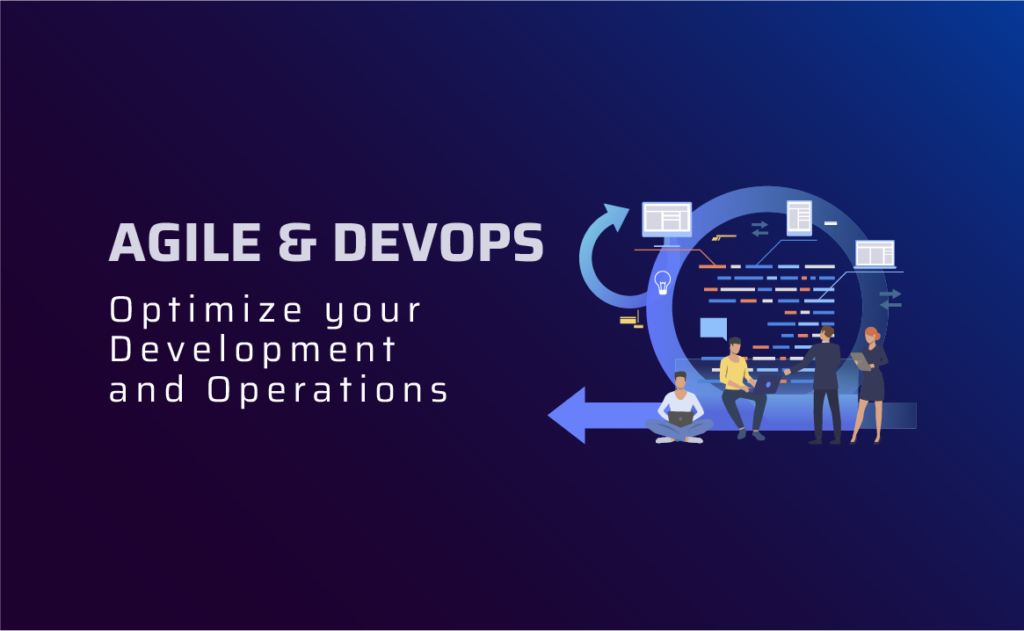
What is SDLC (software development life cycle) The process in which we formulize that how we developed software within the given budget and resources. It involves composing an arrangement of interrelated programming code, which gives the real picture for the software creation. It comprises planning, defining, designing, building, testing and deployment. The life cycle characterizes a technique for making the quality of software and the generally advanced process of development along with a standardized approach. Software development methodologies: There are lots of software development methodologies and applications for specific projects not for all. All methodologies have distinctive qualities and shortcomings and exist for distinctive reasons. Here’s a list of the foremost commonly utilized computer program improvement methodologies. Agile Devops What is Agile? The term “Agile” was coined in 2001 within the Spry Pronouncement. “Agile may be a term used to depict approaches to computer program improvement emphasizing incremental approaches, group collaboration, arranging, and continual learning, developmental improvement, early delivery, and nonstop advancement, and it empowers adaptable reactions to change. In computer program improvement, agile include finding prerequisites and developing arrangements through the collaborative of self-organizing and cross-functional teams and their customers. What is DevOps? DevOps is the combination of operations and approaches that is for an organization’s capacity to convey applications and software faster than conventional computer programs. This speed empowers organizations to superior to serve their clients and compete more effectively within the market. DevOps is almost following the boundaries between customarily groups, advancement, and operations. Beneath a DevOps model, development and operations groups work together over the whole program application life cycle, from improvement and test through sending operations. Misconception that Agile and DevOps: There’s a common misguided judgment that agile and DevOps cannot work together, which does a disservice to everybody within the program development and in a related field. In reality, both approaches can altogether include straightforwardness, review, and adaption to way better empower items to create, provide and support complex items. Both agile and DevOps encapsulate extraordinary thoughts and enthusiasm that can include esteem to how groups work, guaranteeing the victory of their organization in a world where commerce is both driven and disrupted by software. Both agile and DevOps want to provide esteem to clients in a more successful way, but from diverse beginning points. Agile with the engineer, and DevOps from operations. Their accentuation moreover changes, driving individuals to accept that they are distinctive things. Agile emphasizes group intuition, culture, and values, whereas DevOps emphasizes conveyance pipelines and flow. Agile and DevOps Can Work Together: Agile and DevOps may be diverse, but that doesn’t mean ought to receive superiority to one another. The Agile technique and the DevOps technique can work together and give incredible efficiency. “The two terms are certainly diverse; the agile focus on an iterative approach to improvement, and the DevOps brings two traditionally isolated areas together one is improvement and other is operations, that are ordinarily separated. But the extreme objective of each one is of both to create collaboration and satisfaction to the customer,”. The great news is that it’s not essential to commit to one approach over another. A blend of both techniques can be utilized to guarantee and increased productivity. Both have major parts to play when it comes to computer program advancement and arrangement, and one can be utilized to empower the other. DevOps and agile are not commonly the same. Any organization transitioning to DevOps ought to easily shift to agile workflows. When utilized together, both processes make successful software, more advancement, and lead to superior products. Agile and DevOps are particular, even though their similitudes lead individuals to think they are the same. This does both agile and DevOps a disservice. Both are computer program improvement strategies; there’s no debating this. Agile has been around for over 20 a long time, and DevOps came into the picture decently recently. Merging Agile and DevOps: Numerous points of interest are common in agile and DevOps. Counting, speeding up performance, higher client demands fulfillment and successful collaboration inside a team. Combining the core of DevOps with the culture of agile requires changing in existing methodologies and operations but having little changes. Understanding: The agile technique requires individuals who take an active part in projects. The common understanding is particularly vital for both agile and DevOps. To effectively deliver the product, they have to know each step required to convey the product. Collaboration: DevOps includes the improvement in group working for particular operations. The already specified parts include all aspects of the preparation and operations. Practices: Both follow lots of practices and repetition just for the sake of fulfilling user demands and expectations. Automate workflows: As mechanization is a fundamental portion of DevOps improvement, it ought to be included within the agile workflow and extend its working mechanism. Rising fields, follow automation from manual workflows within the IT environment. Measure success: Blending agile and DevOps moreover includes evaluating and measuring the end-to-end development. Agile Vs DevOps: Agile: Agile follow an iterative approach that centers on collaboration, client input, and little, quick releases. Agile makes a different strategy for complex projects. Agile focuses on early changes. Agile strategy can be executed only for strategic models like a sprint, secure, and scrum. Agile advancement emphasizes preparing all group individuals with different skill sets and raises their skills. Small-Group is usually used agile development process. As littler is the group, the fewer individuals on it, the speedier they can move. Agile follows flexible development in terms of dates. DevOps: DevOps is considered a way of bringing improvement and operations groups together. DevOps’ main focus is on end-to-end building processes. DevOps is consistent in testing and delivery. The essential objective of DevOps is on collaboration, so it doesn’t have any commonly acknowledged framework. DevOps isolates and spreads the ability sets between the improvement and operation teams. DevOps try to fulfill development on exact dates. The actual objective is to convey
What is DevOps and Why Does It Matter During Product Development
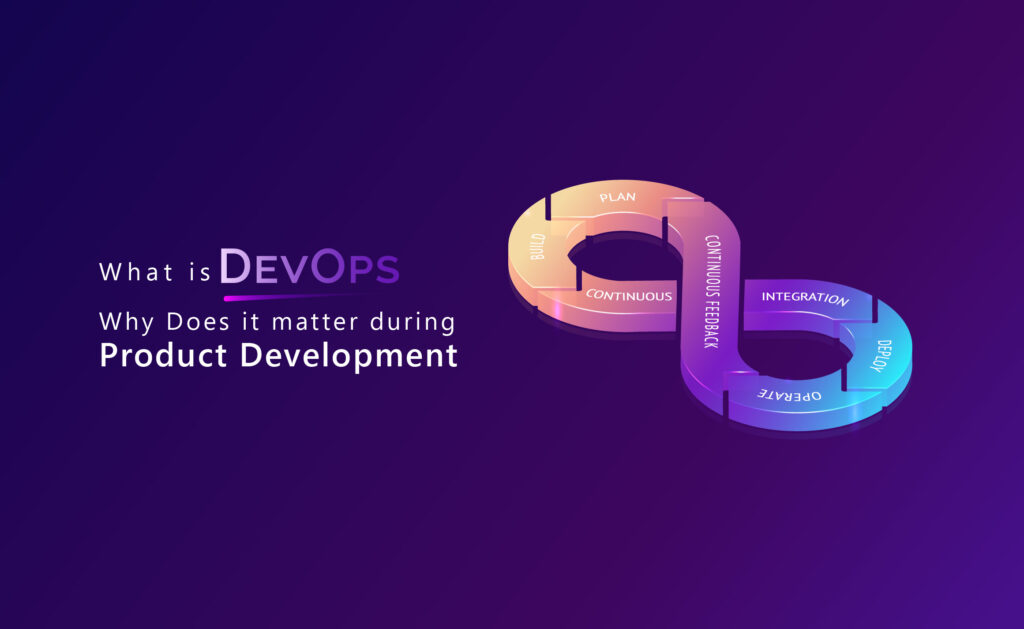
There is a great consideration between dev and ops, making it a complete term DevOps. The word “DevOps” somehow confuses the people, particularly non-technical ones. No formal definition exists for this term and the internet is presenting different guides for solving the term of DevOps. The internet also presents a spectrum of problems and skills to resolve this term, making the essence of the word somehow understandable to both the technical and non-technical people. “DevOps” is a combined term of two factors. The first one is “dev” which refers to development. It specifically means the processing and development of a product. Developers in the scrum team generally represent the product’s owner while keeping the product-based backlog. It assures the processing of a product’s development in the best form. All developers are directly interlinked in developing the product. The second one is “ops” which refers to “operations”. In a non-agile-based approach to software development, the products are developed using the best engineering capability and specialty. The responsibility is focused to release the product while streamlining its operations. A product is finally built using agile software development, ensuring a better chance for continuous development. At all times, DevOps ensures customers’ products competitive and running in a smooth direction. The DevOps team adjusts, changes, and reacts to products to run systematically. It needs a specific way to work while splitting a responsibility in the long-term. Smooth coordination is needed to rapidly respond to changes, making the product run through different stages of development. DevOps could be better understood after understanding the term etymology. A simple definition is that the skills set in agile software development needed for keeping the product’s work with complete flexibility. Common DevOps Tasks: Every developer requires an infrastructure to begin working for DevOps product development. This process needs to be reliable, secure, efficient, and stable. Such infrastructure continues evolving at different intervals while adjusting the product lifecycle. This is the step where DevOps skill becomes important to be considered for further product development. DevOps is not only run through the database server, but it is developed through the infrastructure-based system. It makes the product participating through different architecture and designs. The development team develops the product using different DevOps methodology. It is particularly used and requires more functioning similar to the development of a Linux system configuration. Apart from complying with a formulated plan, it is important to consider Agile Manifesto, making the change and response to be implemented smoothly. DevOps work requires a strategic integration and deployment of product change quickly. The great knowledge of the tools comes into existence when considering the DevOps skillset. It supports teamwork in releasing software smoothly while automating the entire process. For example, it implements the ultimate continuous deployment, continuous delivery, and continuous integration. The concept of “working software” is another term to be considered from the Agile Manifestor when it comes to understanding DevOps. There exist few essential matters that are needed to be covered, such as to craft a product, design it completely, and change it routinely. The complete DevOps product cannot be achieved until the software product is continuously monitored for better performance. It then comprises many things that are needed to be systematically monitored for the better functioning of the software product. This strategic way can help the product to work perfectly while avoiding the consequence of a failure. Why DevOps is Important? DevOps skills should be properly included in the work of a development team. A coordinated team and operations are required to manage DevOps operations, as have been stated above. However, there exist some drawbacks that come during the process of product development. The process of gathering feedback from every user should be done merely after the completion of the product’s finishing outcome. Afterward, the response to change should be focused collaboratively through teamwork, making it highly effective and perfect in the long-term. A product missing DevOps capabilities could experience different problems. Such a product cannot be a part of the agile development team. The missing of DevOps capabilities usually means the following: Other Ways DevOps Can Accelerate the Product Development: The product development lifecycle can be accelerated through a spectrum of ways. Some of the most effective ways of speeding-up the product-development are as follows: Faster Delivery of Features: After a developer develops an application or software, they start connecting it through the IT-based operation. It is particularly done to test the product for better efficiency. If a new application or software is in place, then the process to test becomes necessary for a successful product. Similarly, if there is an updated version of an application or software, then there is already created a testing environment. It then necessitates the IT operation team to start configuring the product, ensure side applications, and add interfaces. Quick Recovery from Failure and Enhanced Quality of Code: Upon releasing a product, application, or software in markets, every developer focuses on the project-based parameters. These include operational responsibilities, future updates, and fixing bugs. This strategic task can be better achieved through DevOps technology. It can support developers to remain updated with the product lifecycle. It improves the quality of code while running through every development stage. It quickly recovers from failures particularly after increasing the quality of code and the fixation of identified bugs. Improved Efficiency: The DevOps methodology motivates every developer to continue devoting the ultimate time to creating values for the product. In general, routine tedious working is needed to ensure integration and automated testing of the software product. However, there comes a matter of configuring or ensuring code integration. The above tasks are generally accomplished through the click of a button. Consequently, there is achieved true work efficiency with complete enhancement. The challenges are also resolved systematically through this factor, making it complete a value-creating work. DevOps – It’s More Than That: Few major general definitions of DevOps are necessary to be considered before initiating a software product development. It requires focused teamwork together with a
How Business Intelligence Helps Manufacturing Companies
Are you thinking how business intelligence can help manufacturing companies? In fact, Business intelligence isn’t new. First came under the limelight in the 1960s; it has developed into modern tools, software, and effective practices to help companies and business to optimize their performances and increase sales and conversions with the help of data. In this blog post, I’m going to share relevant and reliable information on business intelligence for manufacturing companies. And, this will help you find understand What is BI, how it works and so much more. So, what are you waiting for? Let’s begin…! 1- What is Business Intelligence? Business Intelligence (BI) is NOT a specific thing; It’s an umbrella term that covers processes, methods for collection, storage and analysis of data from business operations or activities to optimize a performance of any business. BI helps companies make informed decisions based on historical data. Plain simply, BI gives a comprehensive view of your organization’s data to drive necessary changes, get rid of inefficiencies to adopt market or supply changes quickly. Business intelligence or BI is the mix of business analytics, data visualizations, data mining, lots of data tools and effective practices to help your organization make data-driven decisions. BI tools analyze data sets and provide analytical findings visually in reports, graphs, charts, interactive maps and summaries with detailed information about the current state of a business. 2- How does Business Intelligence work? Every business has questions and goals. And it leverages the power of data to find answers to these questions and monitor performance against those goals. Therefore, every enterprise or business needs to gather relevant data, analyze it and has to be determined to find out quick actions to reach ultimate business goals. Technically, raw data is collected from the overall business activity. It is processed and later on, stored in data warehouses. And, when data is stored once, it lets users access the data, and analyze the entire process to answer complicated business questions. What are the benefits of visual analytics and data visualization? Understanding data is tedious for an average human being. Humans are visual creatures. It loves visuals. Research says that ‘90% of information transferred to the brain is visual’- It further shows that the brain can understand visuals 60,000 times faster than words/texts. Here comes, Data Visualization: It shows data with fine-tuned patterns and differences in colors. Visual analytics make data easy-to-access and easily understandable. Visual Analytics integrated into dashboards tell data stories effectively and highlight trends or patterns which are hard-to-discover when analyzed manually using the raw data. That’s why; visual analytics and data visualization are of immense value for businesses as they help to communicate complex data with ease. How can Business Intelligence Help Manufacturing Companies? A- Increases Operational Efficiency As BI can make huge volumes of data easily understandable and accessible, it helps to improve the operational efficiency of manufacturing companies. From product modeling to analytics, it can minimize and correct errors throughout the development process. It incorporates viable financial models, BI evaluates capacity and material requirements periodically. In practice, BI simplifies complex processes from productions to shipping. Business intelligence is the best way to incorporate transparency to the network from fulfilling market demands to forecasting, supply chain management and sales strategy. Likewise, it eases up team performance analysis and puts forth remedial measures for timely allocation of scarce resources. B- Informed Decision-Making With an ever-growing influx of data from multiple resources, it creates a necessity to have a well-defined system for flawless management, utilization and storage of relevant and important data, here comes ‘Business Intelligence’ for your rescue. BI tools access cumbersome, large databases and transform them into easily comprehensible structures. Similarly, visualization tools help simplify complex analysis and present them in a minimalized way with key business metrics and KPIs. And, it will help business executives in informed decision-making at all levels. It is the beauty of business intelligence that it can test ‘What If’ scenarios to analyze alternate strategies. As a result, it helps business to improve its risk-taking capabilities. C- Inventory Control Inventory control is an inevitable operation of a manufacturing company. It works to regulate the performance of the firms. Realistically, with zero or no control over inventories, a business is doomed to fail. By incorporating business tools, your inventory cost will diminish across location and time. Likewise, you can test and simulate new manufacturing products with ease. In the long run, BI pinpoints defects and helps reduce process flaws after analyzing turnover rates and margins based on products, departments and sellers. D- Financial Risk Assessment BI tools are surefire solutions for optimization of available resources and improvement of ROI. They can be leveraged for profit and loss analysis, sales analysis, and so much more. Since, it’s indispensable to escalate profit margins, both (external profit building and Internal cost reductions) play key roles in this regard. At this stage, Business intelligence tools help to identify unexplored streams of revenue and mitigate internal costs. As a result, it lets an in-depth cost-benefit-analysis to help businesses and companies manage production costs in better ways. All-in-all, business intelligence works to manage and monitor by streamlining operational procedures. E- Supply Chain Management Business intelligence is of incalculable value for supply chain management as it evaluates SCM performance on day-to-day basis and analyzes overall data to make sure quick deliveries with quality service. Identify changes in supply and demand and monitor freight costs. Long story short, BI evaluates shipment performance and helps to optimize the value of suppliers. F- The Future Role of Business Intelligence Business intelligence is constantly fast changing as per business needs and technology. Therefore, there are new trends to keep BI enthusiasts and analysts up-to-date on innovations. Same way, AI and machine learning continue to evolve, they can be integrated into a broader BI strategy to produce in-depth insights. Since companies, businesses and entrepreneurs put forth great efforts to be highly data-driven, their efforts to collaborate and share data will escalate highly. What are the
Google Maps Goes Social with Local Guides Feature

Google Maps isn’t just a road maps anymore. It has worn a role of a navigation app suggesting which meals should you try where, foretells public transit crowds, and most importantly, helps in translating names of foreign places. All-in-all, it can help you with your next adventure – and, credit goes to Local Guides. Are you wondering – What are Local Guides by Google? Google launched Local Guides Program in 2015 with anticipation of taking on Yelp Elites by allowing the most active Maps contributors and as a result they are given status of ‘Tastemakers’ in their own hometowns. In fact, Guides are in-depth business reviews with photos to help Google Maps users find and learn about any area or a location. If you’re a contributor, this program enables you to contribute you to Google Maps greatly – add reviews and photos, upload videos, correct information and that too in exchange for perks and benefits. This pilot program will let Google Maps users to follow top Local Guides in selected niches just by clicking a new “Follow” button on these users’ (Tastemakers) profile pages. This way, the Guides’ recommendation will pop up every time while you’re using Google Maps. Likewise, a new tab has also been added named “For You” in the app which works to find area recommendation from the Local Guides. At the moment, Google is piloting this program in a few major cities across the globe i.e. Delhi, New York, Tokyo, São Paulo, Mexico City, London, Bangkok, Osaka, and San Francisco. Hopefully, if it goes well; it will expand to other markets as well. A big caution with Local Guides is that they should be a good source for business information. But, in reality, all the crowded information is from regular people, instead of professional reviewers or critics. It means that quality of the Local Guides reviews can be Hit-Or-Miss. On the other hand, Google looks highly concerned with Local Guides to be highly engaging in big quantity forgetting quality and review accuracy. The new recommendation feature is about to be tested in places where pilot program is being run (London, San Francisco, etc.) It will focus more on photos instead of words. That’s why; on the ‘For You’ tab of Google Maps, their recommendation would be displayed as Photo Collages- It will give you more of an Instagram-like feel right on the Google Maps. In the end, Local Guides are the people. They can tell you how may you experience a new place. And how that’s going to be valuable for you. In Local Guides, you will find everything from photos, reviews to everything to help you make your journey stress-free and time-saving.