
Why Cloud-Delivered Software is Ideal for Business Growth

Summary Use of Cloud delivered software services is growing and will likely continue to do so. The blog will help you understand why you need to migrate to the cloud for your business productivity and growth. Imagine spending thousands of dollars on setting up, maintaining, and upgrading the hardware and infrastructures for your on-premises software only to end up spending more money on further maintenance, data recovery (in case of an IT disaster), or when you decide to scale up the software. Nerve-wracking isn’t it? What if we tell you there is a way to kick on-premise hardware to the curb along with its hefty expenses and maintenance? Let’s find out how it is possible. No Need to Get into the Technicalities Yourself You do not need great technical sophistication to create and operate the software you want, you just need to know exactly how you want it to operate. Next, you have to discuss it all with your software developers and let them create the scope of work outlining your software. The software is then built according to your specification in several stages. You just need to make sure that you monitor and approve the progress at each step so that the final product mirrors what you initially wanted. Why is ‘Using’ it better than ‘Running’ it? Want to know something interesting? The software you see on your computer screen, probably through a web browser, or on your mobile is not running on it, it is actually running somewhere else….on the cloud! The software is being delivered to your browser as a service and you are simply ‘using’ it. Still not sure what that means? If you’ve ever used an online service to play games, order food, purchase anything, watch movies, or done just about anything on a computer you have used software-as-a-service (SaaS) which is being delivered to your browser and is running on the Cloud. Your software developer will set this up for you, and it will fully eliminate all of the heavy liftings. It makes little to no sense to through all the hassle of creating and maintaining on-premises software if you can simply plug into the internet and use your software. Cloud is Here to Stay Here are some of the reasons why businesses, if not already, should migrate to the cloud include: Disaster Recovery & Backup Let’s accept it, IT Disasters are unavoidable and there is little we can do to prevent them. This is why a disaster recovery strategy is a crucial part of every business. Businesses that wish to ensure excellent disaster recovery without the cloud must set up a separate data center, which needs an additional cost and this is not the end of the story. They must also put up the tools needed to replicate data or offer backups for system restoration. Cloud-delivered software can handle all of this without the need to invest in any sort of infrastructure upfront by providing off-site backup for all your business data leading to faster data recovery. Accessibility Cloud computing provides secure, anytime access to mobile or desktop devices, allowing employees to use any combination of locations and technology that suits their work style. If you want access to your data while you are away from your office, you can quickly and conveniently login to your virtual office. Cloud apps that provide Software as a Service (abbreviated SaaS) simply require an Internet connection to access data. Automated Software Updates When you use the cloud, you no longer have to bother about acquiring, installing, downloading, and upgrading software. Cloud computing providers handle this for you, including security updates, freeing up your time to focus on other elements of your organization. Cost Efficiency Cloud computing decreases or eliminates the need for organizations to purchase equipment and build-out and run data centers. Being in the cloud means that your infrastructure is being managed by someone else. This will not only save you money but will also relieve you of the burden of dealing with servers and difficult hardware upkeep. Instead of buying a complete software package and paying the additional cost for features or tools that would be of no use to you; pick and choose the applications, services, and features you need and only pay for them using cloud computing. Scalability Cloud-based solutions are a great choice for businesses with growing or fluctuating bandwidth demands. Cloud migration enables upward or downward business expansions based on the needs of the company. Small firms may quickly expand their processes into new territories, and major enterprises can spread their offerings to an international audience by utilizing cloud migration. Cloud computing enables rapid and easy resource allocation in a monitored environment where overloading is never an issue as long as the system is properly maintained. Let’s Get Started Adopting the cloud doesn’t have to be complicated. The benefits of reduced costs and complexity, flexible scalability, automation, and easy accessibility are simply too alluring to ignore. For starters, here are some final points to consider: Conduct a cost-benefit analysis. Discover what kind of computer hardware management technology and VM technology different private cloud IT service providers offer and what their team’s strengths are. Virtualize your existing environment as much as possible. Here’s a piece of advice, don’t do it alone! Turn to a trusted and proven Cloud IT Services provider to help you navigate through the cloud confusion whether your organization is new to the cloud, or you need to expand or consolidate existing cloud services. Contact Us if you’d like to understand exactly how moving to the cloud can reduce costs, enhance efficiency, and support innovation in your organization.
Cloud vs Data Center: What to Consider for your Business Startup
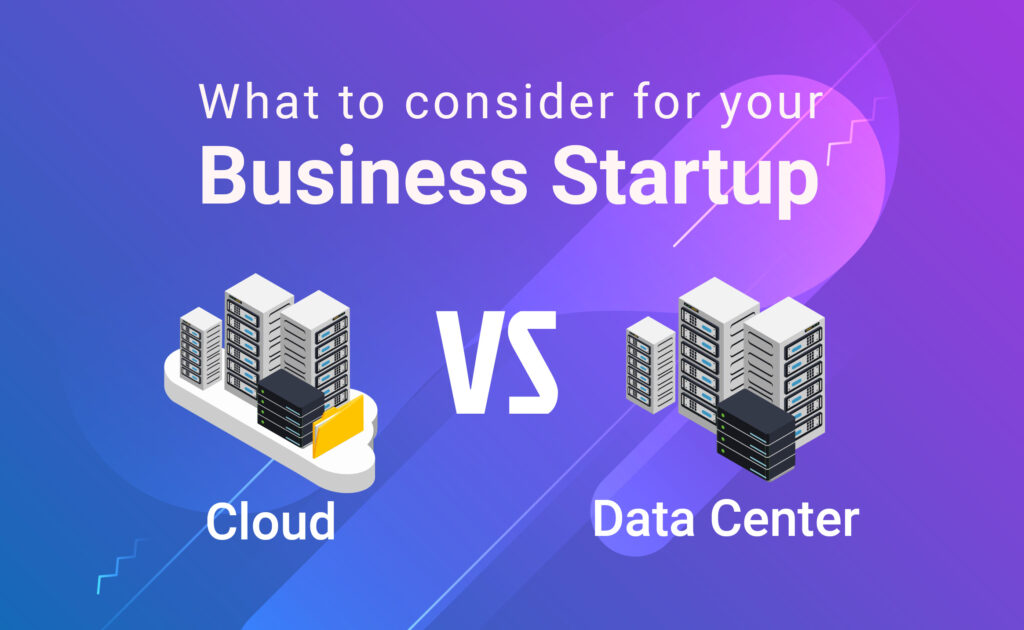
The process to store and move data has rapidly emerged with huge expenses and modern aspects. The selection of software, hardware, and infrastructure need is powerfully bounding several firms. The companies are working hard to develop a robust system that can integrate a well-defined and cost-effective organization. The primary decision-making process of businesses and organizations would generally assemble many IT-based project selections. It is specifically done to process the company data and systemic power to a physical residing level. It is obvious that the supporting infrastructure, servers, and computers are generally bought and set up with on-demand rates. However, it is thankful for the advanced virtualization and distribution of computer systems that the development of the digital system has become possibly easy. They are readily done for hosting and functioning the entire physical remote system and hardware to be systemically working. The companies have been confronting with the major two options of Cloud and Data Center nowadays. These two selections have been charting the development of the traditional data center into a modern-based cloud data center (CDC). It is always good to know the difference between such two kinds of computing-based systems. They could support any business to grow and make a decision independently and set up a data pipeline successfully. Cloud vs. Data Center: What is the Difference? A data center is a specific location that provides access to any member of the firm. It provides housing of ancillary devices and collected hardware that is ensured for running an internal-based network. It is also used for storing data, running different applications, and hosting digital systems. The traditional data center is on premise base, clarifying that every function is running with the physically site-based system and office-based spaces. A data center could be of some computer networks through the whole building, blade servers, climate-controlled room, or a desk. Its management is done through the in-house IT group and its payment is made through the firm accessing the data center. In general, the cloud or the cloud data center has been serving a similar aim to the traditional data center. However, its location is set elsewhere in the physical term. It is also used for distribution over different locations. Similar to the traditional data center, the CDC bases the IT infrastructure system of a firm while managing its third-party services. Security: Apart from the growth advantages of computation and cloud storage, several firms select for retaining in-house IT groups. They do it for remaining on-premise owing to the measures and controls that are affordably provided through the traditional data center. Through the administration and development of a personal system, a business could ensure keeping full responsibilities and authority of the respective contents and data infrastructure. The process of utilizing the cloud enables every customer to reply on its essential factors of hosting, cybersecurity, and reliability. It particularly includes strict compliance needs and related performance and high availability, leading the decisions to be done directly through the traditional data center. It is always a top priority to keep information secure regardless of the cloud or data center on-premises. Every organization needs to ensure the protection of their records, proprietary knowledge, and defending against data breaches. It is good to know that the on-premise data center and the cloud data solution ensure the best level of security for all organizations type. Cost: The process to build and plan traditional data centers includes few time constraints. These generally include hefty upfront investments and continuous working. Some kind of hidden cost is involved in the process from the administrator’s payment to the power-based bill and HVAC payment. It also involves troubleshooting, communicating, documenting, and man-hours work and payment. On the contrary, no basic investments are required in the cloud. The CDC pricing scheme is also comparably much deliberative. For example, it has a straightforward and transparent payment system that estimates the overall payment of on-premises data centers. In general, every customer makes the payment for the exact resource being used. It could include the storage capacity or the computational power. It completely minimizes the entire price of ownership whilst correcting the account and financial plans. The cloud data center is directly maintained and administered by the provider. It means that all worries about outages, downtime running, repair, tuning, and software updates are done directly by the provider. Customization: The cloud is generally termed Infrastructure as a Service (IaaS). It is due to the customers being getting accessible flexibility and virtualization instance of hardware that the concerned providers offer to the organizations. This type of provider capitalizes from increased resources and better infrastructure, particularly thanking the focused delivery of specific services. It clarifies that there is an easy-to-use system in the cloud data center. It has high customization business-driven needs and has more agility over the traditional data center. The process to tweak the on-premises system needs to be focused on working while purchasing an added software and hardware. Similarly, the cloud provides an ability of storage capacity, networking capability, and computing resources through the fingertips on the button. Scalability: There is an on-demand resource in the cloud, making the benefits of a CDC more transparent and rapidly deployable. The scaling process of the traditional data center has the involvement of new costs, new challenges, and new plans. The cloud has the capability of scaling this systematically in the due time with much cheap cost. In the period of big data, firms are continuously finding the volume of related data expanding while revealing completely new resources. The cloud is truly prepared for the constant increase of data, making its scalability more unique in nature and a more future-proofed application. Cloud vs. Data Center: Which is Better for your Business? In the recent period, several firms have changed their options toward the cloud for a better infrastructure requirement. CDC is the right selection for a small business as it can provide correct computational sources while not requiring any IT-based team to deal with the expensive hardware.
How to optimize your cloud performance and reduce cost
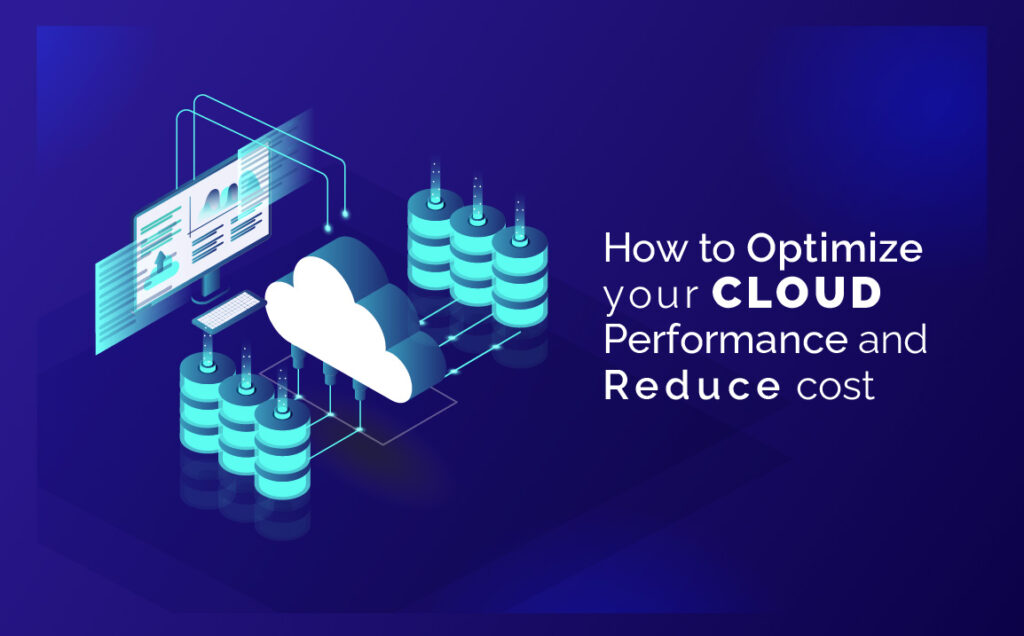
Cloud cost optimization is the processing way to minimize the entire cloud spends through the identification of right-size computing services. It also includes identifying the reserved capacity for higher discounts, eliminated wastage, and mismanaged resources. Cloud computing is changing in different ways that help in building and deploying renowned applications. Nowadays, cloud computing models are proliferated and changed with different forms, making it typical for technological leaders to adopt them. An informed decision is initiated by technology leaders for every cloud-based service. The best resulting outcome is achieved through the payment and platform models of cloud services. Businesses are now adapting to the cloud journey, making a framework of different cloud cost-management techniques. Such cloud instances lead to uncontrolled proliferation, driving providers and services to generate a higher cloud cost. It necessitates organizations to mitigate few general challenges that occur during the cloud cost optimization process. Key Challenges of Cloud Cost Optimization: The cloud cost optimization processes involve different requirements, making the product-based lifecycle process run through different demands. It may need the integration of technological innovation together with IT services. Many challenges occur during the process of cloud cost optimization. Businesses require many years of experience while functioning through different cloud projects. The below are few key challenges every business experience when achieving better cloud cost optimization: The Best Practices of Cloud Cost Optimization Techniques: Concerning the matter of cloud computing, there is a proper need to carefully and efficiently using the approach for direct analysis and continuous monitoring. It assures in a right optimal process, leading to achieving proper cloud resources. The below are few demanding effective ways of optimizing spend on cloud services. These ways are also the best practices to manage infrastructure-based efficiency: Cloud Optimization Use Cases: While initiating the migration journey toward the cloud, the AWS-based system involves a setup of a giant solution that supports managing and optimizing spend. The solution mainly includes the application of usage data, tracking costs, organizing resources, and utilizing AWS cost optimization tools. AWS cost optimization support in improving the control via different access permissions and consolidating billings. Cost optimization in AWS allows a reliable plan via forecast and budgeted outcome while leading to lowered costs of cloud optimization services. Microsoft Azure supports managing cloud spending properly. It then focuses on different matters of the firm, such as finance and resources. Azure cost optimization enables underutilizing resources with Azure-based Advisors while getting through a proper recommendation service. Moreover, Microsoft Azure and its cost optimization process reduce spend, reconfigures cost optimization processes, and consolidates them. Finally, Azure Cost Management helps in monitoring the firm’s overall cloud spending, making it doubled and resourceful for a better future. Other Cloud Cost Optimization Best Practices: Finding Unattached or Unused Resources: An easy way of optimizing the cloud cost is to review the unattached or unused resources. Developers or administrators may use up temporary servers for performing different functions. They usually forget to turn off servers after the completion of jobs. Moreover, they forget the removal of storage being attached to servers or so forth. A good cloud computing strategy starts when the identified unattached and used resources are completely removed from the server. Identifying and Consolidating Idle Resources: Identifying and consolidating idle resources is the main step in optimizing cloud computing costs. For example, idle computing usually consumes up to 1% to 5% of CPU utilization. It causes a significant waste of resources and finance. Administrators generally operate low utilized functions, but their act of forgetting to consolidate idle resources is a big mistake. It is quite a complex process of adding newly introduced resources to the data center. They are also inefficient and expensive, leading to an impact on on-demand capabilities, load balancing, and auto-scaling. It finally ends up with more power consumption, thereby increasing the costs of cloud optimization. Utilizing Heatmaps: As mentioned above, cloud cost optimization gets a direct impact from heatmaps. It is a visually displayed tool that shows up the peak and valley in computing demands. This step could be valuable in creating a start-up time while reducing huge costs. It identifies whether a development server is safe enough to be shut down on weekends, leading to achieving optimized costs from the best-leveraged automation system. Right Size Computing Services: Right-sizing is an effective way to analyze computing services that are later modified to achieve more efficient sizing. There are different options for a server to optimize the storage capacity, graphics, computing, database, and memory. They work individually in reducing cloud costs, making it simply work with highly achieved peak performance and resources outcome. Taking Benefit of Spot Instances: As mentioned above, spot instances have a different aspect from return on investment. However, they can save huge resources and finance on Azure spend and AWS spend. They are truly suitable for specific computing cases, leading to accomplish jobs with the right efficiency and outcome. They can also be eliminated quickly, resulting in a more reduction of cloud cost optimization strategically. Considering Single Cloud vs. Multi-Cloud: Few companies apply multi-cloud solutions for avoiding vendors’ locked-in aspect. It is a wise strategy to increase uptime and availability, but it causes risks to lose possible volume-based discounts comparing to single-cloud vendors. For example, they can miss out to reach a $1 million tier from a vendor if they spend on Azure + $200,000 on Google Cloud Platform. The valuable amount of the $1 million tiers could be a great discount on cloud-based spending from a single vendor. In contrast, the firm’s capability of saving finance and resources could be double from the multi-cloud strategy. It is because the outweighed amount from administrative hassles can be switched between different platforms. It can finally lead to payment for multiple cloud services, training staff, and network traffics. Importance of Cloud Cost Optimization: Regardless of the firms’ involvement in the cloud journey, cloud cost optimization has been continuously evolving at the top concerns. With firms moving more towards cloud workload and services, it has become
3 Steps for a Successful Cloud Migration Process
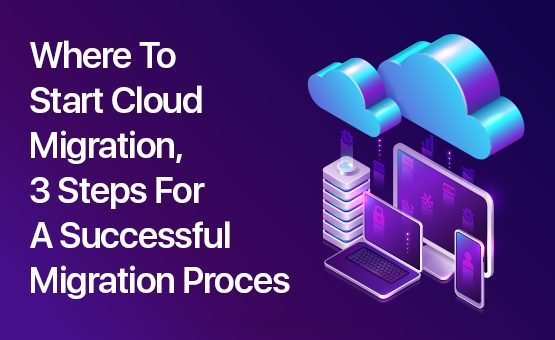
Nowadays, the success and failure of all businesses rely on technological innovation. Many firms have adapted to technical business, enabling them to grow and expand more technologically. Businesses are confronted with increased needs, requiring them to streamline their IT infrastructure in a more scalable manner. It is pertinent to note that IT infrastructure consumes huge costs, both on traditional demands and on-premises. It is because businesses need to constantly train the staff, update software, and buy and maintain new hardware. Before cloud computing, firms need to make a huge investment to remain updated with the technological trend. It mainly includes keeping updated with the latest capital and IT infrastructure factors. The inception of cloud computing has eliminated the above need of remaining updated with the latest technological game. Cloud infrastructure provides the capability of scaling IT-based infrastructure up and down, mostly based on the firm’s current demands. The best advantage of cloud migration is cost-effectiveness, security measures, and scalability. However, there could be great hurdles concerning the matters of testing, execution, and planning. A survey revealed that only 27% of businesses showed their extreme satisfaction with their entire cloud migration process. What is Cloud Migration? Cloud migration is the processing function of shifting business elements, applications, and data from the company’s computers to the cloud. It is generally an online network of shared resources that provide networking, storing, and computing services on a need basis. The firms having on-premises computing are more needed to migrate to cloud services. Cloud migration drags down under-utilized and outdated resources and subsequently makes the company’s on-premises system flexible and agile. It also rapidly adapts to the market’s needs, making them more workable with on-premises IT infrastructure. In other words, cloud migration provides numerous benefits, such as competitive edge, control, disaster recovery, mobility, scalability, security, and cost reduction. Cloud Migration Steps: Plan and Prepare for Migration: There is a need for better preparation before actual migration to the cloud. The level of preparatory needs depends on different businesses’ factors. However, businesses need to initiate some basic steps to migrate to the cloud. First, the reasons need to be clear as to why the firm is migrating to the cloud. The cloud provides several advantages, but every firm needs to be aware of the actual and right advantage that it seeks to avail. It is always a better idea to designate a manager for planning and overseeing the overall migration process. Amid a huge migration process, the company has to initiate several technical decisions and planning factors. It is pertinent to note that the success of every cloud migration project depends on the overseeing management of a specialist. There exist two ways to migrate applications to the cloud, particularly while moving applications from the on-premise data center. These are deep cloud integration and shallow cloud integration. In the shallow cloud integration, the process involves moving the on-premise applications to the cloud-based system. It is also called the “lift and shift” system where applications are run through the changes made in the server system. The application change is simply accepted into running in the new environment. In this process, cloud-unique services are not used for better efficiency. This strategic process is called “lift and shift” because applications are started lifting and shifting to the cloud interaction. In deep cloud integration, the process involves modifying applications amid the migration process. It also involves taking advantage of key cloud capability while remaining simple in the use of dynamic load balancing and auto-scaling. It is as general as using serverless computing capability for the partition of applications. Choose Your Cloud Environment: Before starting the cloud migration, it is essential to choose the right cloud model for a better adaptation. For example, the company needs to decide whether it will prefer a multi-cloud environment or a single-cloud environment. A single cloud environment is encompassed with the use of a single-based cloud migration service. It is a provider that serves a single application and service that the company makes a decision when migrating to the cloud. It can facilitate either public clouds or private clouds, particularly based on the business’ future and current demands. Moreover, it lets businesses shift moving their workload to the cloud as the need grows. There are also options for expanding the range of virtualized servers based on a single cloud and its server-based limitation. It is often noticed that businesses with a single cloud model apply cloud-based single service/application. These mainly include customer relationship management (CRM), enterprise resource planning (ERP), email, or related ones. A multi-cloud environment is encompassed with several public cloud services. It includes organizations using multiple different providers. A varying cloud is utilized for different tasks to be achieved, such as reducing vendor’s locked-in or best-of-breed result. It is again pertinent to note that not every cloud is developed equally. For example, cloud services relating to sales and marketing might have different requirements, as compared to R&D or software development. In general, different cloud solutions have the capability of meeting such needs much efficiently. This type of cloud solution benefits companies with more added peace of mind, such as through minimization of dependencies on a single provider. These may be supported with both increasing flexibility and decreasing costs. Cloud services offer different service factors through a single focused service. These may include Software as a Service (SaaS), Platform as a Service (PaaS), and Infrastructure as a Service (IaaS). The cloud-based other service factors may include Testing as a Service (TaaS), management, security, integration, application, process, information, database, and storage. Migrate Applications/Data and Then Review: The general migration process goes quickly and smoothly. It involves a carefully planned migration process, letting firms to decide on their migration needs successfully. The decision is made based on the size of applications and databases. Different techniques are used in copying the data from manifold resources. If there is not much data available in the company, then it can simply migrate by copying pasting the data and information.
How Can Cloud Computing Supports Your Growing Business
Nowadays, firms have been continuously adapting to cloud technology. It is a basic idea to incorporate into the capability of accessing storage capabilities and distributed computer processing. Under a 2016 poll, it revealed that 41% of companies plan on adapting to cloud technology. Now large firms are accepting trends of getting fast, as compared to their rival companies. Comparing to 35% of small firms, cloud computing firms account for up to 51% of large corporations. Cloud technology is effective in enhancing operational efficiency and customer-driven service for all businesses. Every firm now adapts to cloud technology because it enables the workforce to work remotely while saving huge corporate costs. Around 64% of surveyed firms determined their keen interest in cloud technology due to its ease of convenience and economics. They claimed that they are happier to allocate increased budgets for their cloud computing needs. Improving Operations: With growing needs, cloud technology helps firms in scaling their computing solution. It is a past practice of forecasting servers to be purchased for the business service. Now firms no more keep hiding servers to expand their business practices. Firms have now been altering their usage with cloud providers. These may include high powered service solutions from Microsoft Azure or Amazon Web Services. The cloud provider is in the practice of identifying more finance, charge, and space for the respective business. However, the firm can decrease their usage based on their decreased requirements of computing resources. The business now fulfills its computing needs through the cloud technology scales. A complete host of the new application is now opened up for businesses, enabling them to fulfill their large firm-based cloud technology needs. For example, Business Insider determined that Toyota leveraged its cloud-based technology for transforming their cars into a “connected platform”. Toyota also used Microsoft Azure service for hosting its app network while connecting their cars to Facebook or rewarding “eco-point” to use as an electric vehicle. Supporting Customers More Effectively: Apart from creating valuable apps for customers, cloud computing technology allows for better-oriented customer support services. There is no more practice of a single employee handling phone calls from 9-5. Customers now demand a rapid answer and purchasing need all day long. Cloud technology is the best resource for business-driven needs. It enables employees to access the same recorded services and information while providing direct customer support all day long. The customers are believed to come to a single platform to receive all their support services. The customer service is specifically provided with more strong connections and relationships. These may particularly include the use of the desktop computer, laptop, or mobile device. It allows for more room for customer service while sharing the same information from everywhere. Even the small business is now in a growing practice of fulfilling customers’ need for high-bandwidth and high-quality information through cloud computing. Enabling a Flexible Workforce: The company adapting to cloud computing technology also creates benefits for their employees. The workforce can work from home particularly with the shared information stored online. A Gallup poll revealed that there was an observed 37% increase in the workforce been working online in 2015, comparing to 9% in 1995. In 2010, many firms transformed their business practices into cloud technology. The average workforce is believed for telecommuting two days per month. It is cloud computing that has enabled the workforce to work from home, particularly with their right connected information. The cloud has enabled working through Bring Your Own Device (BYOD), thereby letting employees work from home for more than one company. Saving Infrastructure Costs: Firms have been benefiting from decreased infrastructure costs due to employees’ working from home. There are fewer desks needed to be availed when the workforce prefer rotating from office-based work to home-based employment. An example is Zapier Company that experienced its startup working through entire remote working. Zapier’s business model no more needs the maintenance of an office-based building. It saves the company’s lot of finances while lowering the cost of starting a successful business. The other cost of services, such as purchasing computers and servers, are also reduced with its startup process. These are particularly supported through the cloud computing technology of AWS and Azure. The cloud-based service is also beneficial for entrepreneurs and startups. It mostly supports the service of API integration that many startups avail for their better processing of operations. Another example is customer relationship management (CRM) software that enables startups to integrate their accounting software into their business practices. Different software as a service (SaaS) firms have been highlighting such integration as a great business advantage. This service also ensures scalability for businesses, making them a more focused cloud-oriented company. It finally supports businesses to get a cheap and less capable service, thereby expanding its business horizon beyond their business development needs. Storing Data Safely: The security concern becomes essential for all small, large, and medium-sized companies as they start adapting to cloud technology. However, safety is quite recorded in cloud services, determining that security is not the top concern for firms anymore. An example is the Toyota Company that safely stored its data online while turning cars into connected devices. Toyota’s adaptation to Microsoft Azure led the firm to dedicate its security much safer while performing cloud-based data storage services. Cloud service is continuously working on its security measure to fulfill the needs of its customers, thereby making the security issue less concern nowadays. Increasing Productivity: Direct investment in the cloud enables companies to offer a central repository for every of their information, processing, and communication. This strategic central point enables the workforce to work from any part of the world. The workforce and customers can connect online 24/7 through the use of internet-connecting devices. Cloud services increase productivity by saving financial resources. The workforce can conveniently connect to customer relationship management software. Many startups are believed to generate huge productivity through cloud services, making them adopted more easily and favorably. This financial privilege
Are Cloud Managed Services, are Right for My Business?
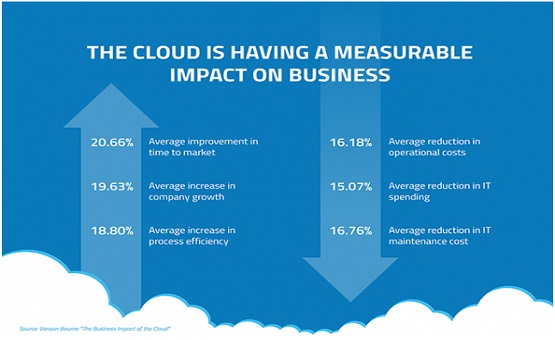
The cloud managed services determine a collaborative partnership among service providers and companies. It provides a great contribution among different factors, such as overseeing application performance, expertise financing, built-in infrastructure, and cloud technology. It creates an automated platform that extends all through the cloud stack. It ensures direct monitoring of optimal management for different cloud-based applications for the better future of companies. It provides a robust security measure while protecting the overall corporate data. It then offers an affordable private data-centered service, leading to align costs with usage in the peak time and according to the focused needs of the business. There is a spectrum of benefits inherent with the adaptation of cloud managed services. The companies’ decision to subscribe to the right cloud managed services can enable them to achieve diversified financial and technological business growth. For example, it can lead to the development of a data-centered facility. It can ensure minimal capital investment in an IT-based system. It can eliminate the requirement of hiring trained IT professionals that run the entire system-based applications. It assures the functioning of predictable and consistent application performance. It leads to better resulting outcomes through the management against service level agreement. Gain Positive Business Value: The cloud managed services help in gaining a positive business value. For instance, it supports translating into great employees’ productivity. It provides different levels of work unit services as well as decreases the overall costs. It generates higher revenues that are achieved similar to e-Commerce driven sales revenues. It derives businesses to get speedy market proportions that increase revenues and consumer retention. There is involved less time spending in maintaining the overall technology system, such as achieving the fastest level of technology innovation. It eventually provides great value for businesses through its cost-effective features. In fact, it’s a leading source for value generation, thereby exceeding the business values against its overall costs of investment. Improve Business Technology: The cloud managed services enable the CFOs to get an intensive interest in business value. It is highly driven from a slightly different perspective, meaning that it facilitates business technology from manifold resources. For example, it supports organizations in achieving a user-based technological system. It helps in leading the overall company’s workplace, such as financially determining as to how the use of technology tools can increase efficiency for the business functions. It is easily adaptable to financial software and specialized accounting systems, leading to run the general business applications and data analytics smoothly. It ensures better delivery of a software system that runs throughout the business functions. . Moreover, the cloud managed services draw on personalizing the experiences of firms. It deeply evaluates the overall value of corporate managed services. It specifically includes the business costs, ease of reporting, speed of updates, and application availability. It reviews the technology investment at higher levels and lets the firm’s assets and business operations to be running smoothly and securely. It focuses on the company’s cloud-managed services while aligning them with the capital operating budgets and corporate goals. It eventually assesses how the investments may affect line items and services that are utilized by the company stakeholders. The technology of cloud managed services is also beneficial in effectively reviewing corporate taxes, depreciation, earnings, and revenues. Offer Business Agility and Allocating IT Costs: The cloud managed services enable business innovation through robust agility. It ensures business success from the main spotlight and lets the business adapt to the latest tactics. It supports in saving the firm from downsizing staff while adding value to the business. It allocates IT costs and affects the share value of the firm’s assets. It increases customer confidence and makes it easy to track consumer queries. Its functionality in allocating IT costs then determines the actual visibility into investment. It subsequently identifies any issues that might be hindering during revenue generation. It facilitates all the business units and their budgets, such as avoiding Capex constraint and accounting complexity. Additionally, it mainly emphasizes the way of investment money rather than simply saving money for the business. It diversely supports business agility and renders services for better workforce flexibility. It perceives every calculated cost of hiring the workforce and helps in maintaining the budgets, as may be allocated therein. It also supports the factor of compliance with the labor laws and deals with every shared liability that usually arises amid the negative sides of the business. It supports the entire compliance needs legally and then personally reacts to responsibilities that are necessarily complied with the financial regulations and data protection laws. Deliver Maximum Value for Business: The cloud managed services are highly recognized with the factor of delivering maximum value for the business. It focuses more on the business value regardless of the company’s situation, such as being in the CFO or CIO organization. It is also best known in investment concerning the generation higher values for the corporations. It deals with different types of business goals when it comes to confronting the lost-opportunity cost which is a factor of the business market. Its delivery in the business impacts highly on workforce flexibility and employee productivity. It is further recognized in dealing with the Total Cost of Ownership, thereby assessing the business value in the longer terms. It is quite adaptable to achieve the required business agility, such as deploying and removing resources on a need basis. It generates faster business results that afterward lead to much flexibility in the workforce. It even facilitates flexible IT staffing, such as emphasizing innovation instead of simply maintaining the business value. Ensure Reliable Security: The cloud managed services offer a reliable security measure. It acts as a direct security expert in responsibly protecting the physical and online data. It enhances compliance profile and reduces the vulnerable situations of sensitive financial data. It then protects personally identifiable information through the adjoined security experts, particularly without requiring the need of hiring IT professionals. It provides recovery services according to the security of business needs and subsequently ensures
5 Reasons for Application Migration to the Cloud
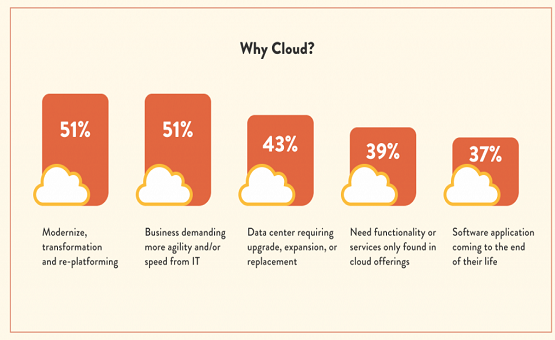
The businesses are now increasingly migrating their application to the cloud. Cisco estimated that over 80% of businesses are generating traffic through a cloud-based system. The leading vendors are delivering great performance through cloud management. A good example is Amazon that achieved a huge 42% increase in its revenues in the initial quarter of 2017, indicating a great value in performance. There is now an increased cloud migration wave throughout many businesses. The revenue-driven prospect has encouraged the businesses to migrate their storage, software, and data to the cloud system, thereby preparing them for a leading change in their respective industry. This blog determines five reasons why the corporate situations are now promptly shifting their clientele and corporate systems to the cloud. 1-Get More Value from IT The businesses now seek more ways of getting an increased value from their IT system. The entire cloud migration system can enable CFOs and CEOs to identify that their infrastructure-based IT system is quite expensive, leading to achieving less business growth. The cloud system generates maximum value for the IT operations while prompting an executive achievement. It also helps in embedding the company’s infrastructure into the targeted product and service. It can further increase business innovation and lead the IT teams toward the effective maintenance of their support services. There is eventually achieved forward-thinking ways for the businesses, leading them to achieve overall business growth. 2-Gives Efficient ERP System and Email Support to the Cloud The smooth migration to the cloud enables businesses to avail of the fastest moving ERP system. It supports the email system to the cloud and leads to more Software as a Service (SaaS) licensing. It generates a more efficient cloud solution for firms while enjoying traditional on-premises ERP businesses. It then drives the companies in gaining a more sophisticated change and software development system. For example, it ensures in achieving a more effective ERP and cloud-based software system automatically. It ends the needs of getting potentially unwanted upgrades, giving no chance of disruption in any way. A direct migration to the cloud enables businesses to achieve manifold resources and benefits. These include getting better infrastructure teams that are supportive of the email system and ERP solution. Another benefit and resource-based value are to get a fast-paced movement of business activities being carried out to the cloud. 3-Provide Large Hardware Refresh The cloud is quite useful in gaining a large hardware refresh, such as considering a large capital expenditure. The systemic migration to the cloud leads the businesses to remain saved from limited on-premises hardware. This tool is also useful in benefiting from depreciating assets that generally impact the companies’ borrowing abilities. It provides a giant technology shift for almost three to five years or more, thereby retaining a great business future afterward. The migration to the cloud is simply less expensive, meaning that the aggressively made investment in the cloud pays back profitably. The cloud has a better efficiency in leading the biggest possible workloads amid the fast-paced business operations. 4-Eliminate Business Outpacing Growth for Infrastructure: The businesses always seek effective ways of infrastructure development, causing them to shift to the demanding pace of the cloud. The businesses quickly grow from the cloud system and subsequently achieve better clients’ management. The cloud has become a bottle-neck for every type of business, encouraging them to avail of the right cloud technology system. There also comes a benefit of creating reliable new corporate systems, such as scaling demand of business and increasing the overall corporate operational speed. The cloud is a highly effective way of gaining rapid prototyping for businesses. For example, cloud technology establishes a fast-paced environment where the ideas move quickly and strategically. The cloud works automatically even when the business professionals leave the work for a while or for a certain period of time, such as during 1 p.m. break or amid the off-time duration of one or two weeks. The businesses also start working with simplicity, meaning that they enjoy a new development of servers throughout the year. The cloud technology reads the credit cards and other financial information instantly in minutes while keeping a secure web-based system. It eventually provides robust scalability of the products and services and subsequently exceeds businesses’ expectations in a wider manner. 5-Future is Cloud Technology for Businesses The businesses will be getting a diversified network of buying and selling their products and services, particularly in the next five years. The future of cloud technology is worth noting because it helps businesses in gaining an efficient migration system, selling off businesses, and maintaining of corporate data. The IT operational activities become highly adaptable to every business through cloud technology, leading the businesses to work through a severance IT agreement. The businesses finally get a chance and adaptability to acquire other IT-supporting projects and firms while identifying the best driven corporate IT applications and data.
Why are Cloud Apps on Rise?
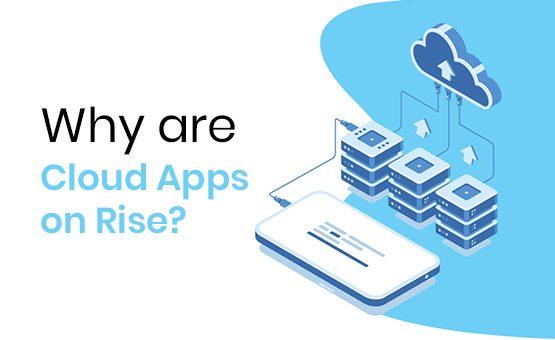
Are you wondering why cloud apps are on rise? Well, This revolutionary smartphone technology with over 5 billion users along with 2.6 million Android and 2.2 million iOS apps is telling us why cloud apps are rising and how it is impactful in our daily lives. These numbers and figures show that cloud apps will escalate productivity and efficiency of not just individuals but also companies and enterprises everywhere. Because, ● Cloud apps are affordable.● They are independent from the confinements of local servers.● They are highly secure and support every operating system. Although, benefits for mobile app development are boundless for all industries from healthcare management, hospitality to travel; cloud app development is the one that stands out in the competition. Therefore, I’m going to share in-depth and practical information on the use of cloud apps. This blog post will help you find answers to your questions related to cloud-based applications – effectively and clearly. Let’s start….! 1- Ease of Data Recovery As you know data is primarily stored on a local server for a native application. But think for a while, what if the server goes down, and unfortunately, you lose some of your key data; do you know what repercussions it holds for you? You can never recover your data, once it’ll be lost, it will be forever. Yes, it’s true. Keeping your data on a local server is that risky. Whereas cloud is the safe heaven where your key data is also safeguarded and remains threat-free. You should keep one thing in mind when it comes to the safety of your online identity and information – A data loss isn’t good. Because, either you’re a business owner or just an individual, data is the key to open doors of unusual opportunities. You can lose the whole database for good unless you’ve some of your data backed-up. And, here comes cloud-hosted applications for your rescue, because they can recover all of your data in 1Click, even if you lose it – By mistake. So, ease of data recovery is one of the reasons why cloud apps are on the rise because your data will always be secure and you can recover your data in two-clicks. 2- Data Security Cloud apps are highly secure and they are easily retrievable. That’s why; they are on the rise. Since cloud mobile has all of their data stored in the cloud; with top-notch data security and accessibility, it is the cloud technology that not only protects the privacy of customers and guarantees quick access to information but also helps companies grow effectively. Despite base-less and unrealistic misconception that majority of netizens believe that it’s not right to use cloud apps just because their crucial information is stored in the cloud; cloud- based applications are becoming high-in-demand because they are well-protected and secure. In practical terms, it is a cloud host that manages network security instead of In-House IT department which has to juggle among different activities with zero guarantee of data security because in most cases it’s internal leakage of data that leads to enormous data theft for big companies and enterprises. So, wouldn’t it be better to say – Your data is safe in the cloud than relying on vulnerable on-site servers? 3- Cost-Effective Cost effectiveness is another motivator that is driving entrepreneurs, companies and ecommerce businesses to shift to mobile cloud applications. Cloud application frees you from the constraint of native mobile app development which is expensive. Another important thing you should keep in mind: The more features you will embed in your mobile applications, the more that will cost you. In contrast, cloud app development does favor to startups, entrepreneurs and SMEs because it is significantly cost-effective. And, cost-effectiveness is one of the key factors that determines MVPs. On deeper level, cloud-apps rule out native applications due to three main reasons, and they are validated and easy-to-understand: 1- Cloud apps are made with broader vision and greater perspective of an ‘End’ in mind of business owners. This is why Cloud apps are on the rise, because they are expansive and detailed. 2- They don’t incur additional maintenance cost but ensure quick and flawless execution: It puts entrepreneurs and startup-owners in ‘WoW’ moment. Because cloud apps are pocket-friendly and easy-to-implement. Meanwhile, it adds more functionality into your apps/business. 3- Cloud apps support both mobile operating systems i.e. Android and iOS. It says: you’ll not have to think much about which platform will suit best to my mobile application requirements as cloud application can work on these both world-class mobile operating systems. 4- Ease of Scalability with Little or Zero Disruption Are you surprised about how cloud apps are easy to scale with little or zero disruption involved? Let’s first get hold of thread of Native apps and start unravelling sweater of this competitive confusion. Native apps, as it sounds, are apps that are developed for use on particular platforms or devices to accommodate certain needs of users and service providers. They are maintained on regular-basis which adds more costs into the overall development process. Well, any loophole can make security of your native apps be compromised, which is highly risky for your business and your application. On the other hand, cloud mobile apps ensure greater scalability with little or zero disruption. A company doesn’t have to pay extra money for adding new functionalities, fixing technical glitches, and improving user user-experience. With native app development, this process is tiresome and takes cost. If you are a get-it-done of business owner with plethora of work and ideas in a pipeline, cloud app development is your thing. Because a mobile developer can eliminate glitches and can push updates with ease in cloud-based applications. Plus, a developer doesn’t have to download or install apps on their devices. Therefore, cloud apps are easy to scale with little or zero disruption with unlimited benefits. 5- Time- Effective Native and hybrid mobile app development is a time-consuming, energy-draining, and iterative process. On average, it takes