
Key Role of Project Discovery Phase in Custom Software
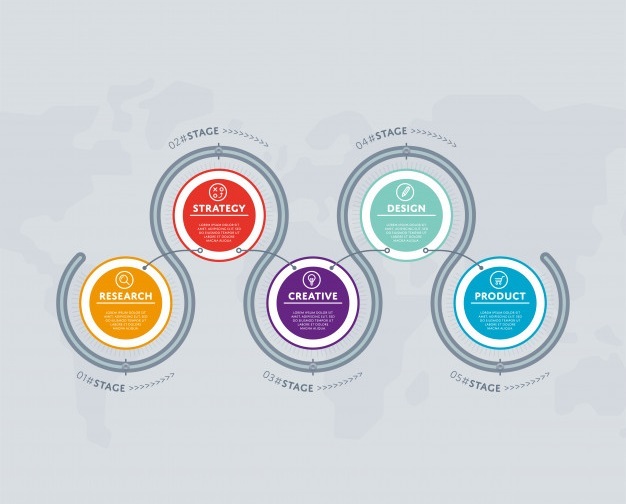
Well how often in everyday life do we come across the launch of a new product such as a software or a website or any product benefitting any cause? For the target audience it is just a product launch, but only the business owners know how many steps an ideal project undergoes to be launched and made available. The minor ones may vary company to company but the primary and most vital steps taken by the business owners are pretty much what makes the product good or bad. The primary thing to start with is the critical thinking and planning where all the aspects of the project are analyzed very carefully. In this blog, we will go through the main and the most vital step in the custom software development cycle. Main stages in Project Development Typically a project undergoes a series of trivial steps and these steps may vary a little with respect to the name but are usually the same. The main stages are as follows: Initiation:As the name shows, initiation refers to coming up with the idea of what you are going to design. It means getting a nod on the idea from everyone included in the project and the initialization of the project. Planning:The time window and the steps to make the project successful such as the resources to utilized, the people and their roles and deadlines for every role. You need to plan the whole thing to make sure that everything is well organized. Execution:The core role where the execution and the implementation of the project takes place. The main steps of development and testing after which the product development reaches the final steps closer to the launch. Monitoring:The step where you monitor the post execution phase of the project. The performance monitoring of the project where the project’s progress is figured out according to the launch and release. Project Close/Release:The final launch of your product when the product is presented to the end users and the customers. The customer decides whether the requirements are actually met or there is still room for improvement. Project Discovery Phase: What is it and why is it needed? This brings us to the main topic of discussion of our blog that is what is the discovery phase and why is it absolutely necessary for a project to undergo this phase. The Project Discovery Phase is the process of collecting and carefully analyzing the information about the project such as the main purpose, the objective and the problem statement and the solution. You need to define the scope of the project and the goal as well as the limitations. Most importantly, you need to decide your target audience and how your project will server their needs. The main heads such as the project manager, business analyst and the account managers are the leaders leading the discovery phase. Now let us answer the second question that is the purpose of why this phase is so important for the success of the project. This discovery stage keeps you aware of all the aspects of a project and most importantly gets you prepared for any uncalled circumstances your project can go through. It minimizes the chances of any uncertainty and risk causing factor deep rooted in your project. Pretty cool, right? Now let’s get slowly into the detail of the project discovery phase. Personnel’s Involved in the Discovery Phase A group of people are responsible for the implementation of the discovery phase. We will look one by one which role is important and why? Project Manager/Product Owner From the technical perspective the project owner is the person who decided the requirements of the project after either gathering requirements from the customer or by searching through the market to see what the requirements are according to the problem statement and the solution to be proposed. If using the scrum methodologies, the product owner creates a User Story that contains the business requirements and the steps to be taken. Another thing to be determined is the acceptance criteria of the project which decides when the project is accepted by the product owner as per the provided requirements. The timelines are also defined by the project owner where the defined time is the total time taken by all the persons involved in the development of the project. Interface Designer The designer which defines the user interface and the requirements that the interface needs to cater as per the requirements defined. The user interface needs to give accessibility to the main product keeping in mind the complexity levels as per the end user. The designers need to keep the estimated time in mind and create a prototype for the first experience and then keep modifying it till all the requirements are completely met. Software Developer Lead The key person involved who manages all the heavy development using a set of tools and a well-defined set of APIs as per the specifications of the project. The software usually goes through a process called SDLC (Software Development Life Cycle) where the necessary steps are proposed and the phases are decided through which the project undergo. It also includes the architectural and technical experts and their takes on the whole project. And finally after the project is developed, the testing phase starts which makes sure that all the requirements presented by the stakeholders are met and work perfectly fine. Stakeholder/Client The stakeholder or the client is the person that is presented with the final product. The stakeholder then decides if the project contains all the necessary requirements as per the business specifications or the project needs to undergo another phase of development to satisfy the required needs. This process is repeated to the extent when the client finally decides the launch to be finalized after being presented with the perfect product. Roles of the Project Discovery Phase This brings us to the main stages of the discovery phase i.e. the tasks and the responsibilities of the mentioned people
Begin with MVP Prior to Custom Software Development
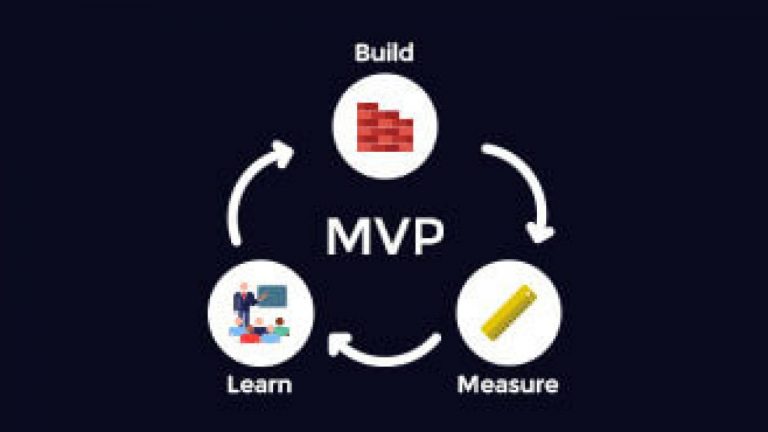
While starting up a new business, most entrepreneurs think that they are creating the next big thing. But little do they know their new startup can easily run out of business if they don’t plan out their business execution smartly. The risk factor is even higher in the Technological industry. In fact, according to Shikhar Ghosh, an Entrepreneurial professor at Harvard, almost 3 out of 4 startups fail every year. Bad ideas, incompetent team, poor marketing, lack of market interest, and poor management are few of the many reasons for these failures. But 74% of high-growth online startup flop because of premature or early scaling. Companies without testing their hypothesis roll out their final product into the market to gain instant popularity, resulting in extreme disaster. People often forget the success stories of today’s multi-billion dollar companies Uber, Airbnb, FourSquare, and Twitter. Only a few people remember what these applications look like in their initial stage. But the common thing among these companies is that they all built their brands through MVP. These brands launched their products with only a few basic features to see how the market will perceive it. Later all of them enhanced their apps according to the needs of their target audience. With that being said, in this article, we will discuss why it is better to always invest in MVP first before starting the custom software development and how MVP can benefit the companies in succeeding in this cut-throat industry. What is MVPMVP, the most successful methodology used by many entrepreneurs stands for Minimum Viable Product. As the term suggests, it a product with minimum features that is viable enough to fulfill the needs of early customers. The MVP shouldn’t be perfect, however, it must give the essence of the product or service you’re going to offer which, if not all, some of the early adopters resonate with, pay for, and give you valuable feedback. The concept of MVP is originally derived from the Lean Startup methodology, proposed by Eric Ries. According to this concept, MVP is all about working smartly, discovering more, and spending less. Eric Ries defines MVP as“the unfinished version of the product which allows the team to gather the maximum amount of customer insights with the least amount of resources.” The key premise of MVP is based on a simple pattern: build-measure-learn. With the help of an MVP, you can easily evaluate your vision without having to spend tons of money. Besides financial benefits, the results collected from MVP will highlight your audience’s expectations and will enable you to build the app that fits with their demand. However, it’s important to understand that MVP doesn’t mean a bad product, instead it’s a simplified version of a complex idea. The main point of building an MVP is to launch early but launch simple. Some early release of the feature will allow you to set foot into the market first. Once the idea is validated you can now invest in the upcoming releases and jump right into the Custom Software Development. Now, let’s explore all the key reasons for using the MVP approach first before starting the Custom Software Development to understand the feasibility of the application and how it can be beneficial for the new startup. Benefits of Starting the Business with MVP before moving to Custom Software Development Clear RoadMap Through an MVP a company can easily define its value proposition and examine the vision. Once you have a clear focus on what and why you want to offer this product/service your goals eventually become explicit. Every app offers plenty of features, but before moving to custom software development it is extremely crucial to prioritize the features you’re going to offer in the final version of the app. MVP allows you to decide which features are a must-have and valuable for the customers and which are only extra. In this way, you can set clear targets and develop a trial version with only core features to test the value proposition. By doing all this, you can smoothly address all the issues one by one and launch a fully-featured successful app in the future. Generate Funding from InvestorsMoney is the heart and soul of every business, hence you are lucky if you have saved up a couple of million and can spend it in any way you want. While others have to raise funds by attracting investors and showing them how valuable their product is, as the investors only look for the business which is promising enough for them. With that being said, the MVP approach is really helpful in this regard. Once you have launched an app with limited features and received some positive feedback from the early adopters now you can present your business idea to the investors with ease. It will prove the feasibility of the product and increase your chances of getting high funds. Rapid Launch A Minimum Viable Product doesn’t need to be perfect. It should only have a basic set of functions to satisfy the customer’s demands. Hence, creating such a version doesn’t take much time and effort. And as soon as you’re done, you can quickly launch it into the market and get valuable feedback instantly. Besides, through an MVP you can analyze the marketing strategies and sales channels thoroughly. Means the faster you launch, the better you can plan out your business and gain valuable experience. Cost-Efficient As compared to a full-fledged app, an MVP only consists of basic features. Hence developers don’t need much time developing it. Due to less time, you will need to pay less amount for the services as well. Also, the MVP reduces the custom software development cost in a way that developers don’t need to spend a hefty amount in one go. Rather, they invest the amount gradually in improving the existing product and extending the features one by one. Valuable Customer Insight Every business desires to make a strong bond with its customers as soon as